


As we age, stairs can quickly become one of the most challenging and risky parts of the home. Reduced balance, joint pain, and limited mobility can turn even a few steps into a daily hazard. That’s why many families search for mobility steps for elderly people — practical solutions designed to make moving around the home safer and more comfortable.
In this guide, we’ll explain:
-
What mobility steps for elderly people are
-
How they work as a stair aid for elderly users
-
When low rise steps for seniors may (or may not) be suitable
-
When a stairlift becomes the safer long-term option
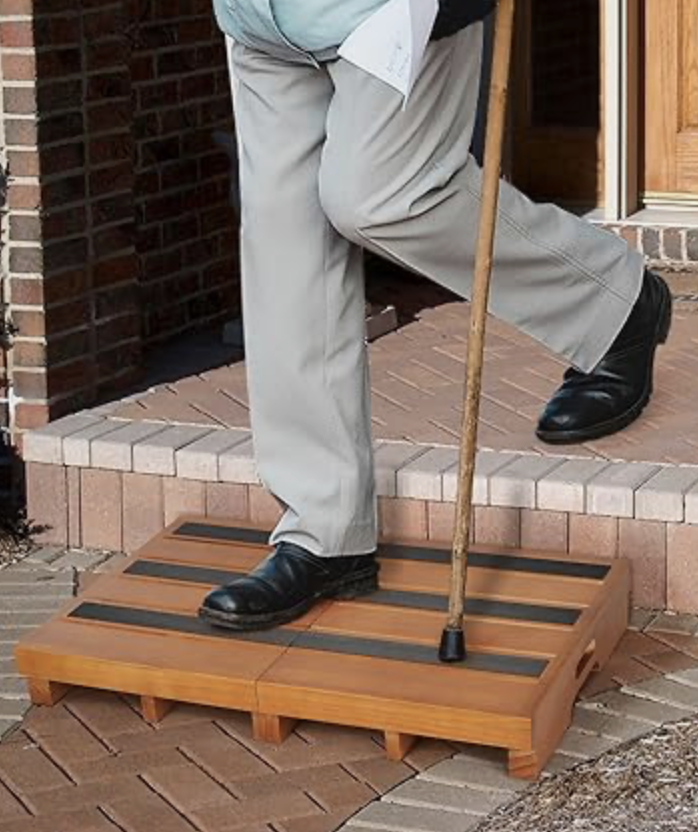
What Are Mobility Steps for Elderly People?
Mobility steps for elderly users are specially designed step that reduces the height between steps, making stairs easier and safer to climb. They are commonly used:
-
At home entrances
-
Indoors where stairs are steep
-
For temporary or mild mobility issues
- For use with climbing in and out of vehicles
Unlike standard stairs, mobility steps are built to minimise strain on knees and hips while improving balance and confidence.

Common Features
-
Lower step height
-
Non-slip surfaces
-
Wide, stable treads
-
Optional handrails
These features make mobility steps a popular stair aid for elderly people who want to stay independent for longer.
Stair Aid for Elderly: Are Mobility Steps Enough?
A stair aid for elderly users can refer to several solutions, including:
-
Mobility steps
-
Grab rails
-
Walking aids/stepping aids
-
Stairlifts
Mobility steps can be effective if mobility loss is mild, but they do not remove the need to climb stairs entirely. For many seniors, this becomes a problem as mobility decreases over time.

Important Consideration
If balance issues, arthritis, or breathlessness are already present, relying on steps alone may still pose a fall risk.
This is why many families eventually consider a stairlift as a safer, more future-proof solution.
Low Rise Steps for Seniors: Who Are They Best For?
Low rise steps for seniors reduce the height of each step, making them easier to manage than traditional stairs. They are often used:
-
For short staircases
-
At door thresholds
-
As a temporary solution after surgery or injury
However, low rise steps still require:
-
Leg strength
-
Balance
-
Coordination
For seniors with progressive mobility conditions, low rise steps may only offer short-term relief rather than a permanent fix.
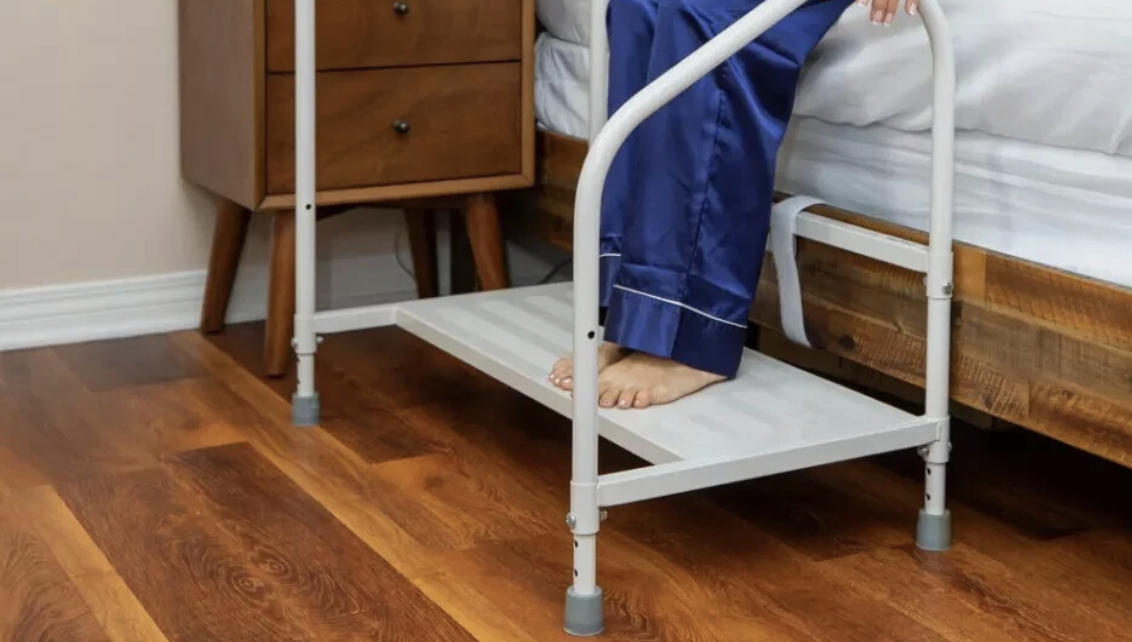
When Mobility Steps Aren’t Enough
While mobility steps for elderly people can help in the early stages of reduced mobility, they don’t eliminate the risk of falls — especially on full staircases.
You may want to consider a stairlift if:
-
Stairs are avoided altogether
-
Falls or near-falls have already happened
-
Pain or fatigue occurs halfway up the stairs
-
Confidence using stairs is declining
A stairlift removes the need to climb entirely, offering a safer and more comfortable solution long-term.
Stairlifts vs Mobility Steps for Elderly People
| Feature | Mobility Steps | Stairlift |
|---|---|---|
| Reduces step height | ✅ | ❌ |
| Removes climbing | ❌ | ✅ |
| Suitable for advanced mobility loss | ❌ | ✅ |
| Long-term safety | ❌ | ✅ |
| Comfort & confidence | ⚠️ | ✅ |
For many households, mobility steps are a short-term stair aid for elderly users, while a stairlift offers a permanent solution.
Choosing the Right Option for Your Home

Every home and mobility need is different. Some people start with mobility steps or low rise steps for seniors, then move to a stairlift when safety becomes a concern.
At UK Stairlifts, we help families:
-
Compare stair aids honestly
-
Decide whether a stairlift is necessary now or later
-
Explore new and reconditioned stairlifts to suit different budgets
Talk to a Stairlift Specialist Today
If you’re unsure whether mobility steps for elderly people are enough, or if a stairlift would be safer long-term, our friendly team is here to help.
Call us free on 0800 046 3438
Or request expert advice via our contact page
See some of our stairlift installations on our YouTube channel.
We’ll help you find the safest, most practical solution for your home — with no pressure and no obligation.
See also our post on alternatives to stairlifts.