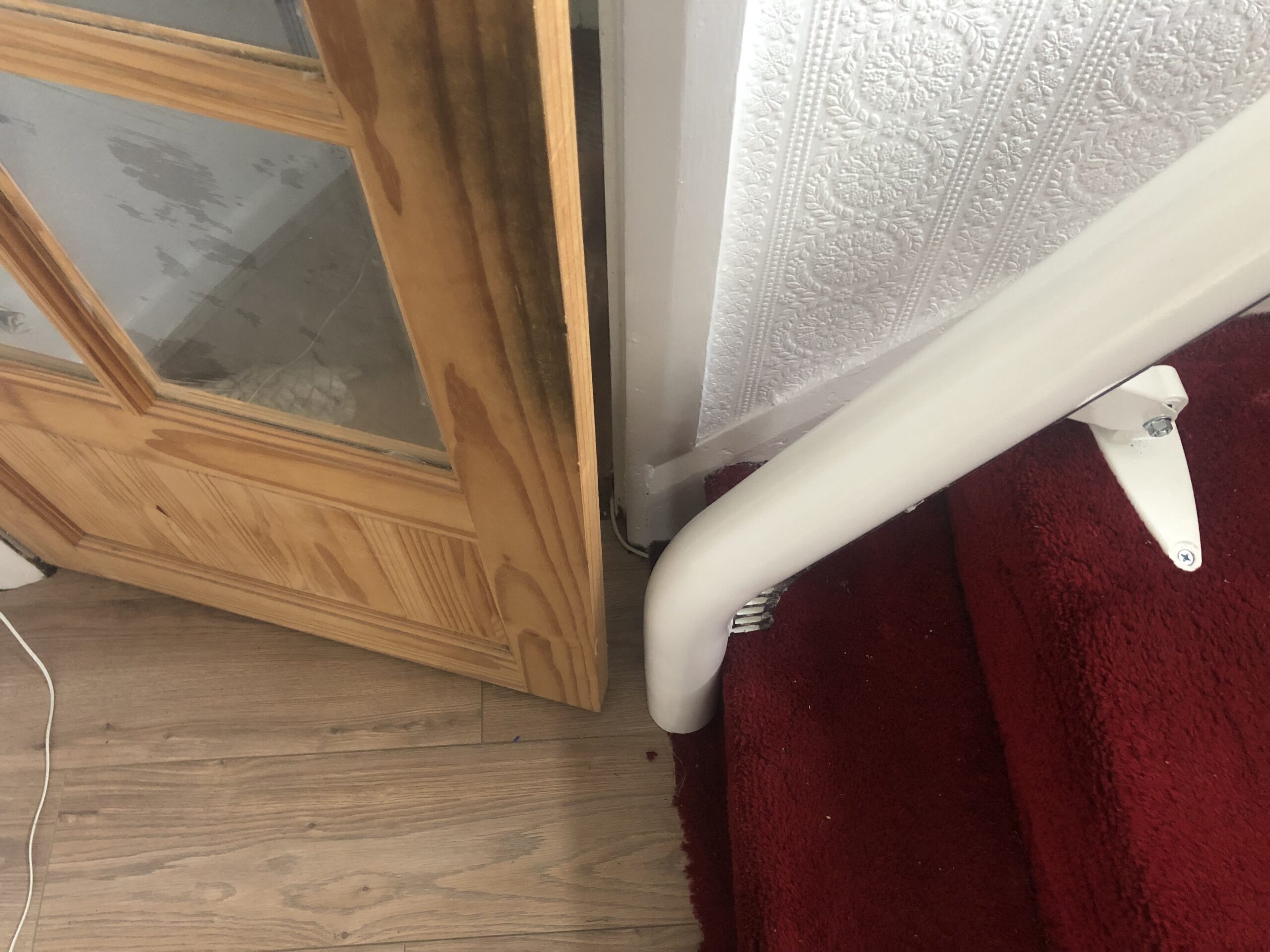


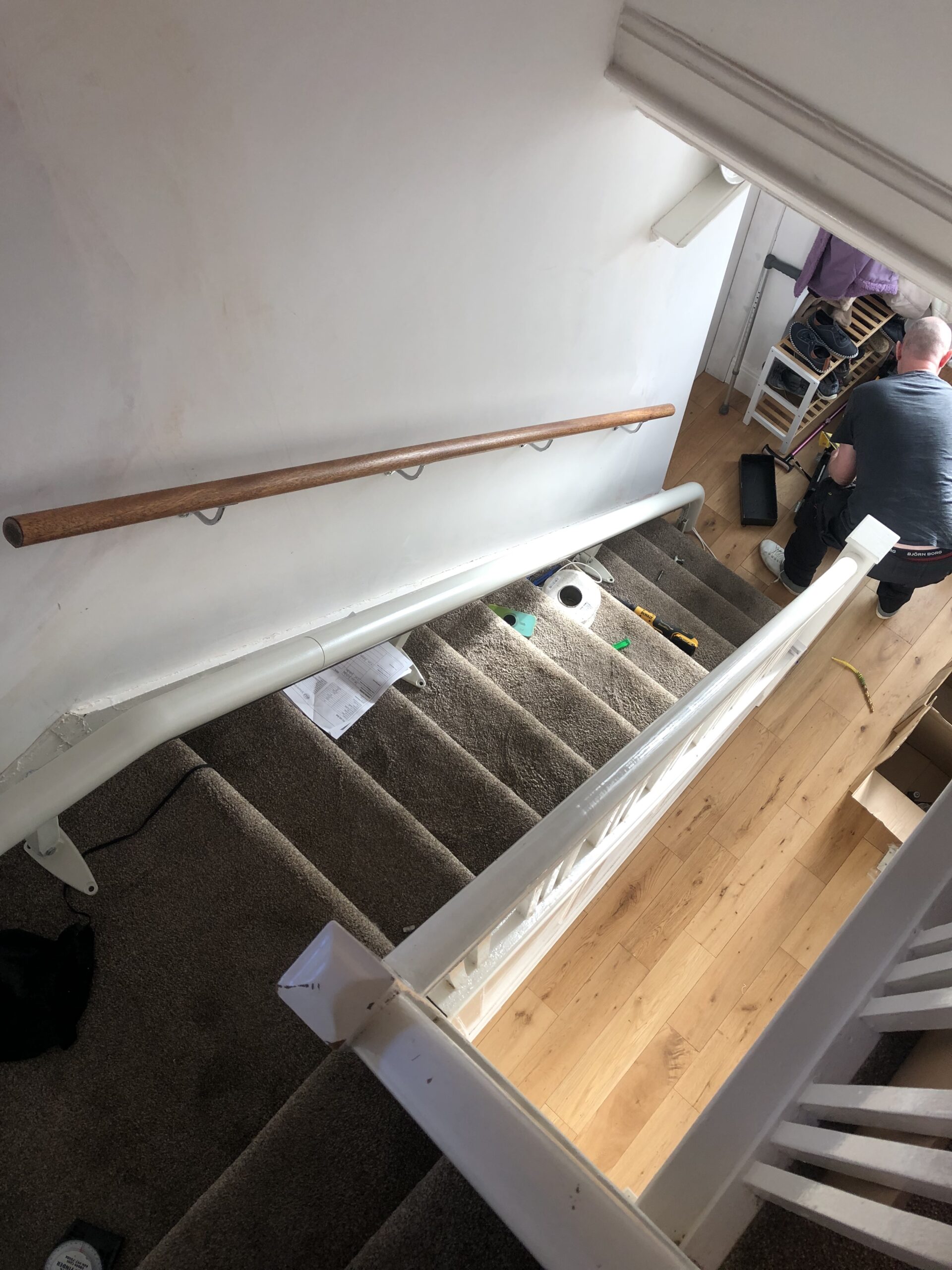
Internal and external stairlift installations are chosen according to the staircase configuration. An “external” stairlift installation refers to the position of the rail on the staircase being on the outside, along the wall. Whereas with an internal installation, the stairlift rail is placed on the “inside” of the staircase. Here’s an image which shows an external fitting. As you can see the rail runs along the outside of the staircase (along the wall).
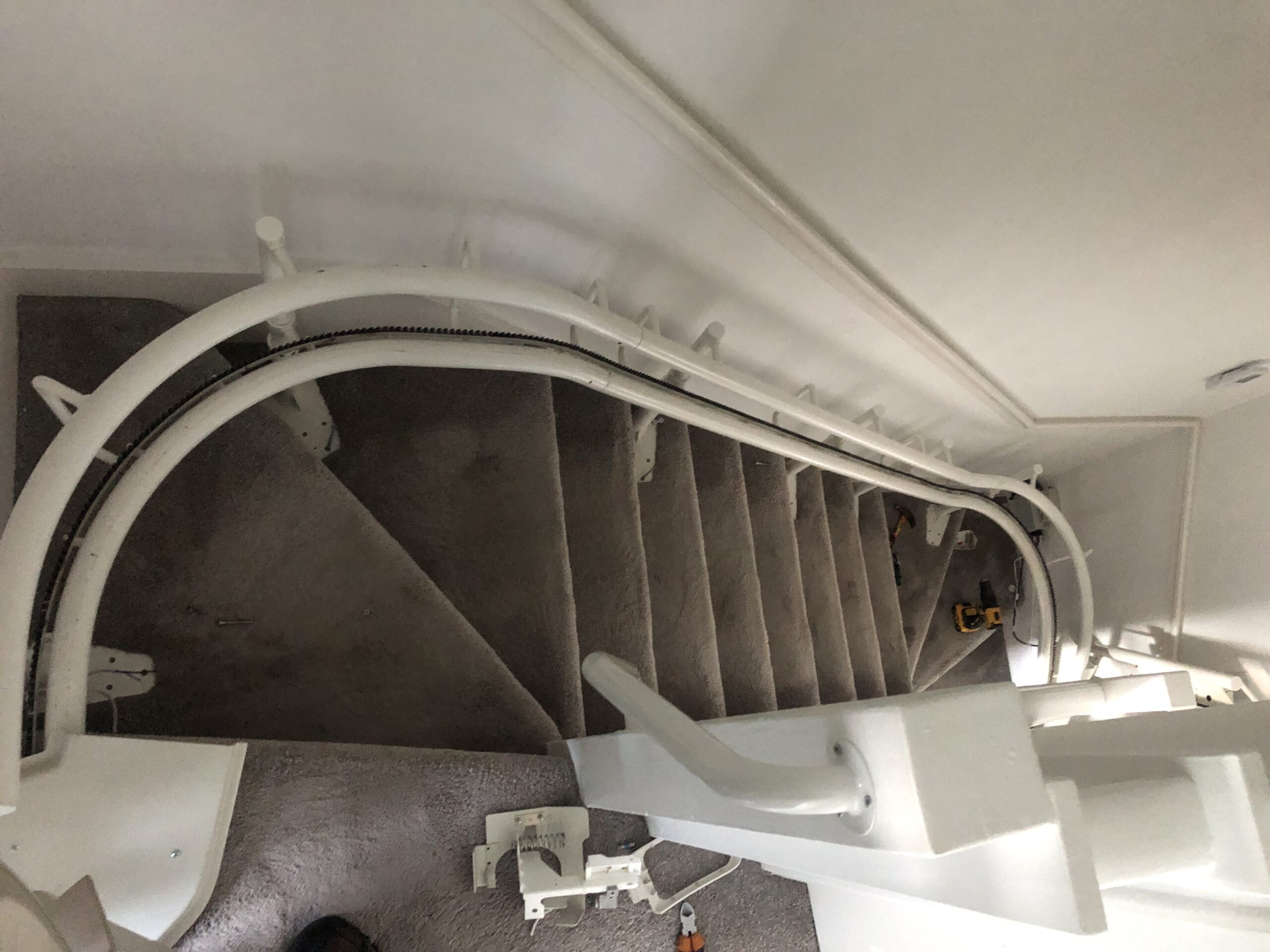
An external rail like this one is great for simple staircases. It simply follows the outside of the staircase along the wall. The pictures below show an internal stairlift fitting – with the rail fitted to the inside of the staircase – (both pictures are of the same stairlift.)
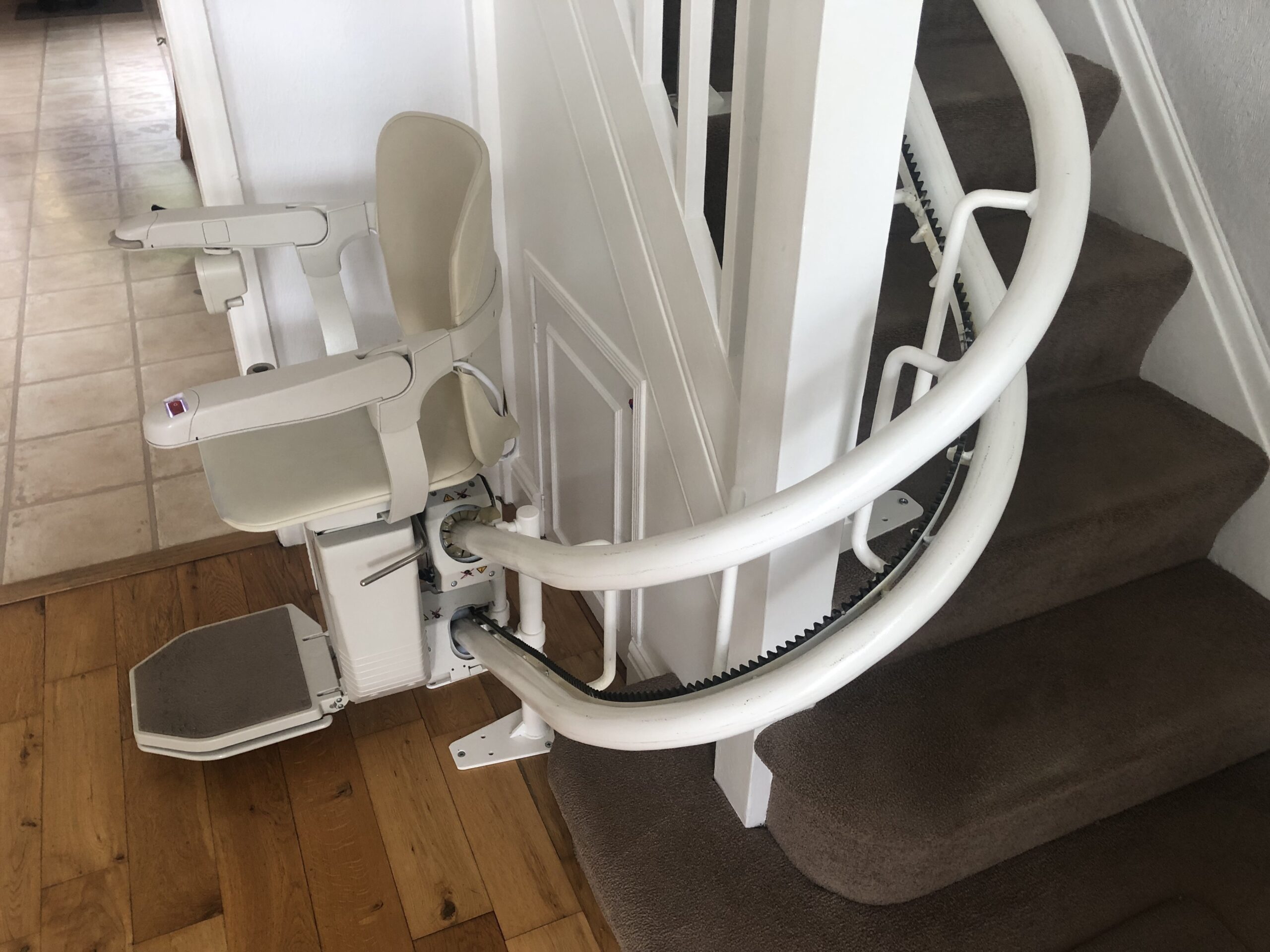
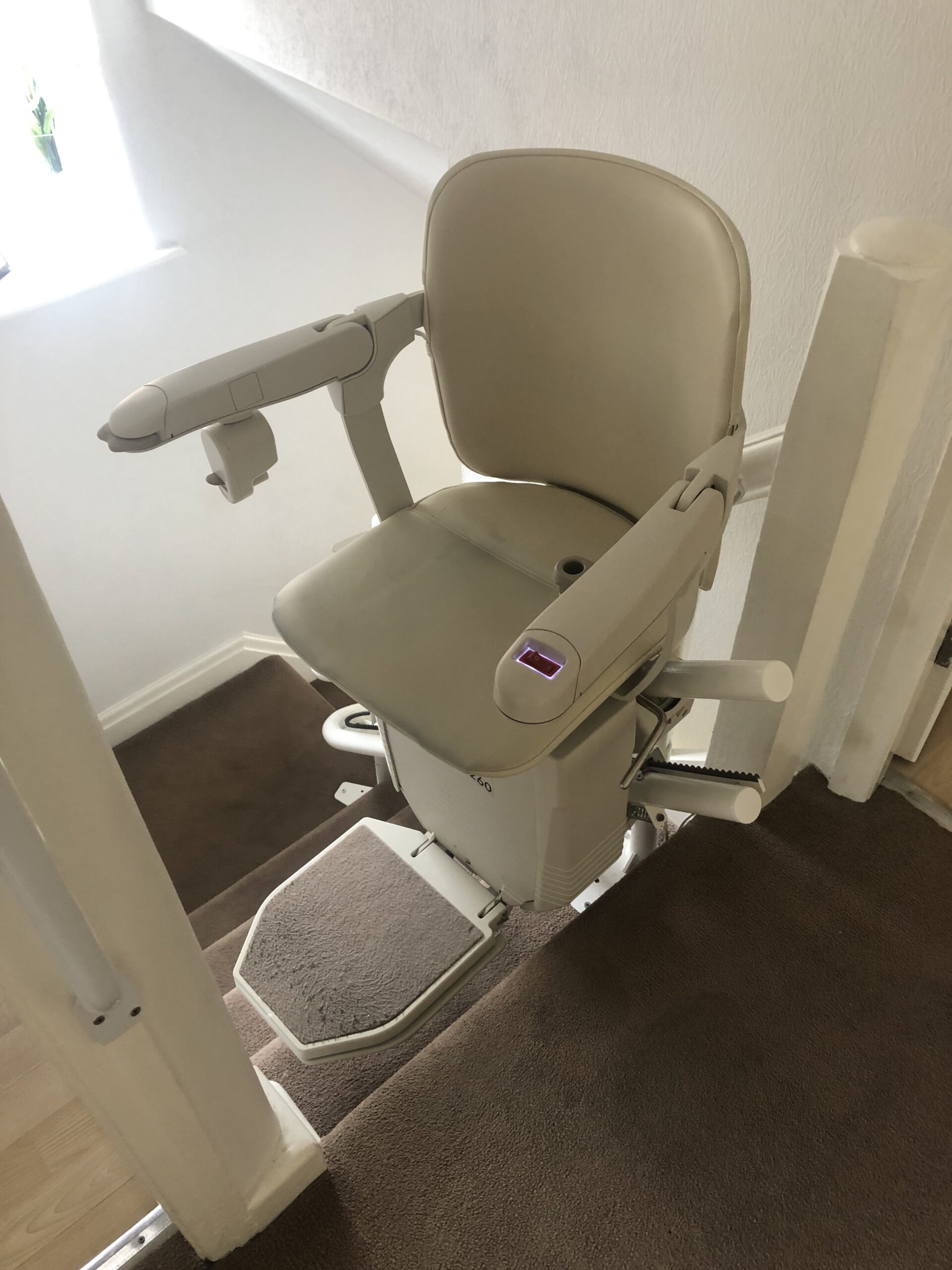
Here’s another image showing the two types of rail installations side by side. On the left you can see the rail running around the inside of the staircase. On the right you can see the rail being installed on the outside of the staircase, along the wall.

Internal and External Stairlift Installations – Which To Choose?
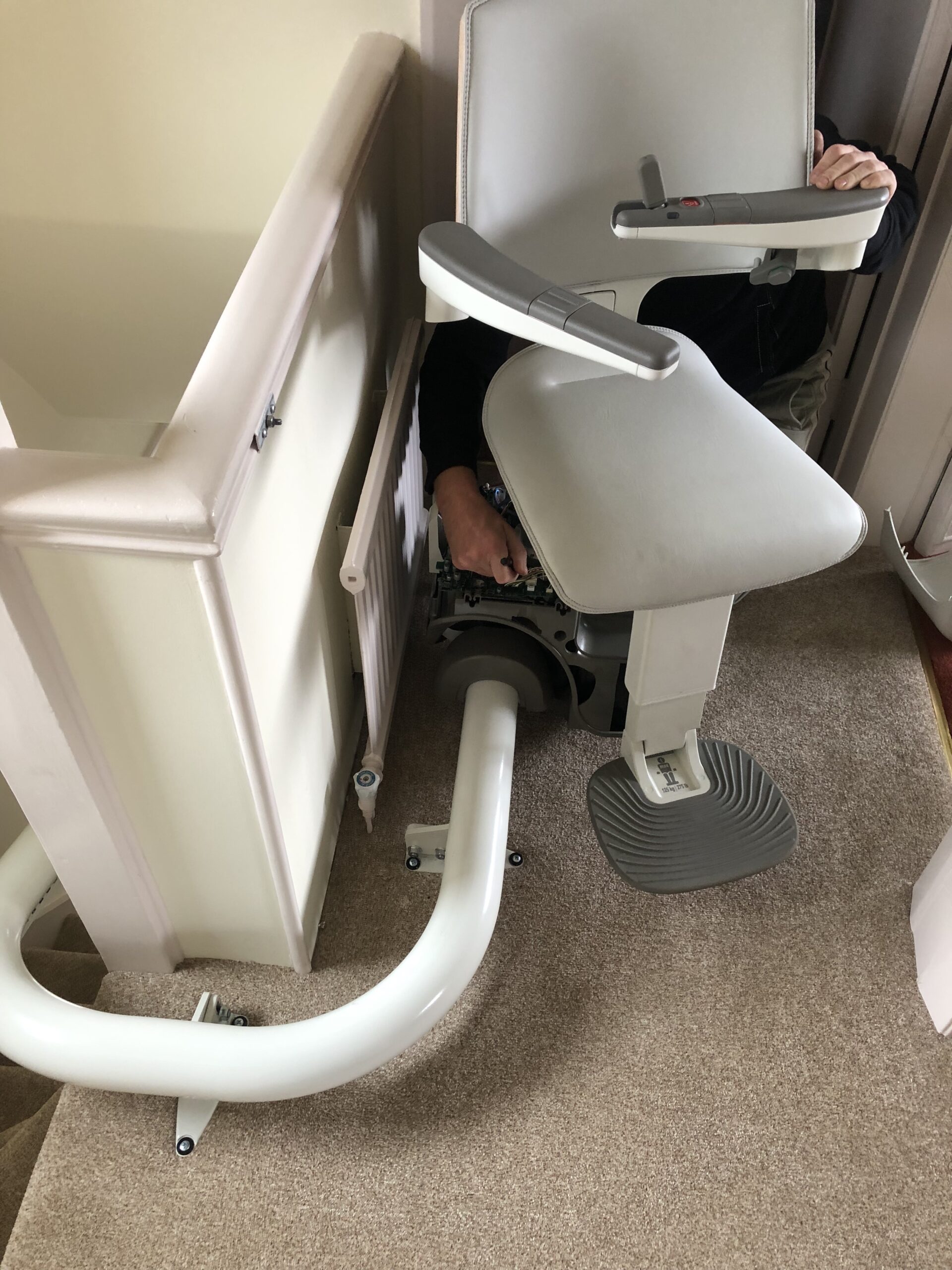
You might choose an internal rail configuration for a stairlift when the standard external rail wouldn’t work. This might be because of a doorway, for example, blocking the movement/parking of the stairlift. In the above (left) image, for example, there was a doorway at the top of the stairs. Since the rail cannot cross a doorway, this would have meant the lift was parked at the top of the stairs. The internal rail was chosen to offer a safer option and to carry the user away from the top of the stairs and towards the bedroom door.
Sine there was also another person (non-stairlift user) in this house, this gave them more room to use the stairs, unencumbered by a stairlift in the way! Parking the stairlift at the top of the stairs, or further down the rail, would definitely have been a greater obstacle for the other household member, and could even have posed a danger to them.
Internal and External Stairlift Installations – Parking At The Top Of The Stairs
In this picture you can see the Platinum Ultimate (heavy weight) stairlift parked at the top of the stairs. With another household member using the stairs on foot, this can present a bit of an obstacle. Even though you can park these stairlifts further down the rail, (and call them remotely), an outside rail can mean your lift blocks the staircase. If there’s a door at the top of the stairs, you cannot carry the rail round the corner, as it would be blocking the door.
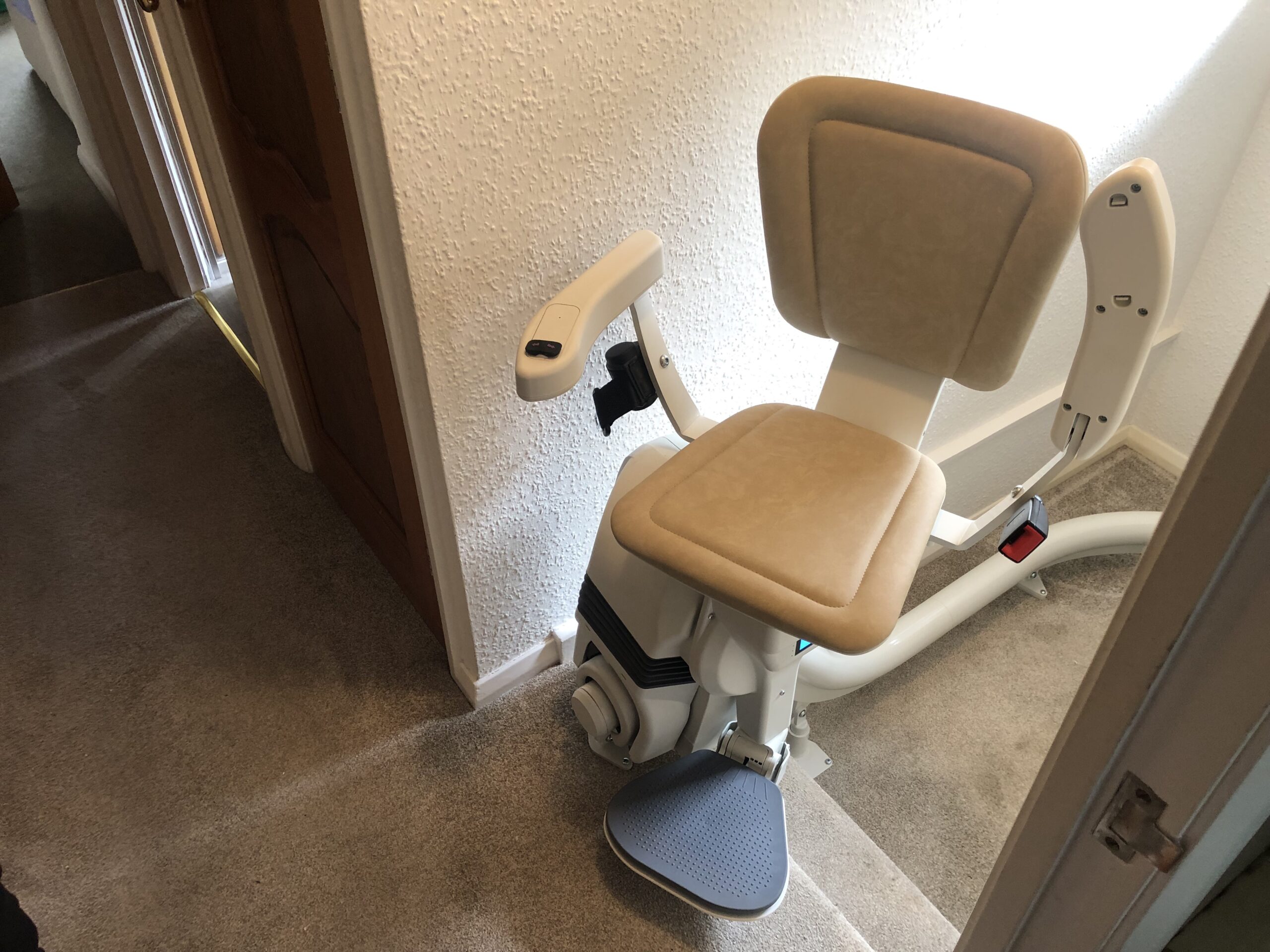
This external rail configuration was the best choice here and the chair folded up to allow the other household member to use the stairs. The main parking point at the bottom too meant there was plenty of clearance for the other (non-stairlift user) to use the stairs. The internal configuration wouldn’t have worked for a couple of reasons. The corridor at the base of the stairs was very narrow. So there was nowhere to park it. There was also a door at the top (on both sides). So installing an internal rail here wouldn’t have helped.
Vulnerable Stairlift Users & Unique Installations
This was an installation we carried out for a vulnerable customer who had a very narrow staircase. He also suffered from a rare muscle wasting condition (see the case study here). As you can see, the staircase was rather narrow and he even had a few problems with stairlifts which were too big before he found our engineer Scott here at UKStairlifts.com.


This was a straight staircase, so normally a simple installation. But it was so narrow we needed a specific stairlift for narrow stairs to make it work. With our customer’s condition, we didn’t want to park the lift at the top, where he could easily have stumbled. Instead, we took the lift into the bedroom. That way, he was away from the staircase when he got on/off it. The bend at the top with a 180 degree bend is similar to one you might find on an internal installation. This time, the bend was used to help move the client away from the stairs.
Another Internal Installation
Here’s another one of our unique installations – this time an internal rail configuration. The door presented an obstacle (for external rail) and there was a nice parking spot at the top which worked wonders for space saving and obstacle removal!


This was also a very narrow staircase so we used a Flow X stairlift here.


Another Reason For An Internal Rail Configuration
Another reason you might choose an internal rail configuration over an external one is the staircase. Here you can see a spiral staircase which is using the internal rail, running up the central pillar.


We recently carried out a stairlift installation on a four-floor spiral staircase in Plymouth. Here you can see the staircase and stairlift installation where we used an internal rail configuration.


An external rail here have been much longer, and it would have been very slow climbing the stairs. But it would also have been a lot more expensive too – with far more pieces of rail to configure.
You can see our case study of the four-floor spiral staircase here.
Internal Versus External Stairlift Fitting
In this video you can see the internal stairlift fitting. This was due to the doorway on the side (an extension) which made the external rail configuration impossible, as the rail would block the doorway on the stairs.
Here’s a timelapse video of another installation we carried out. This one is an external rail configuration. As you can see the rail follows the wall around the outside of the staircase.
See more of our videos on our YouTube channel here.
Summary
Generally we would prefer an external rail configuration. It’s less complicated and the rail is usually cheaper because the bends are less complicated. Where this doesn’t work, such as when the lift would present a problem to another (non-stairlift user) using the stairs, we would choose an internal stairlift. The other reason is when there’s an obstacle such as a door at the top/bottom which prevents a safe parking point. With a moving rail, this problem is often solved. Take a look at this picture which shows a moving rail cleverly avoiding a doorway at the base of the stairs.

There’s a problem with a moving rail, however. If there is ever a break down or fault in the mechanism, it means a door is potentially blocked! Plus, the lift doesn’t work when the moving rail breaks! A remedy is to either use a Flow X stairlift, which has a drop nose rail (see picture), or choose an internal configuration and move the lift to the other side of the staircase.