


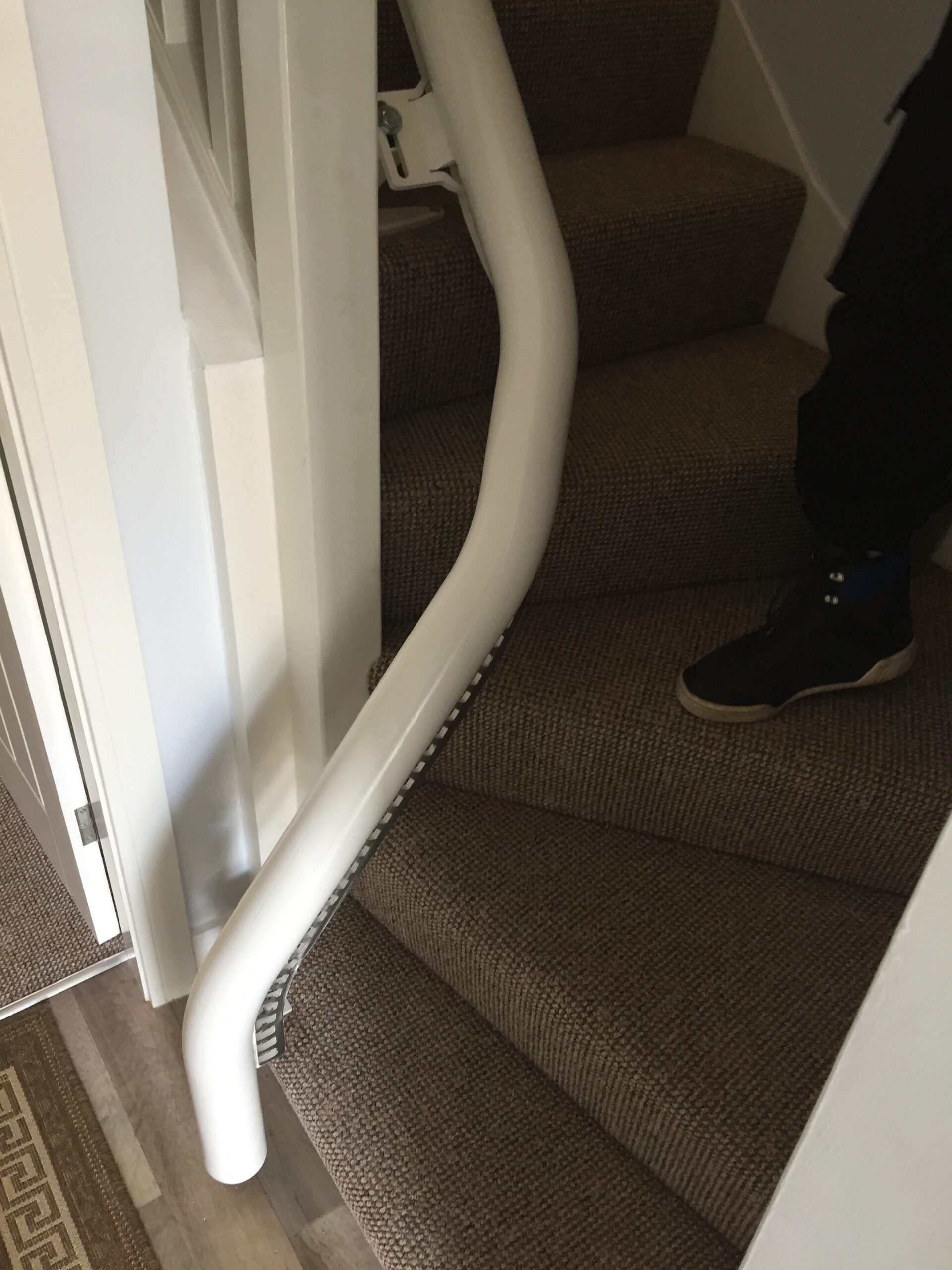
Here’s a stairlift removal we did recently which was a curved stairlift with powered hinge rail mechanism. This one’s a Stannah 260. We don’t come across these models very often (with the powered rail), so this one was of interest. This one was to navigate a narrow staircase with a door at the base. You can see in this picture that the moving rail helps to clear the doorway to the kitchen at the bottom of the stairs.
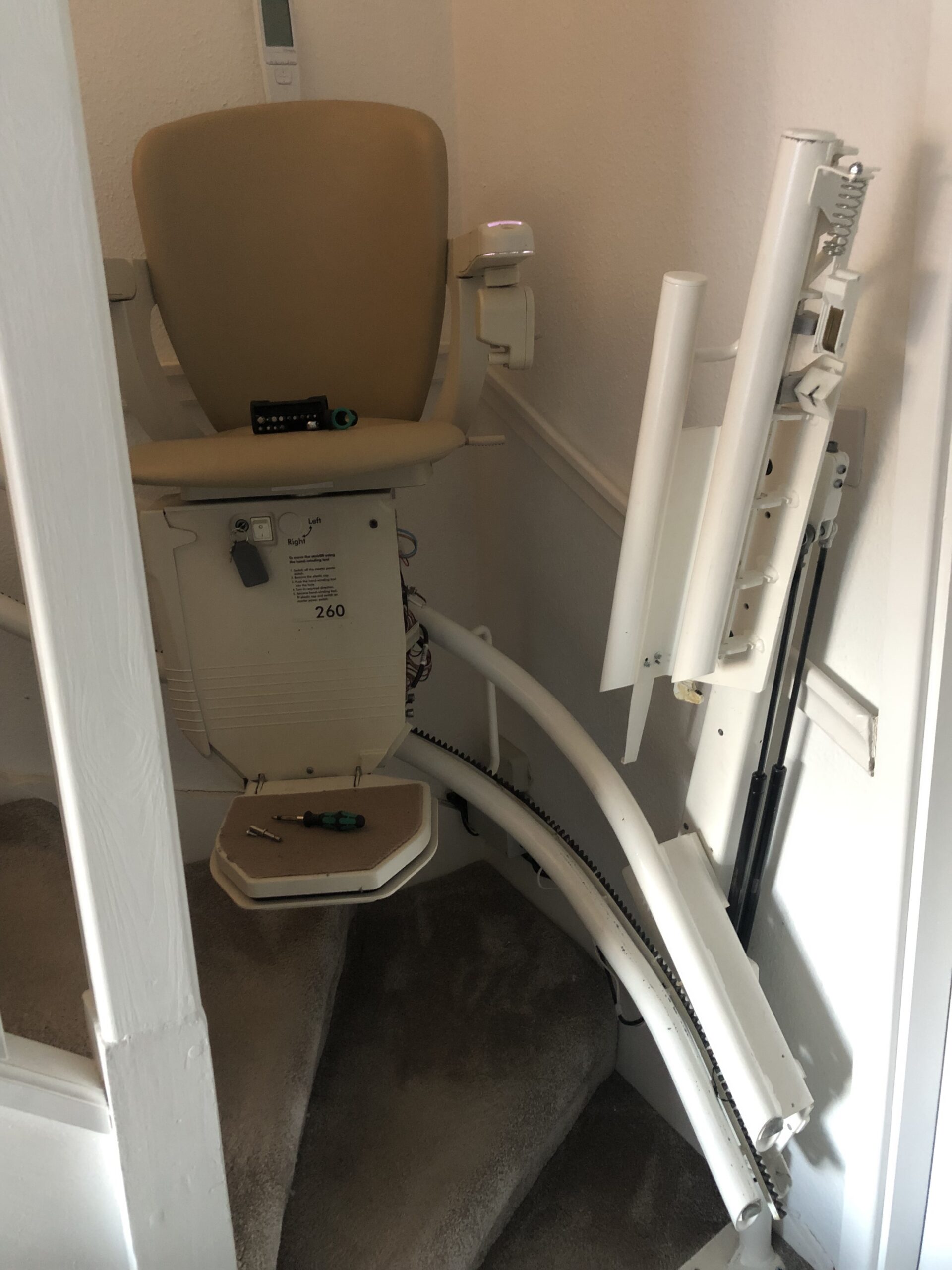

The moving rail section is separately powered from the stairlift and there was a problem with the power unit. So even though this one was for a removal, it tells a story. We like to use the Flow X models in such a situation with an installation for a few reasons. Here’s one of ours with a similar problem – the door at the base of the stairs.
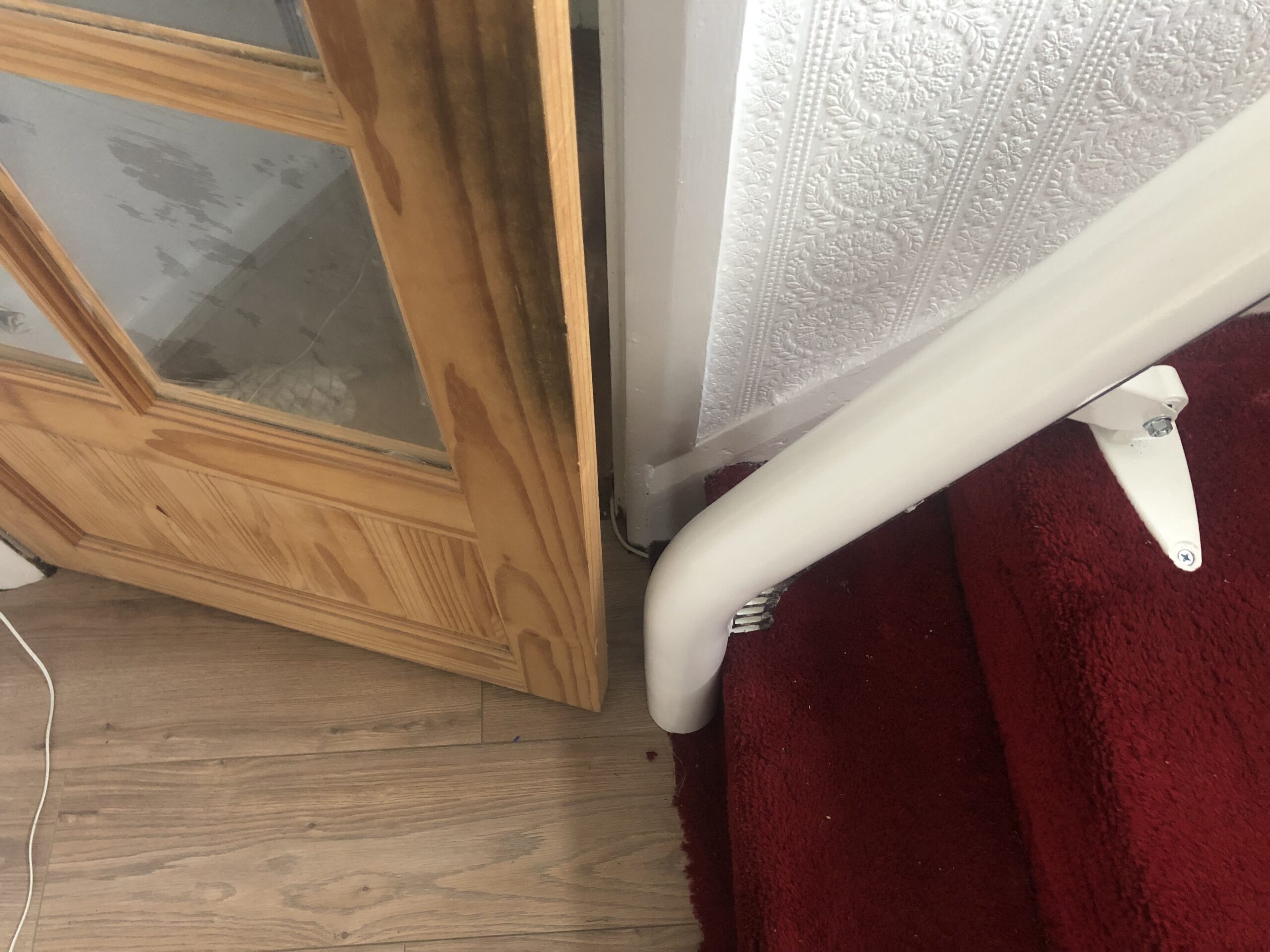
Curved Stairlift With Powered Hinge – Alternative
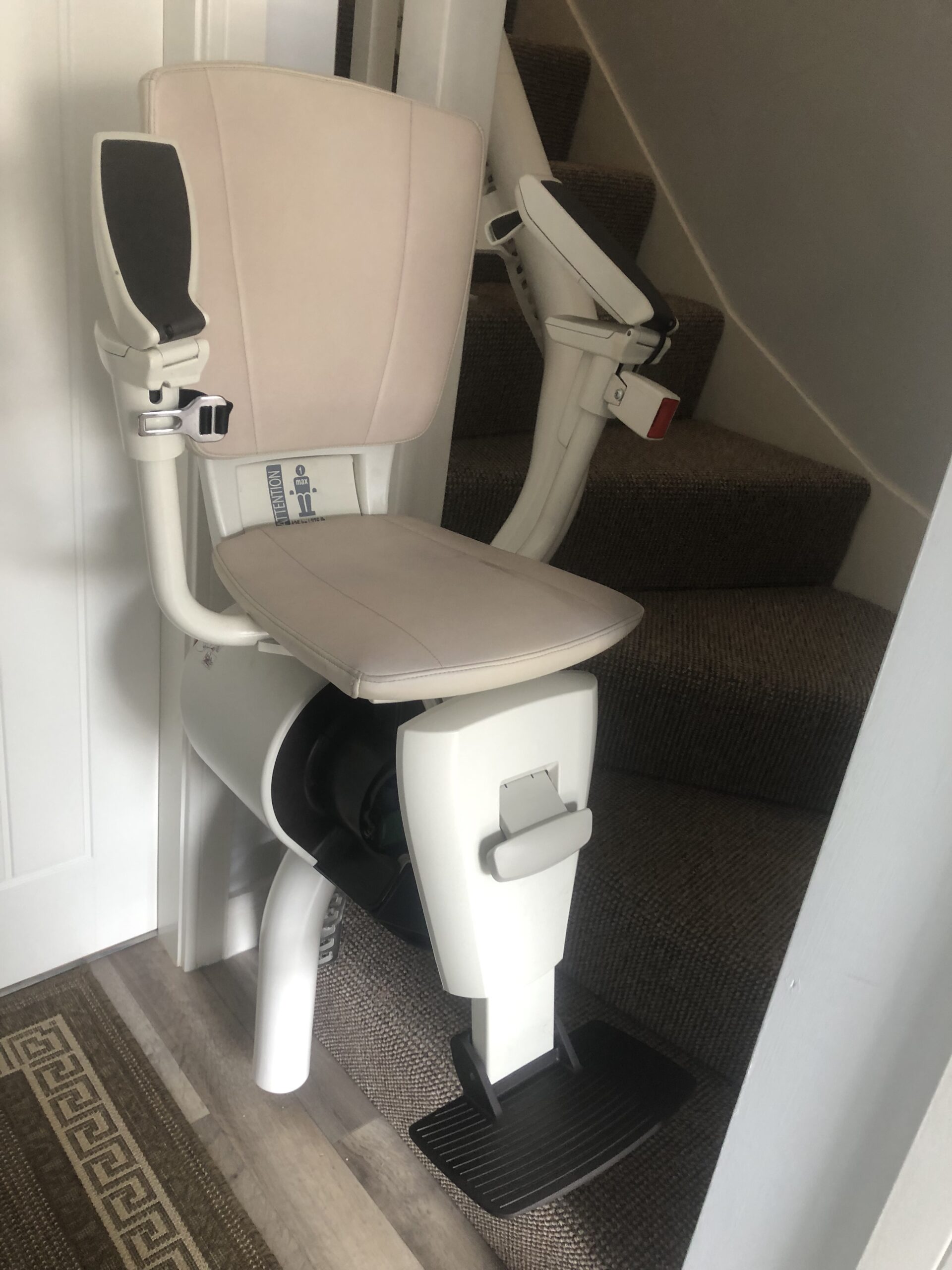
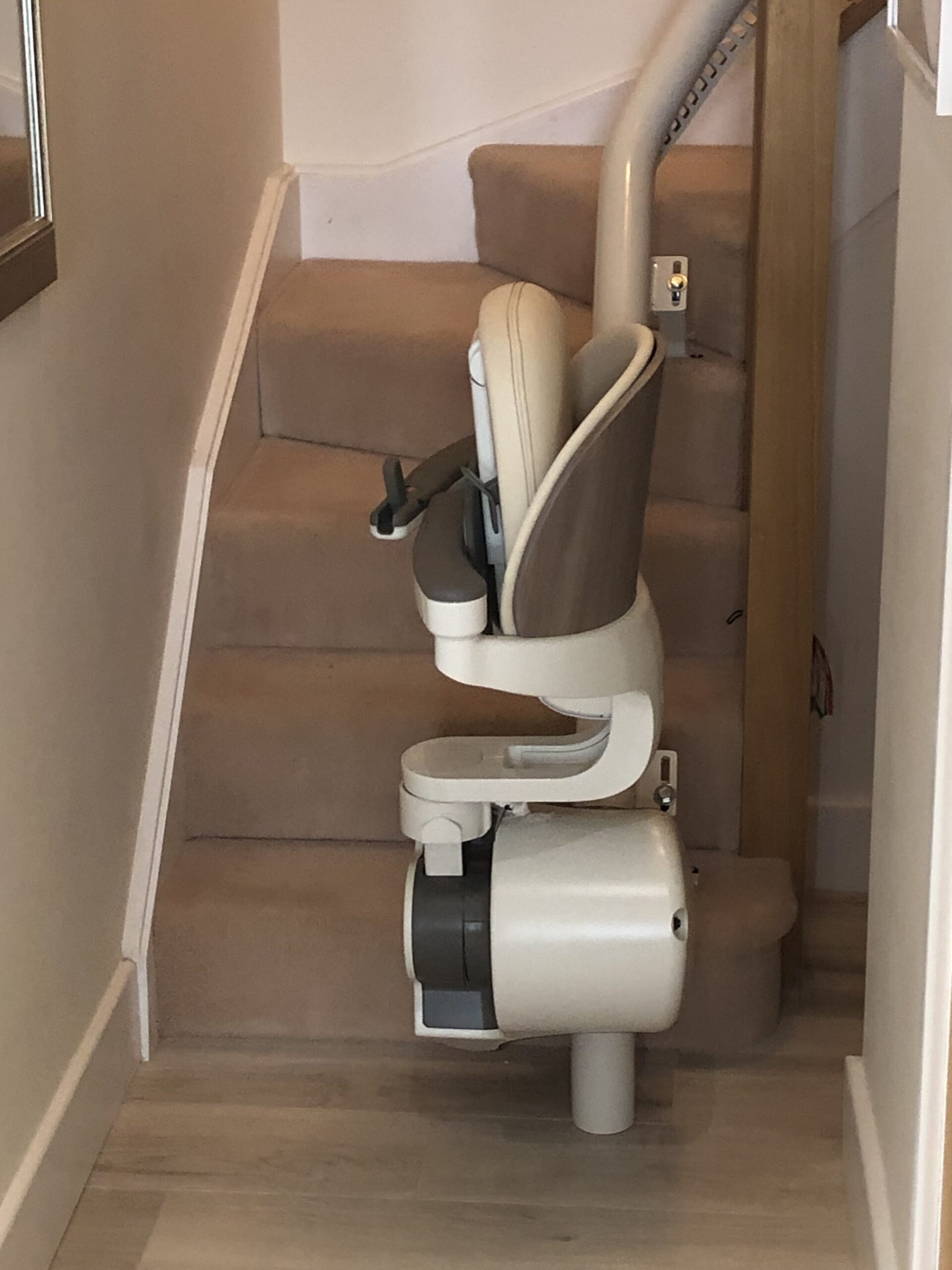
Here’s our alternative and although it’s not as sexy as a powered hinge, much less can go wrong with the above setup. This is the “drop nose” rail of the Flow 2a from Thyssenkrupp (now Access BDD). With a powered rail, the power can be an issue as with this recent stairlift removal case study. The intermittent fault would have rendered the stairlift useless with the hinged rail being either stuck in the up or down position. Any moving part adds another element which can potentially cause more issues later down the line.
Here’s another Flow 2a with its drop nose rail – avoiding blocking the downstairs kitchen doorway.
A broken hinge can mean you can’t use the lift and even worse potentially block a fire exit, or a door to your kitchen/basement. So you would need to call someone out in order to repair the hinge and it could even cause a problem in an emergency.
Some hinged rails too can be an obstruction to other house users and protrude into the room, like this one on a straight stairlift (left). The Flow 2a stairlift rail (right) is much less obtrusive and presents fewer potential problems such as mechanical or electrical breakdown.
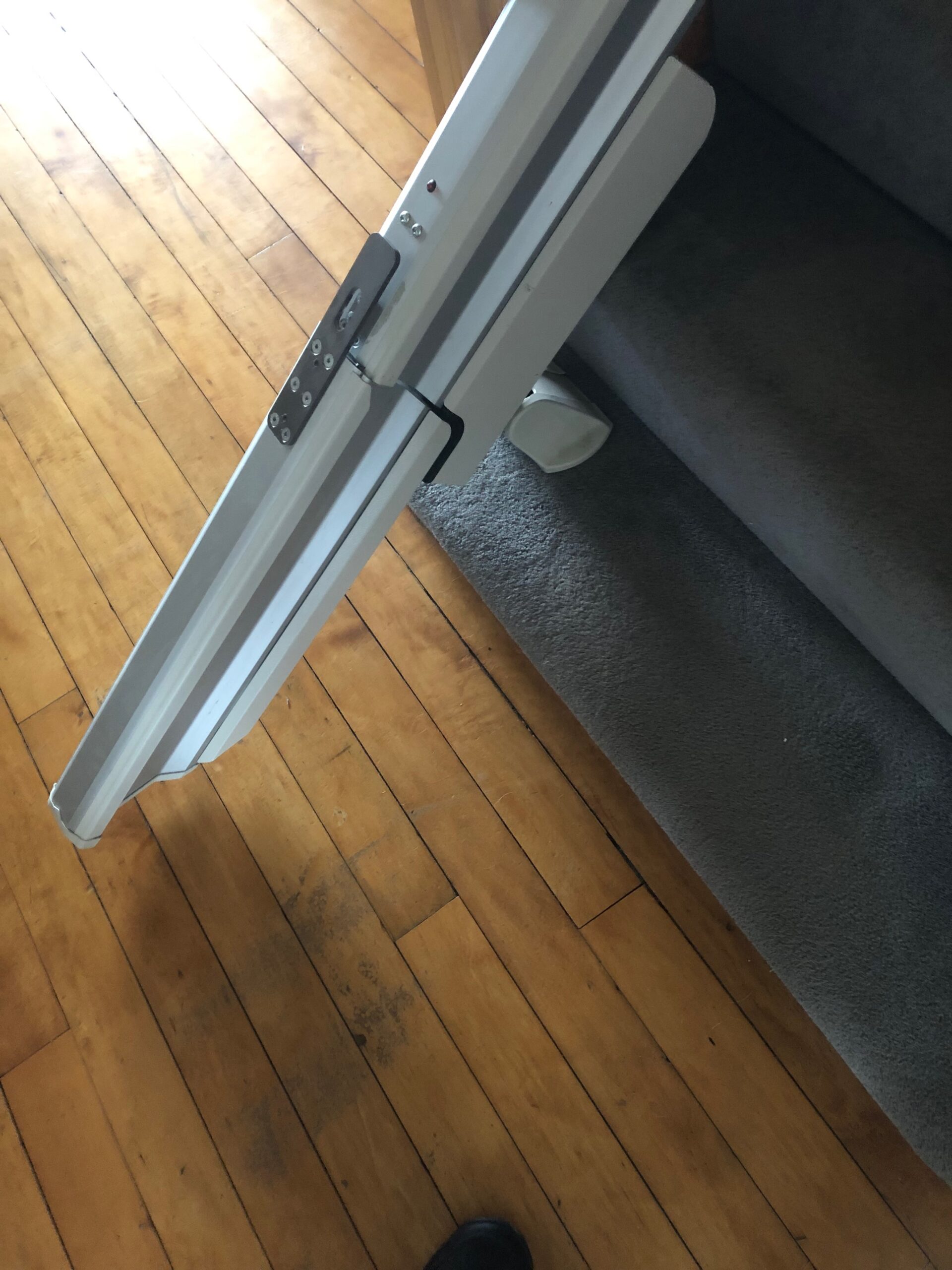
When our customers have problems with their stairlifts, it means we have another call-out! We don’t like inconveniencing our customers, or our “on-call” engineers either! We would much prefer to avoid this problem altogether by using the more understated drop nose rail which neither obscures the passageway or needs any power.
Nothing can go wrong in terms of electrical/mechanical fault when you don’t use a retractable rail mechanism in the first place! We do love Stannah’s though and use their stairlifts often, especially with our reconditioned stairlifts.
Summary
This stairlift was a removal we carried out in Leeds. We don’t find them very often so it was an interesting one! Read the case study on this removal here.

We like the Stannah 260 stairlift and use them often with our refurbished models. However, we tend to favour the Flow X and Flow 2a models with this kind of staircase setup for two main reasons:
- Less can go wrong mechanically or electrically with a drop nose (static) rail.
- The drop nose rail doesn’t obscure the passageway for other house members
See also our post on stairlifts for narrow stairs.

View some of our installations on our YouTube channel here.