


Stairlift rails – which type should you choose? Most stairlift companies will recommend a stairlift make and model according to your particular staircase and budget. The rail type isn’t usually the determining factor for most installations. However, it’s useful to know your options if you’re in the market for a stairlift. What’s definitely worth considering is the after care service and warranty you’ll be getting too. This is really more important for a few reasons than the type of rail you’ll get.

Still, you’re going to be looking at your stairlift for some time, and it becomes a part of your home. So it’s worth knowing what it will look like and you need to be happy with it.
Here’s a few of the rail types you’ll find with different makes and models in the stairlift world!
Stairlift Rails – Folding
The folding rail allows installations to be made where the rail would otherwise obscure or block a doorway or a corridor. Although there can be some issues with folding rails, they are an option if you have a difficult doorway or corridor. Here’s a couple of pictures of stairlifts with folding rails. As you can see, the rail would otherwise obscure the doorway if it wasn’t for the folding mechanism.
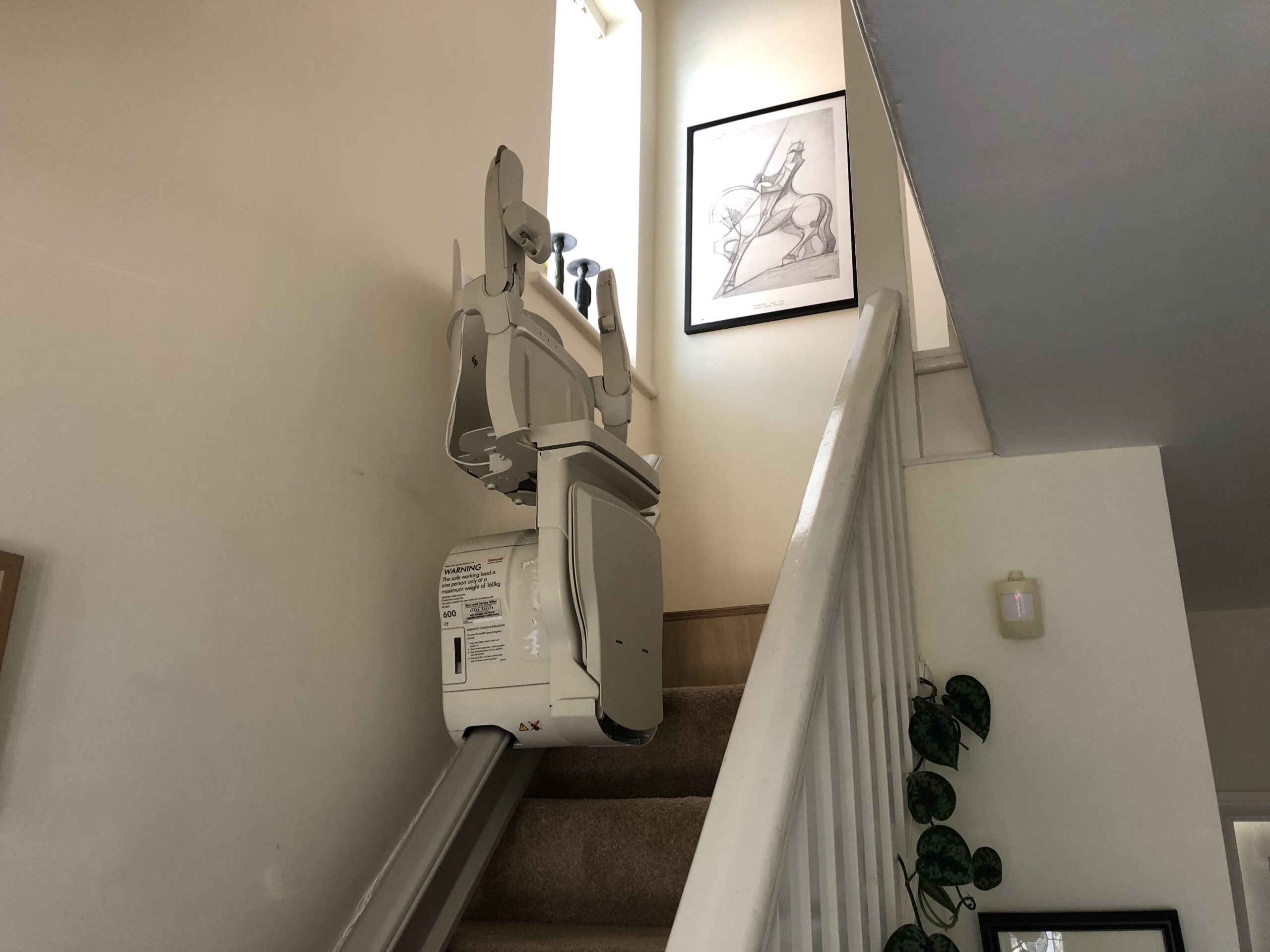
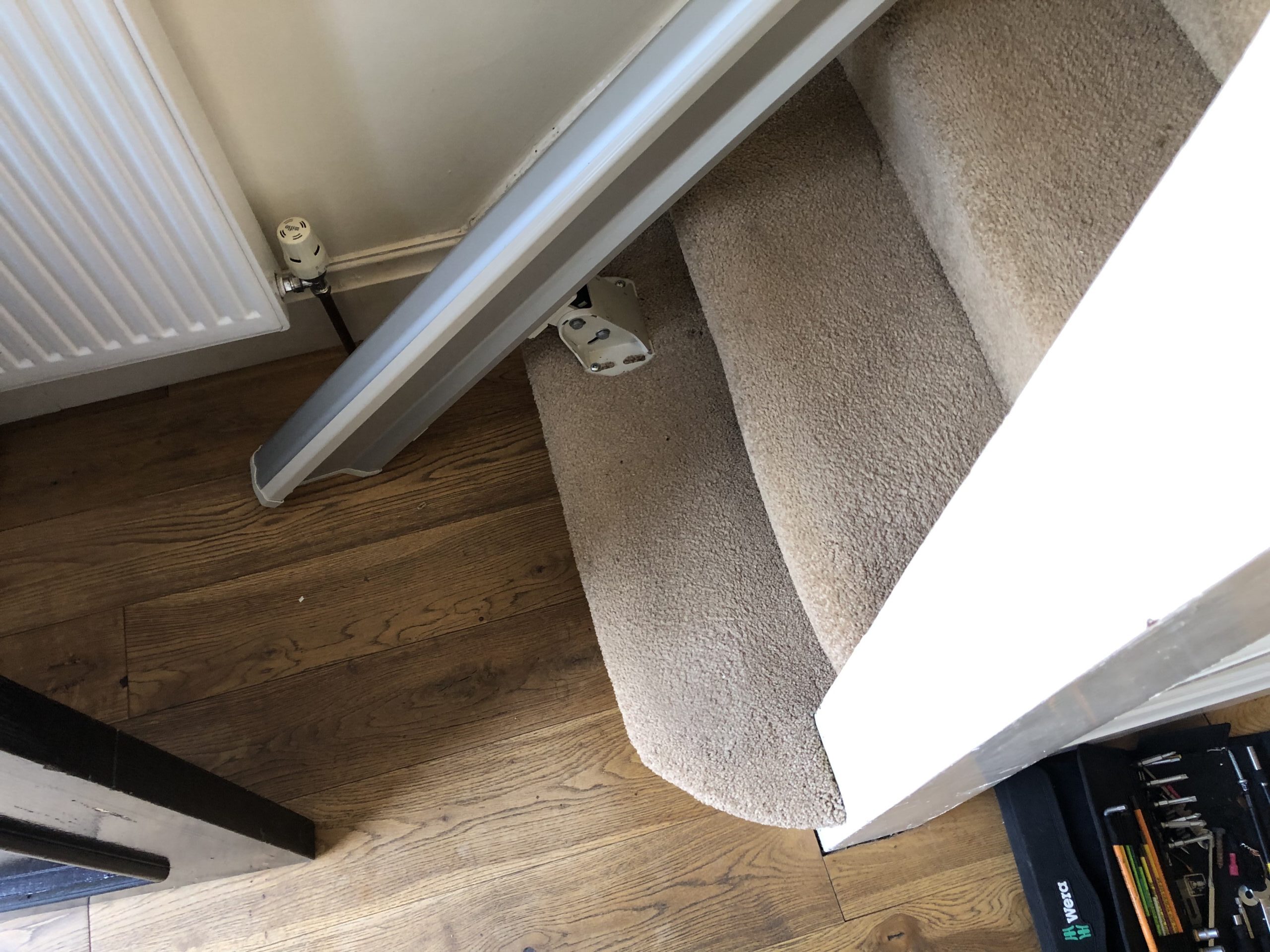
On the left was a repair we carried out in Leeds – it was a Stannah 600. With this one, the rail had dropped slightly with the weight of use, and this had caused a problem with the moving rail not closing properly. As a result, the stairlift was catching on the mechanism. It was however a simple fix! On the right was a Stannah 260 with a moving rail.


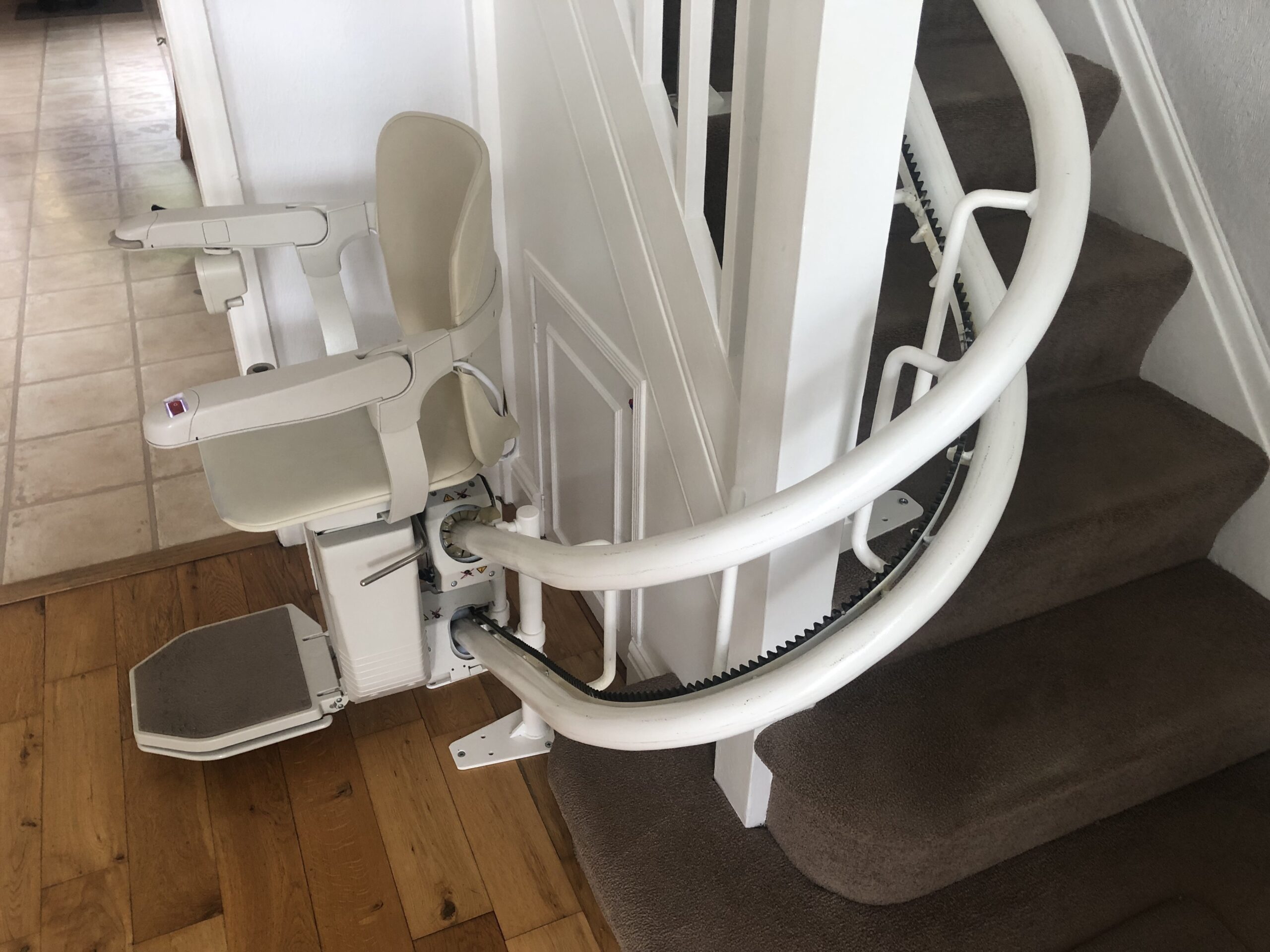
Stairlift Rails – Double Tubular System
The double tubular rail system is a solid build which allows the stability of the stairlift to be mechanical, rather than electrical. This means there’s less that can go wrong mechanically in terms of the upright position of the stairlift. With a single rail system, the stairlift has an internal stabilising system which operates electronically. The picture above right has a double tubular rail system.
Here’s a couple of other, similar railing systems – these are the Stannah 260 stairlifts which are a great option and very reliable.

Stairlift Rails – Single Rail/Monorail
The monorail type of stairlift has a sleeker look than the double rail stairlifts but this often means it’s also more expensive. Monorail stairlifts such as the Flow X too, are particularly designed for awkward and narrow stairs. They have greater manoeuvring capacity than some of the double rail designs. A single rail can fit on narrower stairs and with the Flow X especially, the agility of the lift means it can be installed on certain stairs where otherwise a lift wouldn’t fit at all!
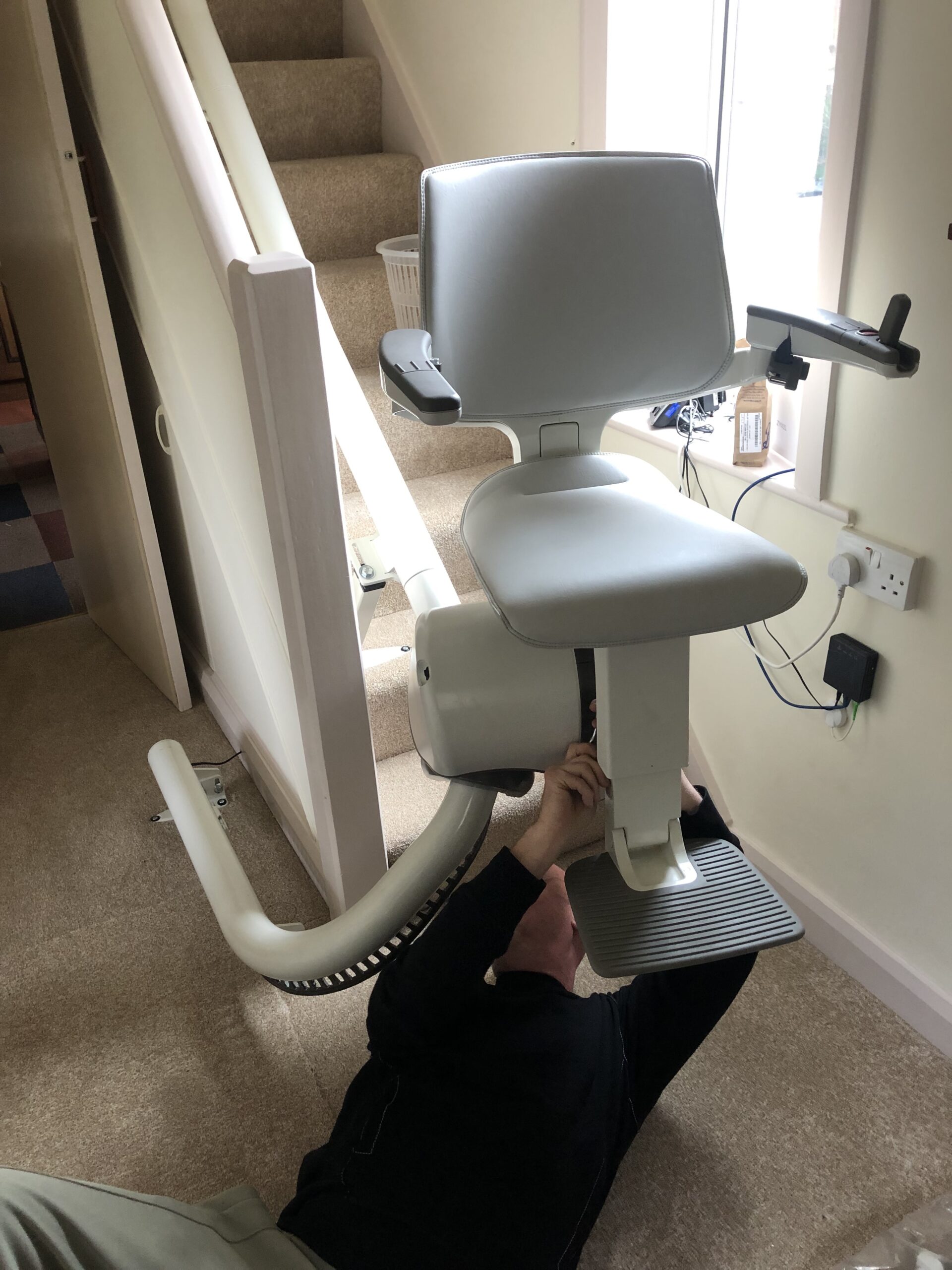
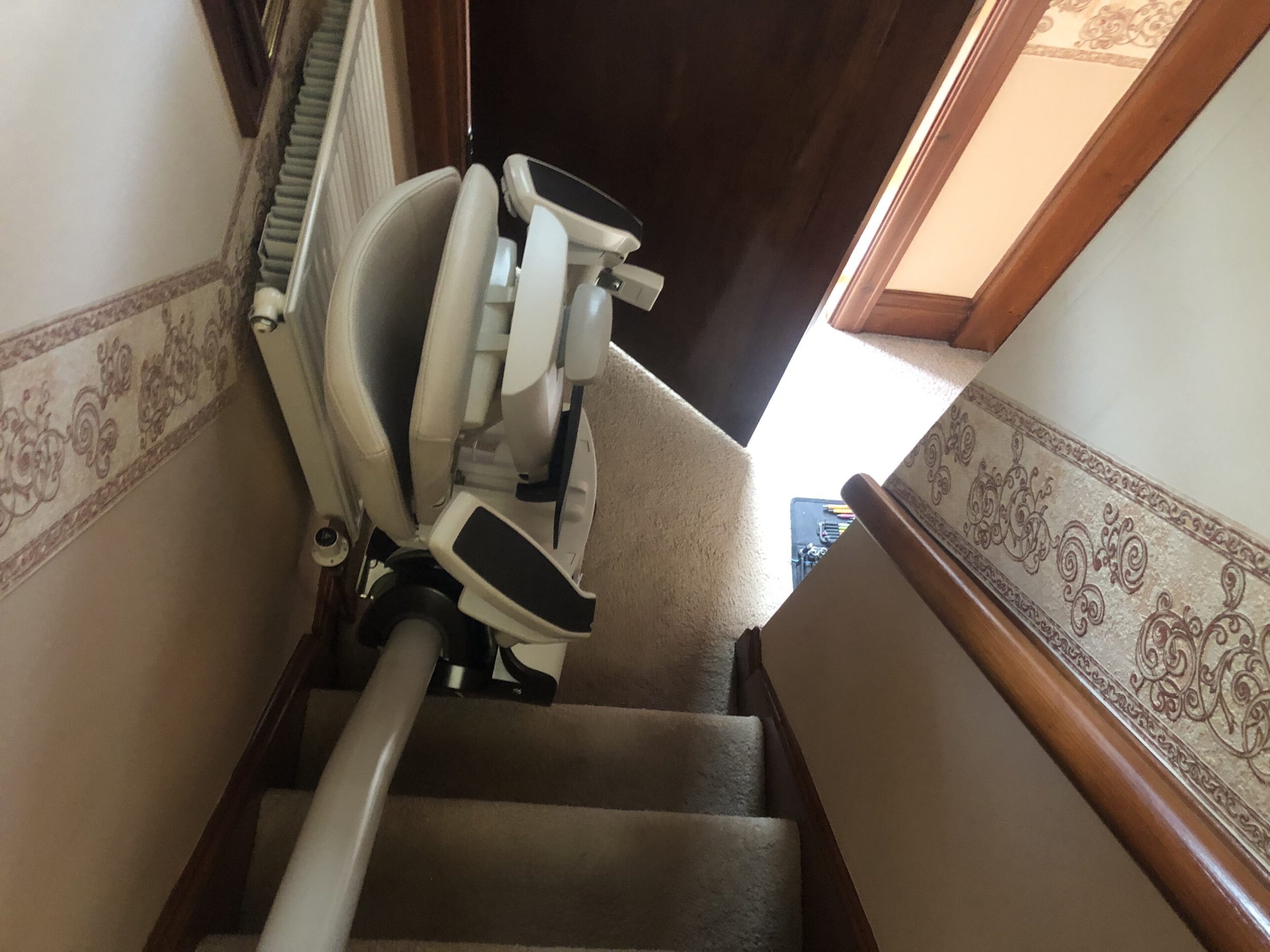
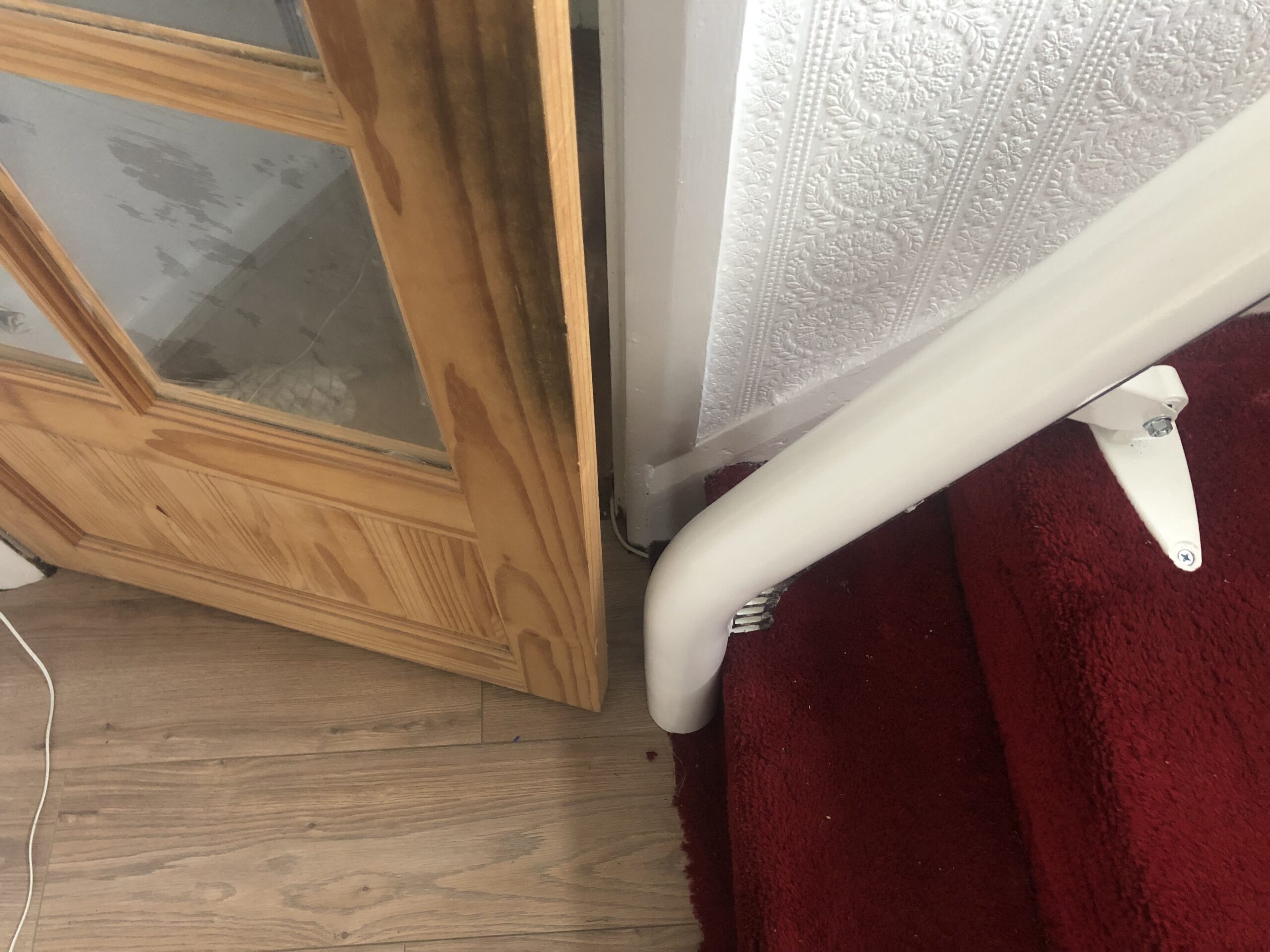
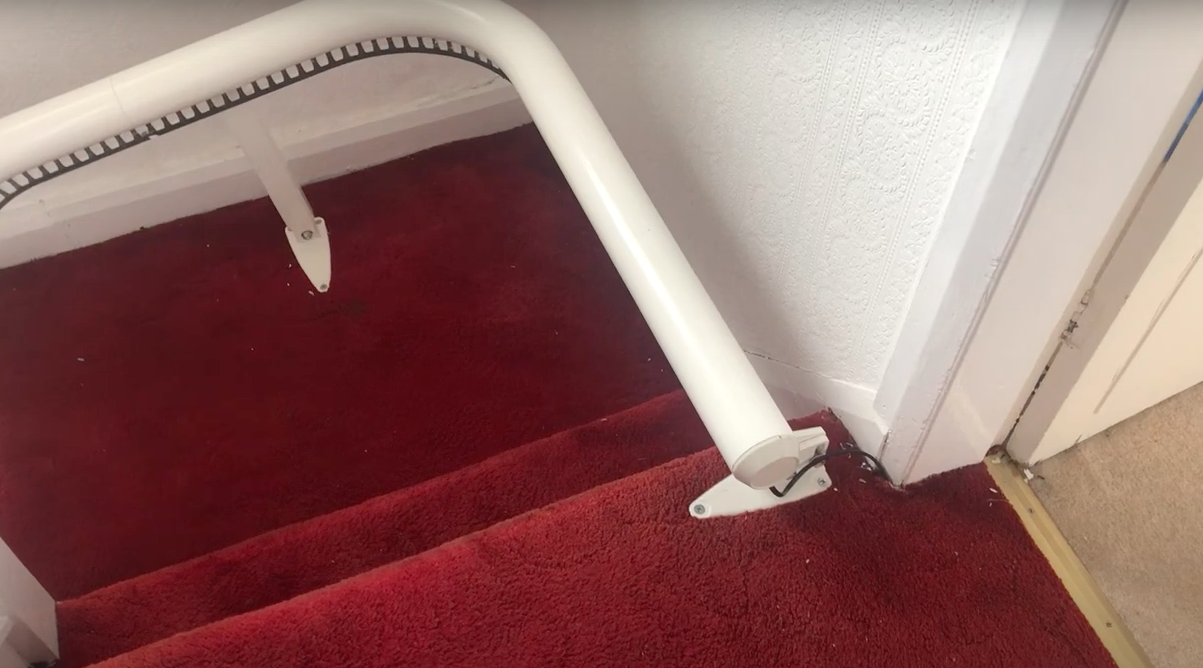
The monorail type of stairlift can also get around obstacles such as doorways and corridors but without having a moving rail to do so. This can be a good choice because fewer moving parts means less can go wrong! Here you can see the “drop nose” rail of the Flow stairlift which helps it carefully avoid a doorway. At the top of the stairs too, the stairlift rail can “stop” just before the doorway because the stairlift doesn’t require a run-on. Some stairlifts need extra space to turn at the top/bottom of the staircase.
Stairlift Rail Types – Standard Straight Rail
If you have a straight staircase, you’re in luck because straight stairlifts are easier to fit and generally much cheaper than stairlifts for curved stairs. With a standard straight stairlift we often recommend our reconditioned Stannah 600’s because of their longevity and build quality. The single straight rail is very robust and the aluminium finish looks great in any home!
So those are a few of the rail types you might find when looking at stairlifts. Don’t worry though because you don’t really need to know all this. Your engineer will explain the best stairlift for your stairs, according to your staircase and budget.
If you’re ready to book a free home assessment and get the wheels in motion, give us a call on 0800 046 3438 or visit our contact page and leave a message. We are also on hand for any advice you might need – so give us a call and we will do our best to help you.
You can also see some of our installations on our YouTube channel here.