


They say prevention is better than cure and it’s especially relevant for fall prevention for the elderly. An elderly fall is far worse than a fall for anyone else. The elderly are far more likely to have a life changing injury from a fall, or do some actual damage.
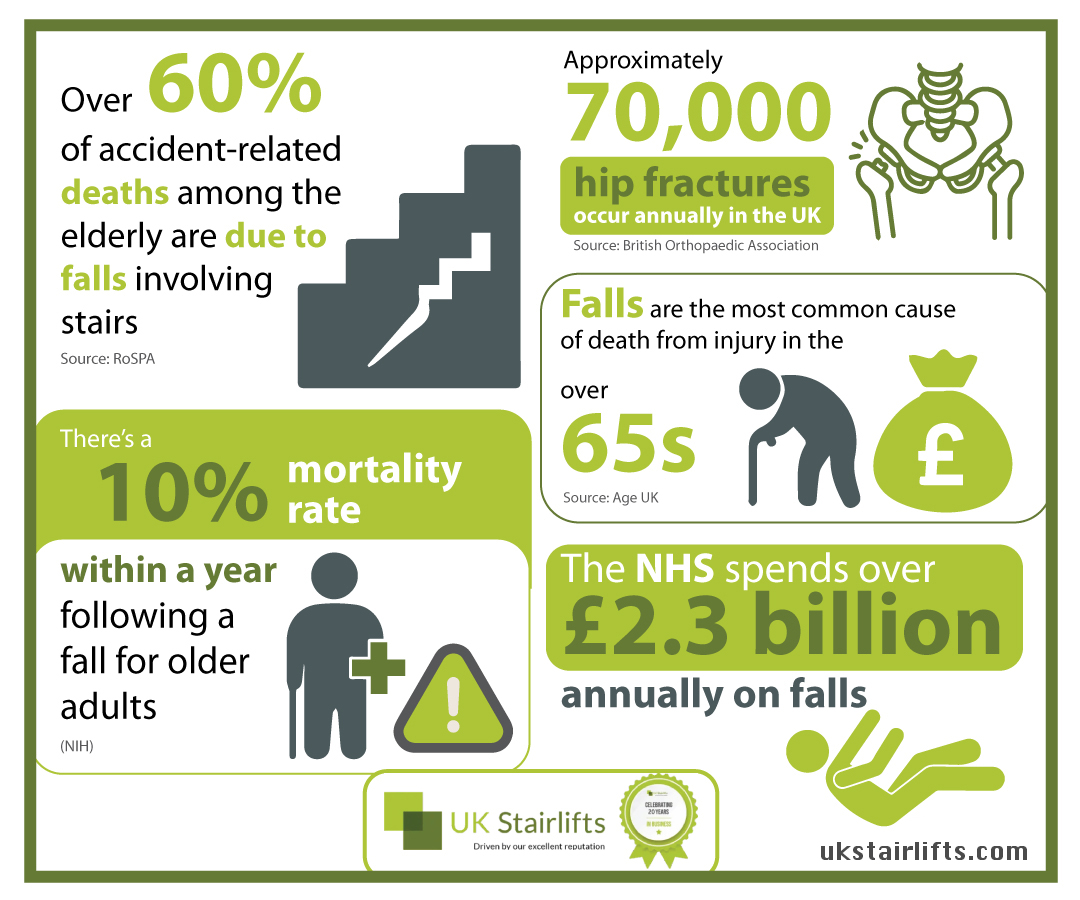
A fracture for example in the elderly will take much longer to heal, and can lead to a downwards spiral. Hip fractures especially are disabling for older adults, with approximately 70,000 of them occurring in the UK annually, according to the British Orthopaedic Association.
Over 60% of accident related deaths among the elderly are due to falls involving stairs. A stair fall can be catastrophic for the elderly. Even if it only leads to injury, that injury can be disabling, especially a hip injury, for example.
Fall Prevention For The Elderly – Grab Rails
If your elderly relative is already unsteady on their feet, it’s worth taking some preventative measures early, to avoid further problems. Grab rails are a super-fast and simple solution too. They’re cheap and easy to install. Just make sure you have them professionally installed and they are safely secured.
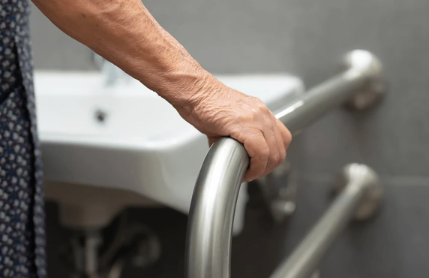
A grab rail should be able to take the full weight of someone during a potential fall. This means it needs proper fitting. Installing a grab rail which is weak, can even cause more problems if it’s used to steady someone and it comes away from the wall.
Grab rails can be fitted around the house according to where there is most need. Usually you’ll find them in bathrooms, on outside steps and anywhere where there is a potential hazard.
Fall Prevention For The Elderly – Handrails
Handrails are generally found on stairs to assist you while climbing or descending. They are super important if someone is unsteady on their feet. If your elderly relative is using stairs and they don’t have a handrail, it’s an easy “win”. Get some installed – it’s relatively inexpensive and can be a lifesaver!
If your staircase already has a handrail on one side but not the other, it’s worth getting both sides fitted too.

Fall Prevention For The Elderly – Environment
Having a tidy house helps and this also means removing obstacles which make moving around more difficult. Can you rearrange the furniture to give you more room for manoeuvre? Are there any obstacles which could be removed such as rugs and sharp furniture edges?
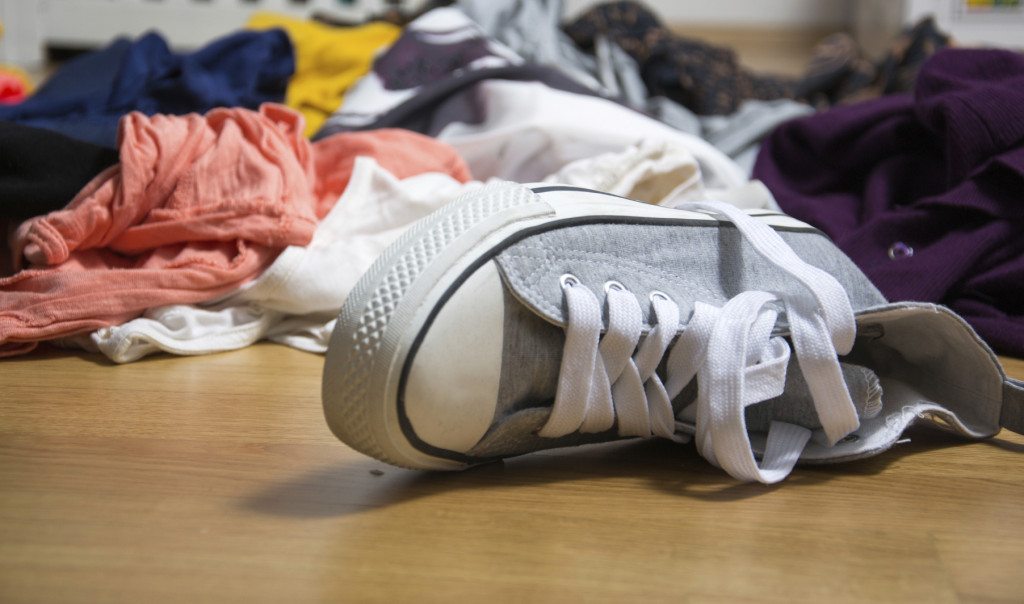
It sounds superficial, but a fall can occur from a small thing such as tripping on a rug or a wire. By carefully going around the house and observing potential problems, you can alter room layout, remove any problem items and fix potential issues.
Is the furniture sturdy should they be needed for balance? Is the lighting sufficient? If a room doesn’t have good lighting, it could cause a problem. Make sure furniture is secure, pathways are clear and there’s good lighting, especially in problems ares such as those with stairs/steps.
Fall Prevention For The Elderly – Regular Health Check-Ups
Is your elderly relative taking regular health check-ups? Eye check-ups are especially important with the elderly because poor sight can lead to more health problems/risk. The NHS recommends that most people have their eyes tested every two years. However, if you’re elderly, you will need more regular eye exams, especially if you have diabetes or with a family history of glaucoma.
Is there is any other health condition present, such as arthritis, for example? If you’re struggling with movement, this can lead to a fall, so it’s important to take preventative measures and keep up with any medication and exercise.
Fall Prevention For The Elderly – Exercises
Depending on your ability, it’s important to keep up with regular exercise in order to maintain your health and ability to move. This is particularly important with elderly people and the more static they become the less able they are to move when they want to.
This is sometimes a reason for an elderly relative not to get a stairlift for example, because the main exercise they get is actually moving on the stairs. Taking this away can mean they don’t exercise at all! This should be carefully weighted up with the possibility of a fall.

When the risk outweighs the benefits, it’s time for a stairlift. One of our clients had a stairlift installed following a fall on the stairs. If you’re unsure whether your elderly relative needs a stairlift, you can ask for the advice of an occupational therapist.
Tripping – Non-Slip Mats & Proper Footwear
A fall is often preceded by a trip and two simple ways to combat a trip are having proper footwear and non slip mats.
In the bathroom especially, a non-slip mat is definitely a good idea. If you have a shower over the bath, the slippy surface of the bath can be a hazard. This is easily overcome with a non-slip mat.
Proper footwear can help avoid problems. Wearing sliders, or open toe shoes can present a hazard. Close foot shoes with good grip can help prevent potential problems of stubbing a toe or tripping over your shoes!
Fall Prevention For The Elderly – Planning For Emergency
Planning for an emergency for your elderly relative is a good idea too. Should they take a fall, are they able to call for help? The fall itself isn’t necessarily the worst of the problem. If your elderly relative is stuck on the floor with no means of getting help, this can be worse – particularly if they’re injured.
Having the means to call for help, such as emergency pull chords in the bathroom, or a mobile phone to hand can give you this reassurance. You can also purchase various personal SOS alarms which link to family/friends. They can be worn around the wrist or neck.

Fall Prevention For The Elderly – Walking Aids
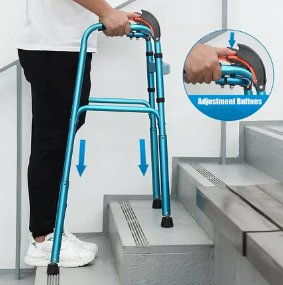
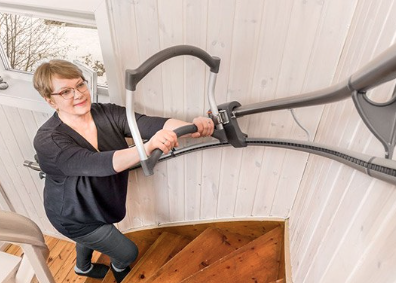
There’s several walking aids which can help the elderly feel more secure on their feet. A walking stick, walkers (with wheels) and walking frames can offer the support needed to move around independently. There’s also devices which help you tackle the stairs in your home, if you’re not ready for a stairlift.
See also our post on alternatives to stairlifts. Here’s two devices which can help the elderly on the stairs.
Fall Prevention For The Elderly – Stairlifts
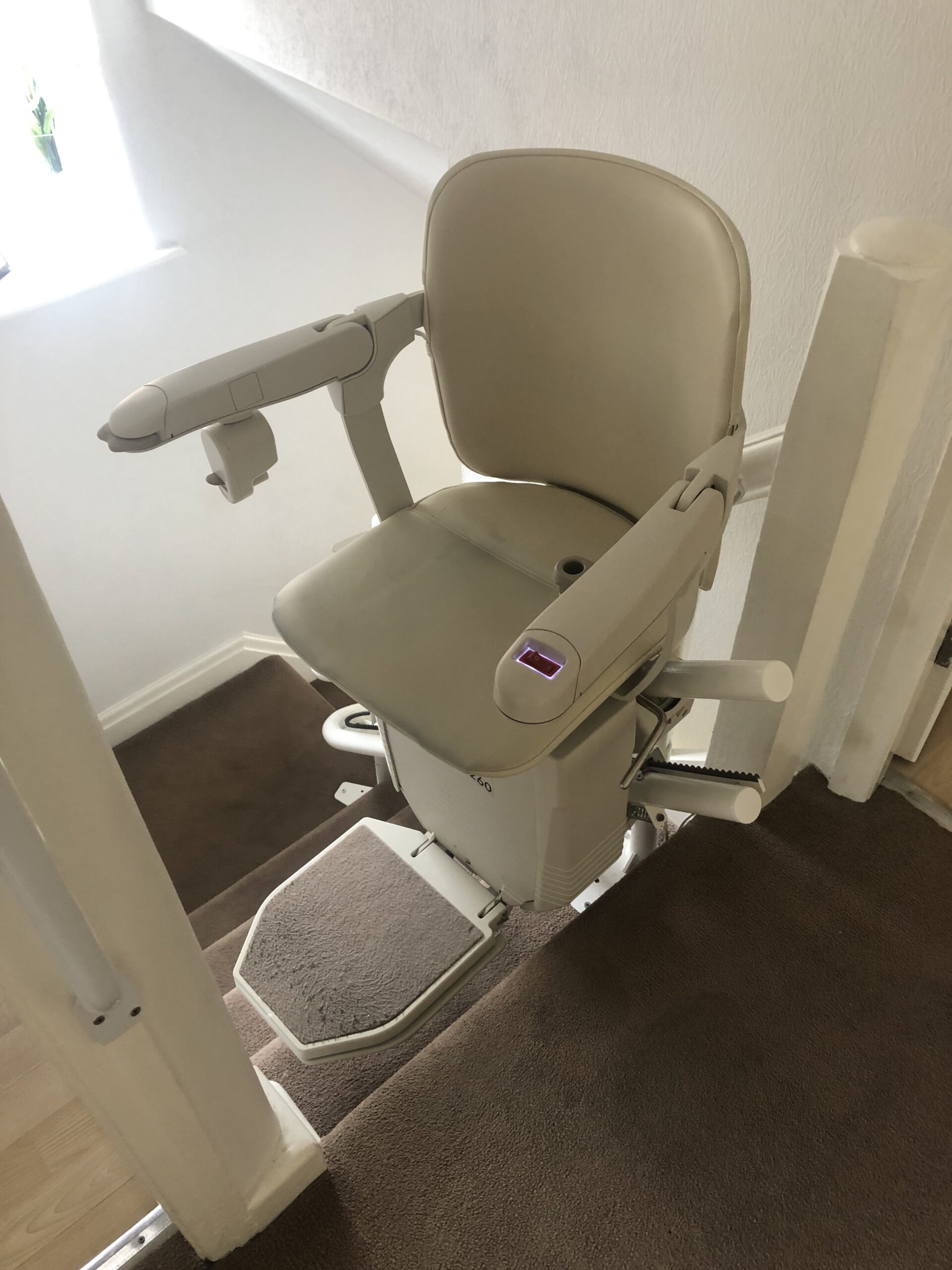
Of course we couldn’t forget stairlifts – since that’s what we do! A stairlift might be an option if there’s a potential for a fall on the stairs. This option should be weighed up against the benefit of your relative getting exercise by walking up and down the stairs.
If the risk outweighs the benefit then it’s probably time for a stairlift. A fall on the stairs can be catastrophic and often leads to a stairlift becoming essential, rather than it being a forethought. It can be difficult to know when this is appropriate. An occupational therapist can help here and give you the best advice.
Summary
There’s many ways you can look after your elderly relatives and keep them safe. The best way is to look ahead and take preventative measures before there’s a problem. A fall in an elderly relative might result in a life-changing fracture which can worsen their mobility further.
Getting measures in place before this happens is definitely a good idea. Many of our clients purchase a stairlift only after a life-altering fall. So if your relative is unsteady on the stairs, this is the first place to look in the prevention of a potential accident.
If you’re interested in a stairlift for a relative or for yourself, give us a call on 0800 046 3438 or visit our contact page and leave a message.