


Convincing Elderly Parents To Get A Stairlift
Are you struggling convincing elderly parents to get a stairlift? For many middle-aged adults, few conversations are harder than persuading ageing parents to make changes for their own safety. One of the most common objections we hear when stairlifts are discussed is:
“But the stairs are good exercise.”
And on the surface, that’s understandable.
For some older adults, climbing the stairs may genuinely be the only regular physical activity they get. Removing that routine can feel like encouraging inactivity—or even admitting a loss of independence.
“I want to remain independent in my own home” – is another common objection.
But the reality is one of the most common reasons older adults lose independence is due to a fall.
Convincing Elderly Parents To Get A Stairlift: Stairs Are Good Exercise

Stair climbing does help maintain:
-
Leg strength
-
Balance
-
Cardiovascular movement
-
A sense of routine and purpose
Many parents fear that installing a stairlift is the first step toward “giving up” of independence. And as adult children, it’s natural to worry that removing stairs from daily life might accelerate the physical decline of your parent.
This concern isn’t wrong, but there’s more to it than that alone.
If physical decline is already happening, and there’s a risk of a fall, a stairlift can prolong independence, and remove an unnecessary risk from the home.
Convincing Elderly Parents To Get A Stairlift: The Unfortunate Reality

At UK Stairlifts, a significant number of customers don’t come to us proactively.
They come after a fall.
Often:
-
After a slip on the stairs
-
After a fractured hip, wrist, or shoulder
-
After weeks or months of lost mobility
-
After confidence has already gone
In many of these cases, the stairlift isn’t a choice—it’s a necessity forced by injury.
And once mobility is lost, it’s far harder to regain than it is to protect in the first place.
The Hard Statistics Families Rarely Talk About
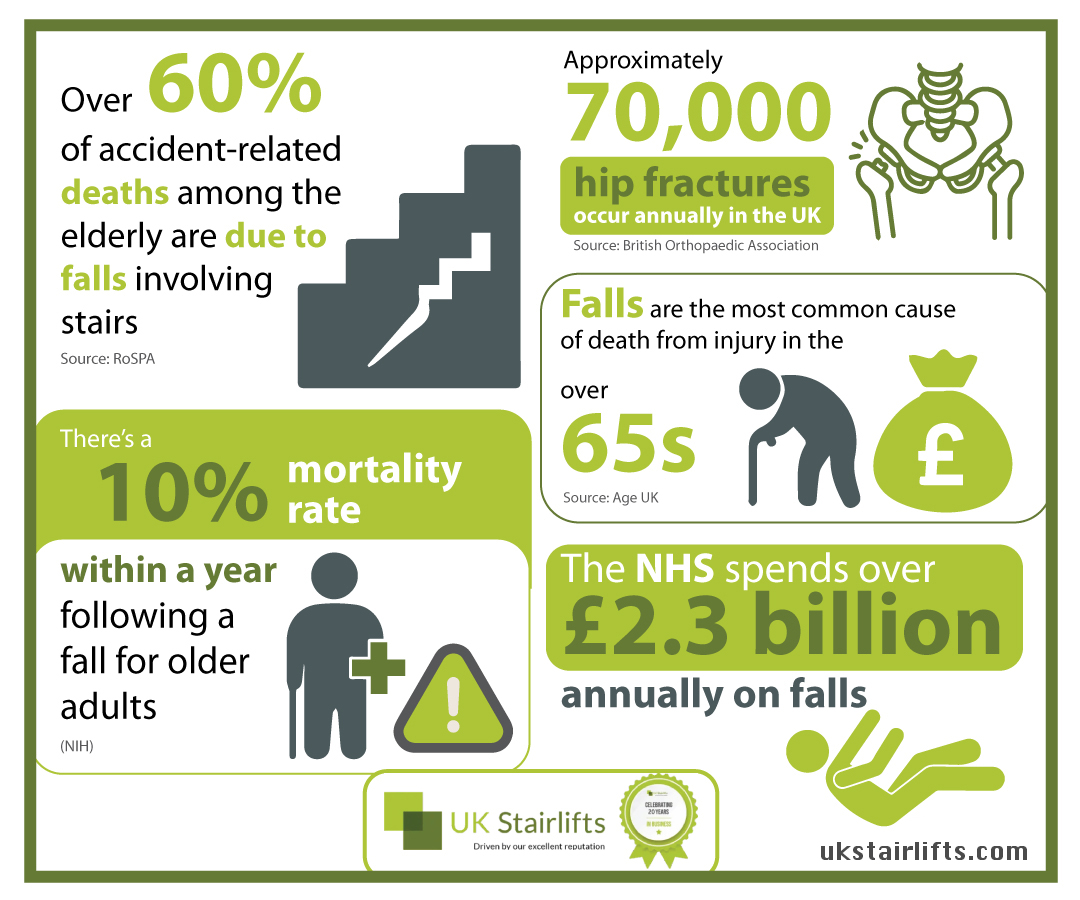
Falls are not a minor risk in later life—particularly on stairs.
-
Over 60% of accident-related deaths in the elderly are caused by falls involving stairs, according to RoSPA
-
There is a 10% mortality rate within one year following a fall among older adults, according to the National Institutes of Health
These aren’t scare tactics. They’re realities that families often only confront after something has gone wrong.
A Better Question to Ask: Where Should Exercise Come From?
The real issue isn’t whether older adults should exercise—they absolutely should.
The better question is:
Should the staircase be the place where that exercise happens?
Stairs are:
-
One of the most dangerous areas of the home
-
Unforgiving if balance or strength fails
-
Often poorly lit or awkwardly shaped
-
Used multiple times a day when tired or distracted
There are far safer ways to encourage movement:
-
Short, supported walks
-
Light strength or balance exercises
-
Physiotherapist-recommended routines
-
Gardening, stretching, or chair-based activity
A stairlift doesn’t remove exercise—it removes unnecessary risk. Stairs are especially dangerous should there be a fall – particularly in older adults who have more brittle bones and will take longer to recover.
Prevention vs Reaction: The Decision Families Regret Delaying
Many adult children tell us the same thing after installation:
“I wish we’d done this sooner.”
Because once a fall happens:
-
Confidence drops
-
Independence shrinks
-
Recovery is uncertain
-
Choices become limited
A stairlift installed before a fall preserves:
-
Mobility
-
Confidence
-
Freedom within the home
-
Peace of mind for the whole family
- Prolongs independence
A Stairlift Isn’t About Giving Up—It’s About Staying Independent
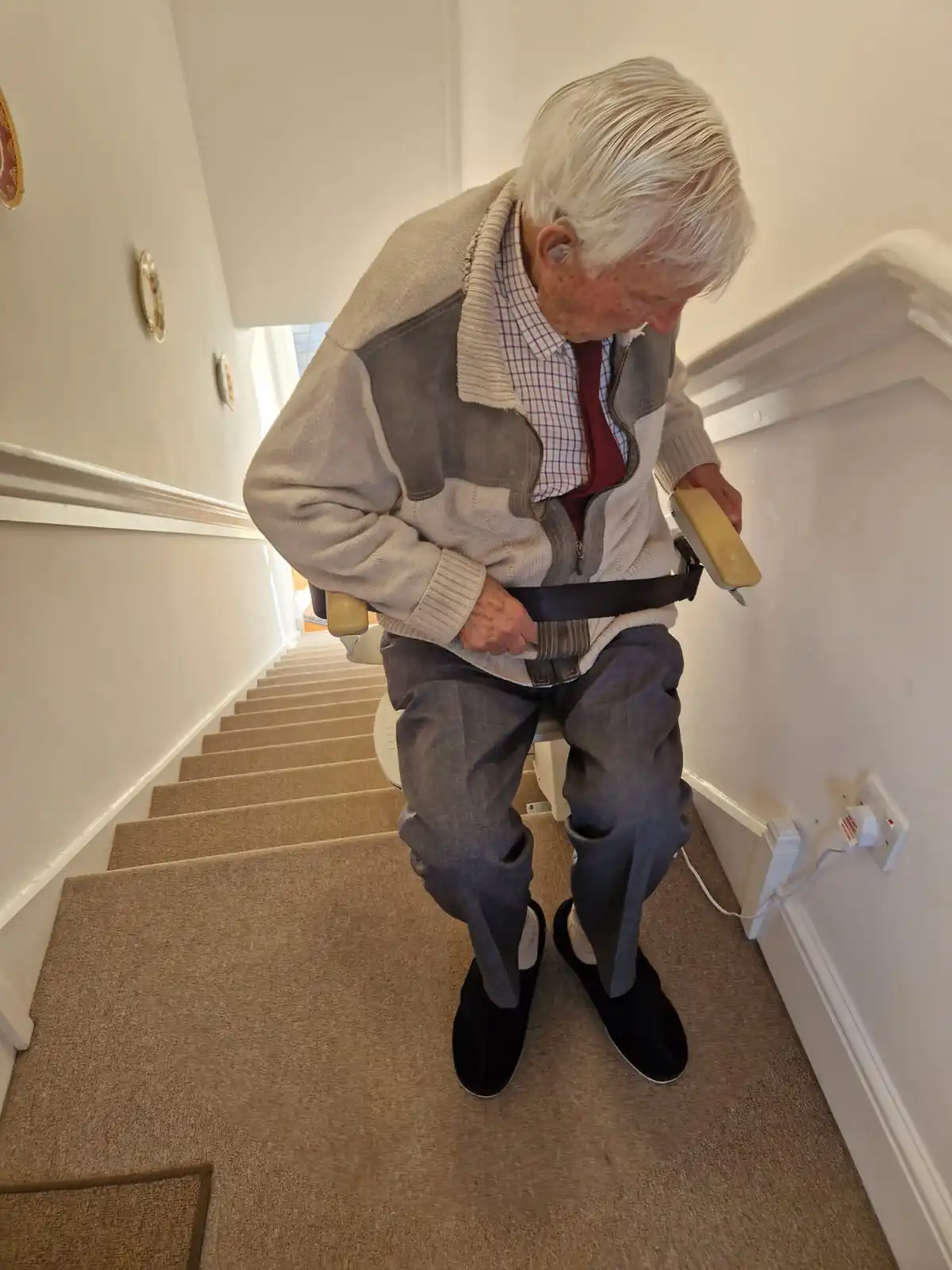
Using a stairlift doesn’t mean your parent stops moving.
It means they:
-
Choose when and how to move
-
Avoid unnecessary danger
-
Stay in their own home longer
-
Keep control, dignity, and independence
For many families, that’s the real win.
Thinking About a Stairlift for Your Parent?
If you’re weighing up safety versus independence, we’re happy to talk it through—no pressure, no obligation.
📞 Call us on 0800 046 3438
or
👉 Get a free, friendly assessment – visit our contact page.
Whether it’s a new or reconditioned stairlift, we’ll help you make the right decision before an accident forces one.
You can also visit our YouTube channel here and see some of our installations.