


Here’s 10 stairlift problems solved by our clever engineers! We’ve encountered a number of stairlift problems over the years. Problems can be a good thing because each time we get an new issue, we’re better prepared for the next one! Here at UKStairlifts we have over 20 year of experience in the stairlift industry. We genuinely believe that the problems we’ve encountered have made us better at what we do!
For example, we choose only the best stairlifts for our customers – both reconditioned and new. We know which stairlifts have the most problems in their later life. So we simply don’t use those models when it comes to installing them for our customers. Fewer problems for our customers means fewer problems for us too! We back all our stairlifts with a minimum of 2 year warranty – including call-outs, parts and labour.
We want our stairlifts to be problem free and we do our best to make sure our customers get the best experience from their stairlift. However, as stairlifts are electrical and mechanical devices, they are prone to breakdown. Especially as they age. So some problems are unavoidable.
In this post, we’ve compiled a list of the 10 problems we’ve experienced with stairlifts in the last year and their solutions.
10 Stairlift Problems Solved – #1 – Electrical Fault
This problem stairlift was in Manchester and there were a couple of issues which we fixed for the customer. One of them was a faulty switch. This is sometimes an issue, particularly on older machines. The problem was intermittent and electrical. With an electrical problem it is often down to a loose wire, or a connector which has detached.
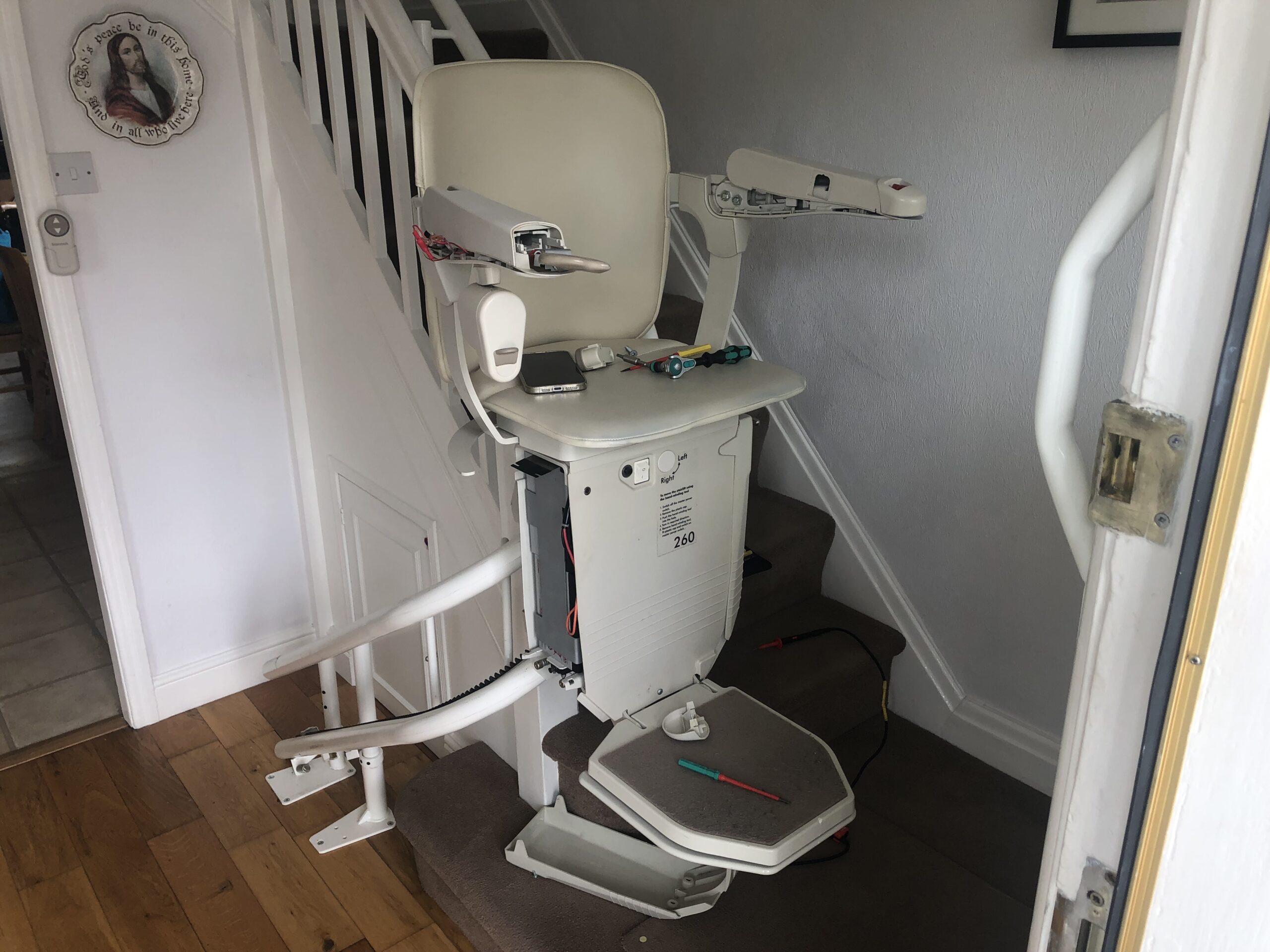
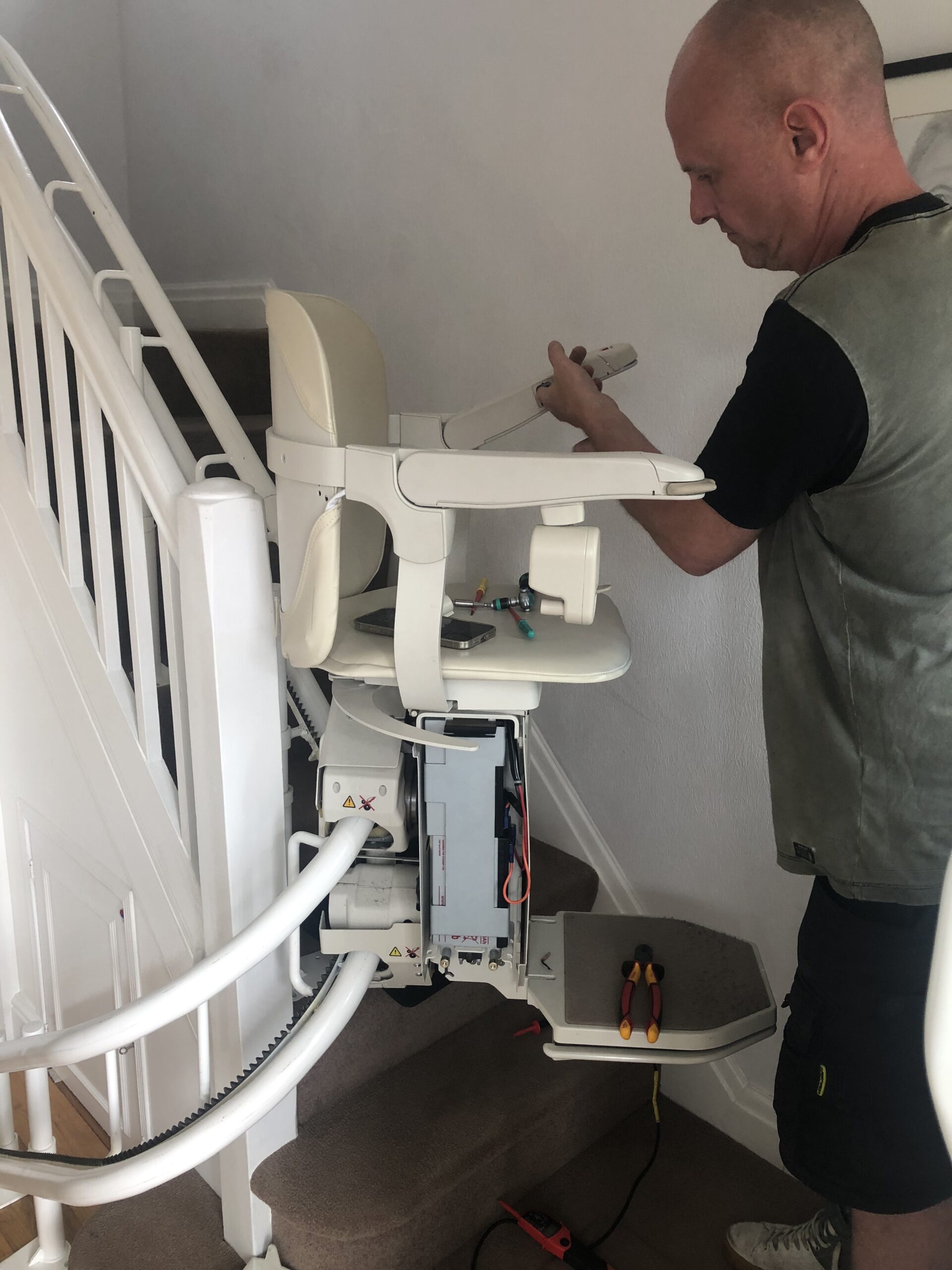
This was initially a difficult one to find, so our engineer had to test a number of components on this one until he finally found the issue. It wasn’t a loose wire in the end but a faulty component. After testing a number of components he finally found the troublesome one. It was then replaced and the lift started co-operating again!
10 Stairlift Problems Solved – #2 – Stairlift Sinkage
Stairlift “sinkage” refers to the natural inclination of a stairlift to drop as it beds in to the carpet and staircase over time. If a stairlift gets a lot of use, and/or has a heavy user, it is more prone to this happening. A thicker carpet can also have an effect as the carpet threads get pushed down with the force of gravity over time.
With this particular stairlift, the sinkage had changed the riding position of the stairlift which was colliding with the top step. This had begun to cause an issue, and was the reason for our stairlift engineer being called out.
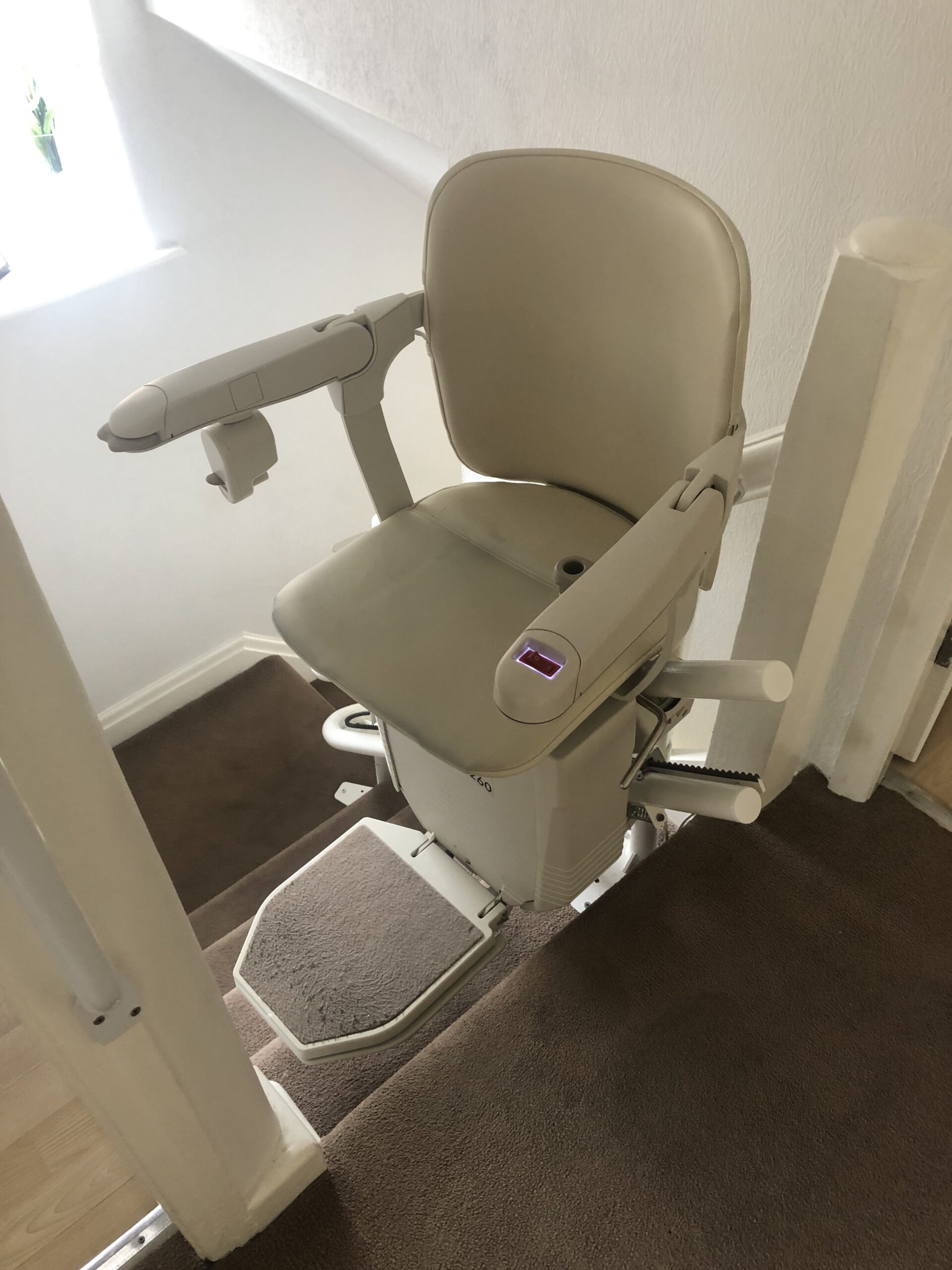
The solution to this one was to raise the stairlift rail slightly, to allow the stairlift to continue past the top step without colliding with it. Ideally when a stairlift goes in, the possibility of the bedding in of the rail feet, and therefore the rail drop, should be taken into account. This is more likely with a heavier than average stairlift user.
10 Stairlift Problems Solved – #3 – A Folding Rail Issue
Here’s a similar issue although this time the rail drop had caused an issue with the folding rail. As the rail dropped with use, the folding part of the rail begun to touch the floor. This meant that it was no longer closing properly. Here’s a picture of the troublesome stairlift, showing the folding rail.


The undercarriage of the stairlift was colliding with the folding join, which was slightly open, due to the rail not being able to fully close. As a solution to this issue, we lifted the rail upwards on the staircase to create more room for it. You can read our stairlift repair case study of this problem here.
10 Stairlift Problems Solved – #4 – Charge Point Collision


This was another interesting stairlift problem. This time the charge unit had broken on the stairlift base unit, and the battery had run down. The problem here was that a retro-fitted charge point had been placed on the stairlift rail on a bend, after the main installation. With these particular stairlifts (Flow 2a), the charge point needs to be on a straight portion of the rail, so this doesn’t happen.
Because the stairlift had collided with the charge point and broken the charge unit, It was unable to charge and the battery had run flat. This fix took a while because a new charge point needed to be fitted to a straight portion of the rail. Here’s a couple of images showing the charge plate (left) and the charge unit (right). The unit runs over the charge plate and makes the connection with the power, charging the stairlift when it is parked. But because the two had collided, the unit was broken and no longer worked! Read more about this in the repair case study here.


10 Stairlift Problems & Solutions – #5 -Stairlift Colliding With Newel Post
This one was a problem during fitting and unfortunately the original measurements did not take this into account. This is why the stairlift assessment or stairlift survey is so important because it can avert problems like these before they become problems! If you look closely at the picture on the right below, you’ll see the stairlift foot plate is wider than the allowable space. It collided with the newel post at the base of the stairs.
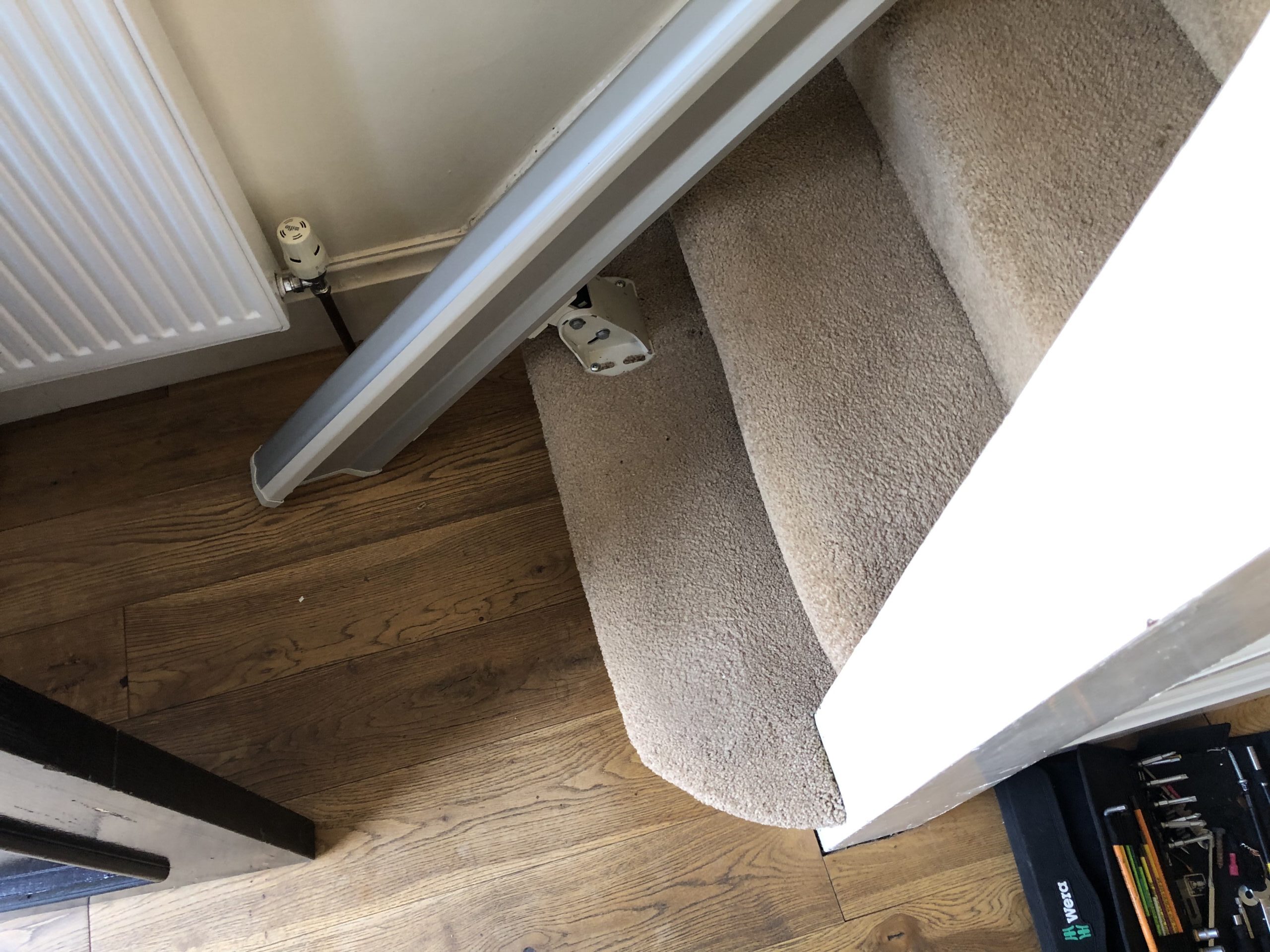
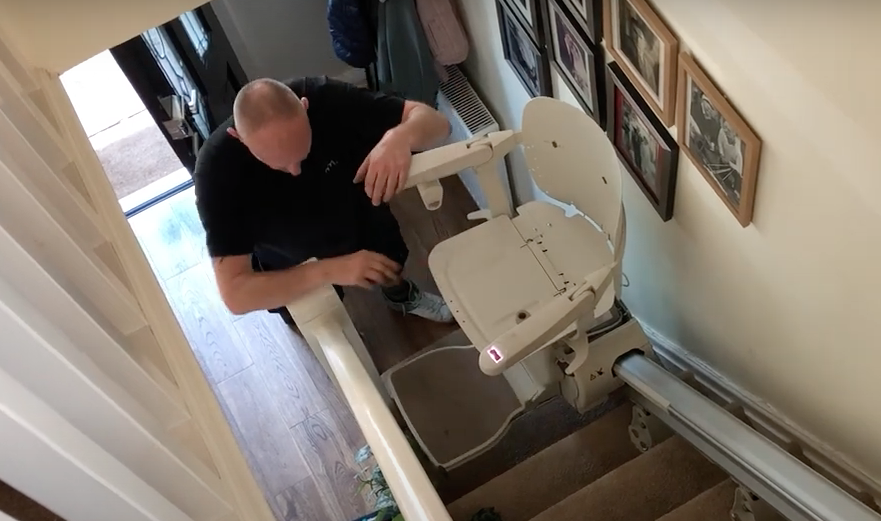
For this one, we had to ask the client to remove the radiator, and return at a later date to finish the job. As you can see in the picture on the left (above) the radiator was stopping us moving the rail further back against the wall, which was ultimately the solution to this particular problem.
10 Stairlift Problems & Solutions – #6 – Door At Staircase Base
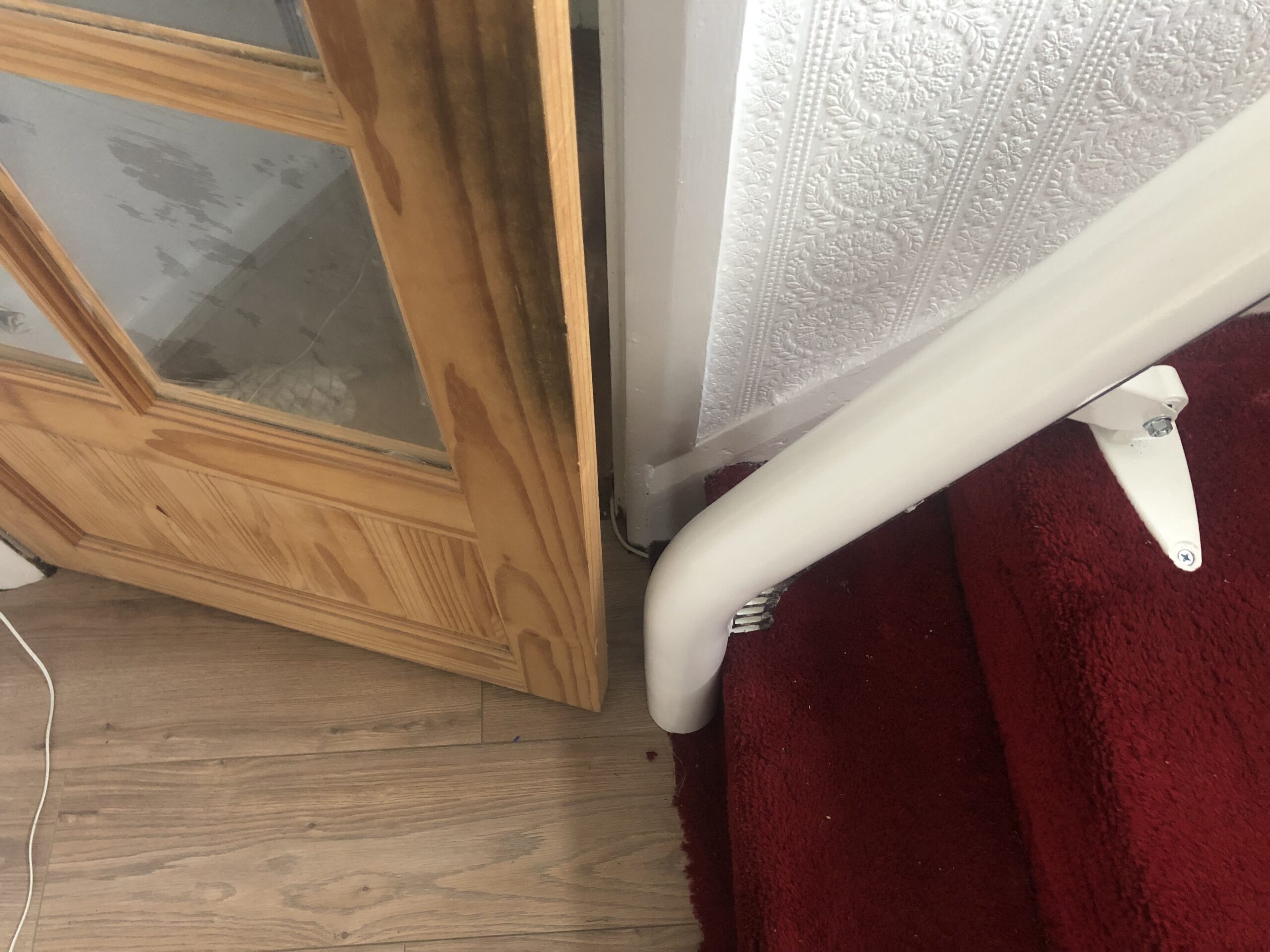
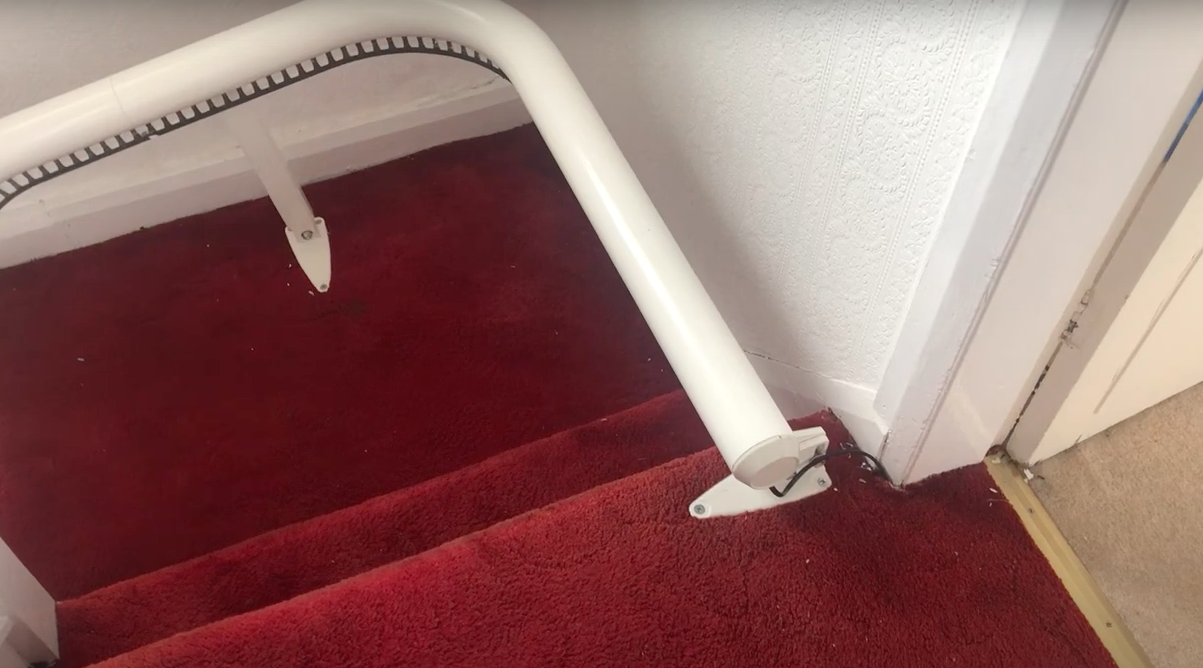
This one was a tight fit and there was doors both at the top and the bottom of the staircase. This meant we had to use a specialist stairlift. We chose the Flow 2a stairlift which is one of the best stairlifts for narrow and difficult stairs.
If you look at the images above, you’ll see how the rail’s “drop nose” design allows it to be placed very close to the door without being an obstruction. Other stairlifts can’t cope with certain configurations and our “go-to” stairlift for awkward stairs is the Flow X or the Flow 2a.
10 Stairlift Problems – #7 – Stairlift Exchange
This was an original “Flow” stairlift which no longer worked. This is often what our engineers are called out for; to replace a stairlift for a newer model.
As stairlifts age, sometimes their batteries can be replaced for new ones and they will still have a certain lifespan left. But for certain models, parts become obsolete and are no longer attainable. Typically a stairlift will last for 10 to 15 years depending on how it has been used and treated. Regular servicing and maintenance can help extend the life of a stairlift too.
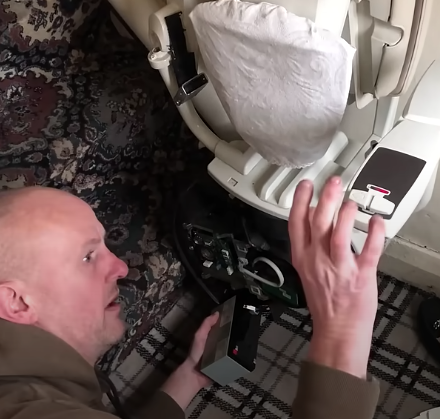
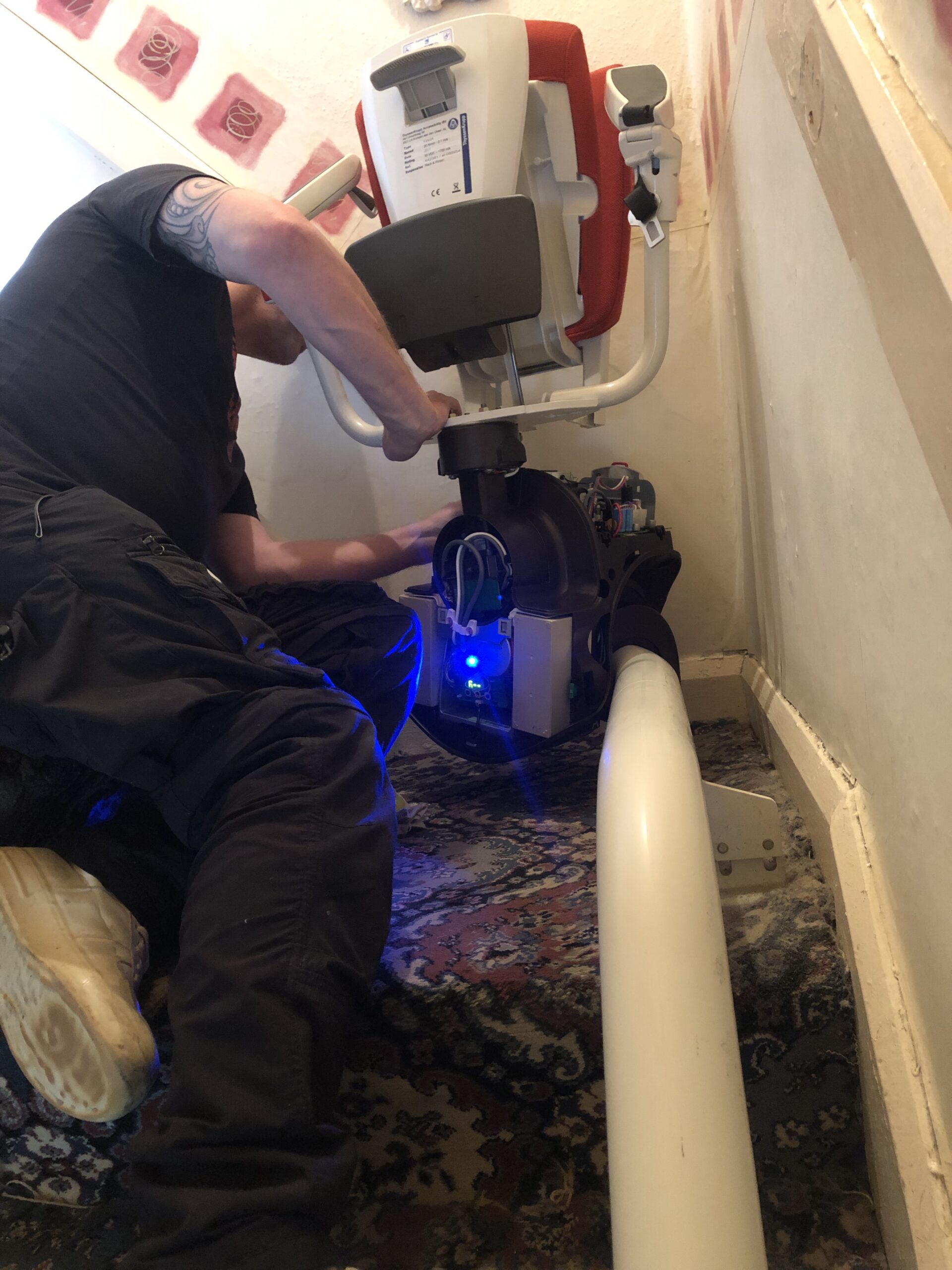
This one had completely “given up the ghost” as the saying goes. We needed to first replace the stairlift batteries in order to drive the old model off the rail and replace it. In this picture, you can see our chief engineer, Scott, replacing the batteries before replacing this model with a newer version. On the right you can see the newer version going in (the Flow 2a).
10 Stairlift Issues – #8 – Staircase Too Steep
In a recent stairlift installation we carried out in Sheffield, there was a major problem. This was a stairlift for a 20 stone client, who needed a heavy duty stairlift. We chose the Stannah 600 which have a weight capacity of up to 25 stone, (5 stone heavier than our client needed).
With the stairlift installed, our client tried it out. It didn’t work! This was due to the angle of the staircase, which was much steeper than an average home. In certain UK homes, particularly older houses, stairs are much steeper than normal.

Most stairs are angled from around 30-37 degrees with building regulations putting them at a maximum of 42 degrees for general use. However, older build houses had their stairs installed before these regulations came into being.
So with this particular installation, we had a problem. The stairlift couldn’t take the weight at such a steep angle, which put a heavier load on the motor. The solution? We had to pull the stairlift out and replace it with a Bruno – a much heavier weight stairlift. The Bruno heavy weight stairlift can cope with up to 30 stone.
10 Stairlift Problems Solved – #9 – Very Narrow Stairs & Stone Steps
We have definitely coped with some narrow stairs in our time. In fact, we’ve become known as the stairlift suppliers who “can”, when it comes to stairlifts for narrow stairs. But this one was a particularly difficult one. Not only were the steps very steep and narrow, but they were also stone steps. With stone, it’s more difficult and you can’t make any mistakes. Each screw you put in risks cracking the stone.
This one was such an interesting one we wrote a case study on it.


With other stairlift suppliers walking away from this one, we had to help. We put in a Flow X, the only solution for such a difficult setup. Our client my Brushett had a rare muscle wasting condition which meant he was vulnerable to falls. We even took the lift into his bedroom, so he was safe away from the stairs when he got on/off the lift.
10 Stairlift Problems – #10 – A Four-Floor Metal, Spiral Staircase
Never ones to shy away from a challenge, we recently took on a four-storey spiral staircase in Plymouth. This one was a largest stairlift we have tackled! The metal floor brought up some similar issues as the previous stone floor example.
Each screw left a hole in the steel floor. So we couldn’t be making mistakes and leaving holes everywhere! With a wood staircase, and carpet, this isn’t such an issue. Screws can easily be removed and replaced in a different place.
Of course the main issue was the staircase itself! The only stairlift which would cope with such a “battlefield” was the Flow X! The Flow X is a very versatile stairlift. It copes with even the most difficult staircases! It’s ASL technology is patented and means it can tilt, travel and pivot simultaneously.

This was one of our biggest challenges – see the case study here.
Summary
We’re not shy when it comes to stairlift problems and we’re here to help! We can’t help with every problem however because we don’t deal with all makes and models of stairlift. If you have a stairlift problem, give us a call on 0800 046 3438 or leave us a message on our contact page.
You can also visit our YouTube channel and see some of our problems solved and our installations.