


In some situations when it comes to stairlifts for very narrow or awkward staircases we will use a photographic stairlift survey. This isn’t normally required; usually a stairlift survey can be done manually by taking exact written measurements of the staircase. However, in more extreme cases, where a staircase is unusually narrow or awkward, a photo-survey is required.
Photographic Stairlift Survey – What Is It?
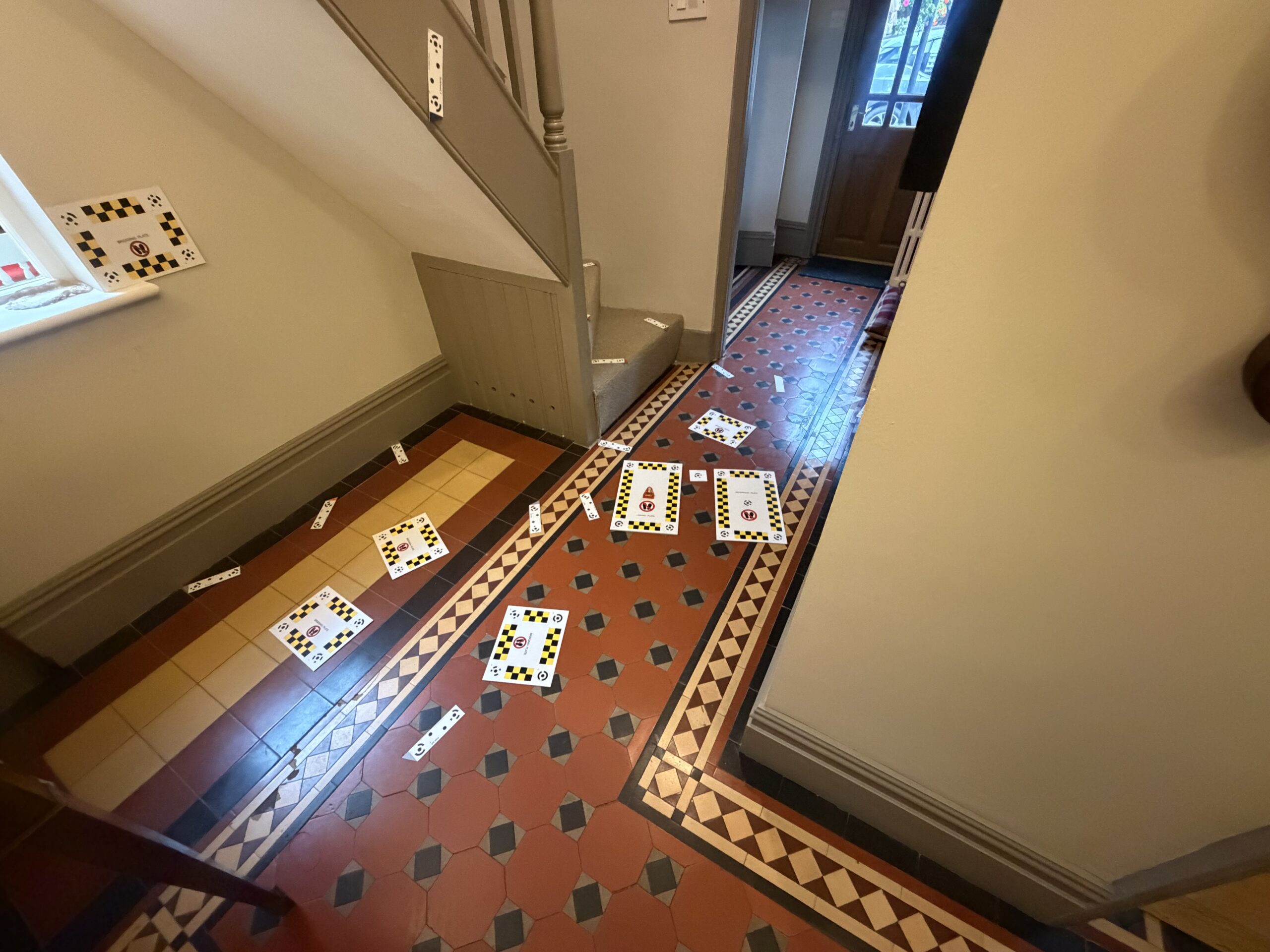
A photographic survey helps to map out the exact measurements of a staircase so that a rail can be customised for a perfect fit. This is for the Flow X stairlift which is used where no other model will fit. Special mapping cards are placed on points on the staircase.
They are also placed on surrounding walls, handrails and overhead obstacles to map out exactly the measurements required for the stairlift to manoeuvre safely. Even skirting boards are included so as to create the perfect fit.
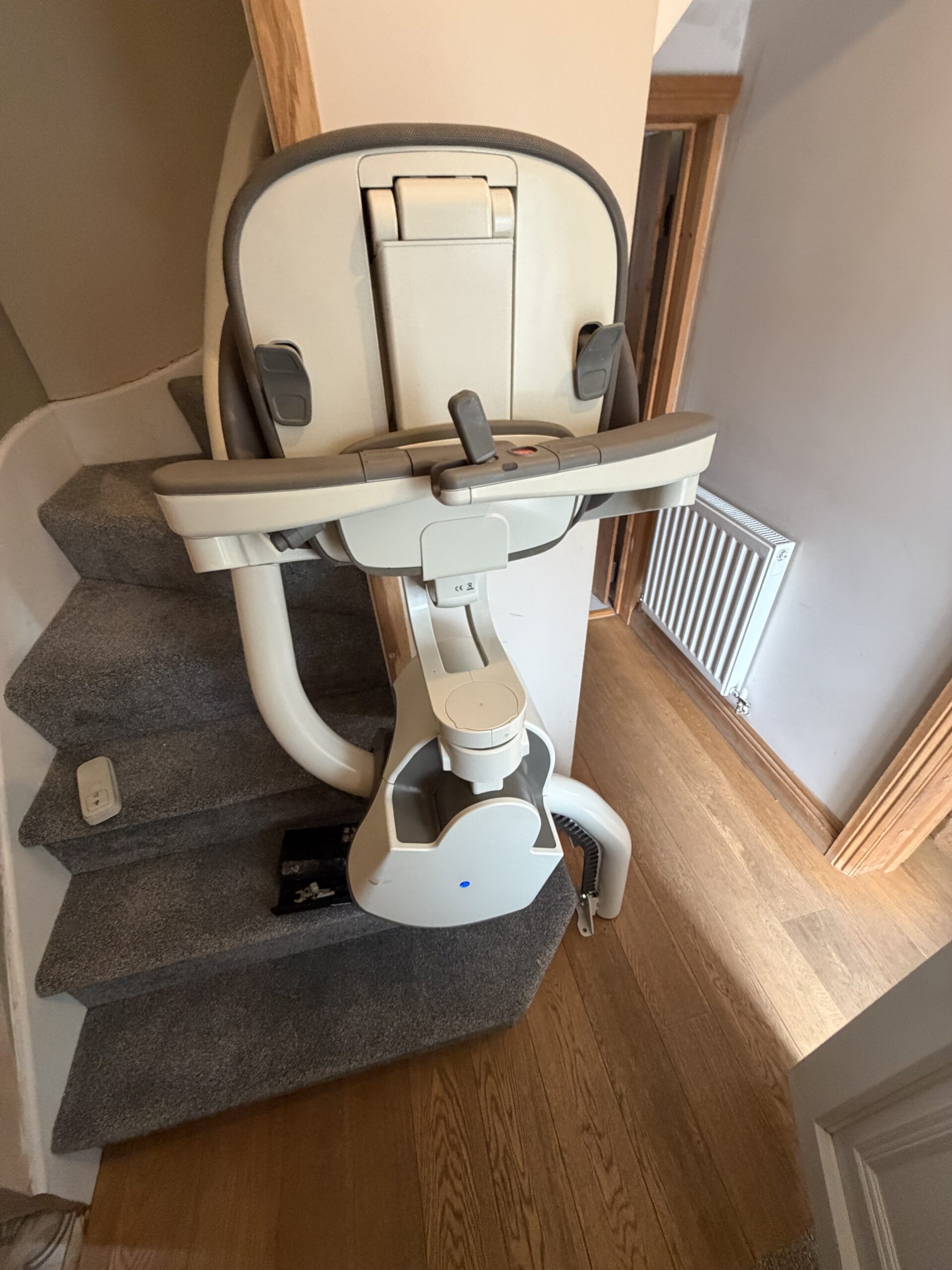
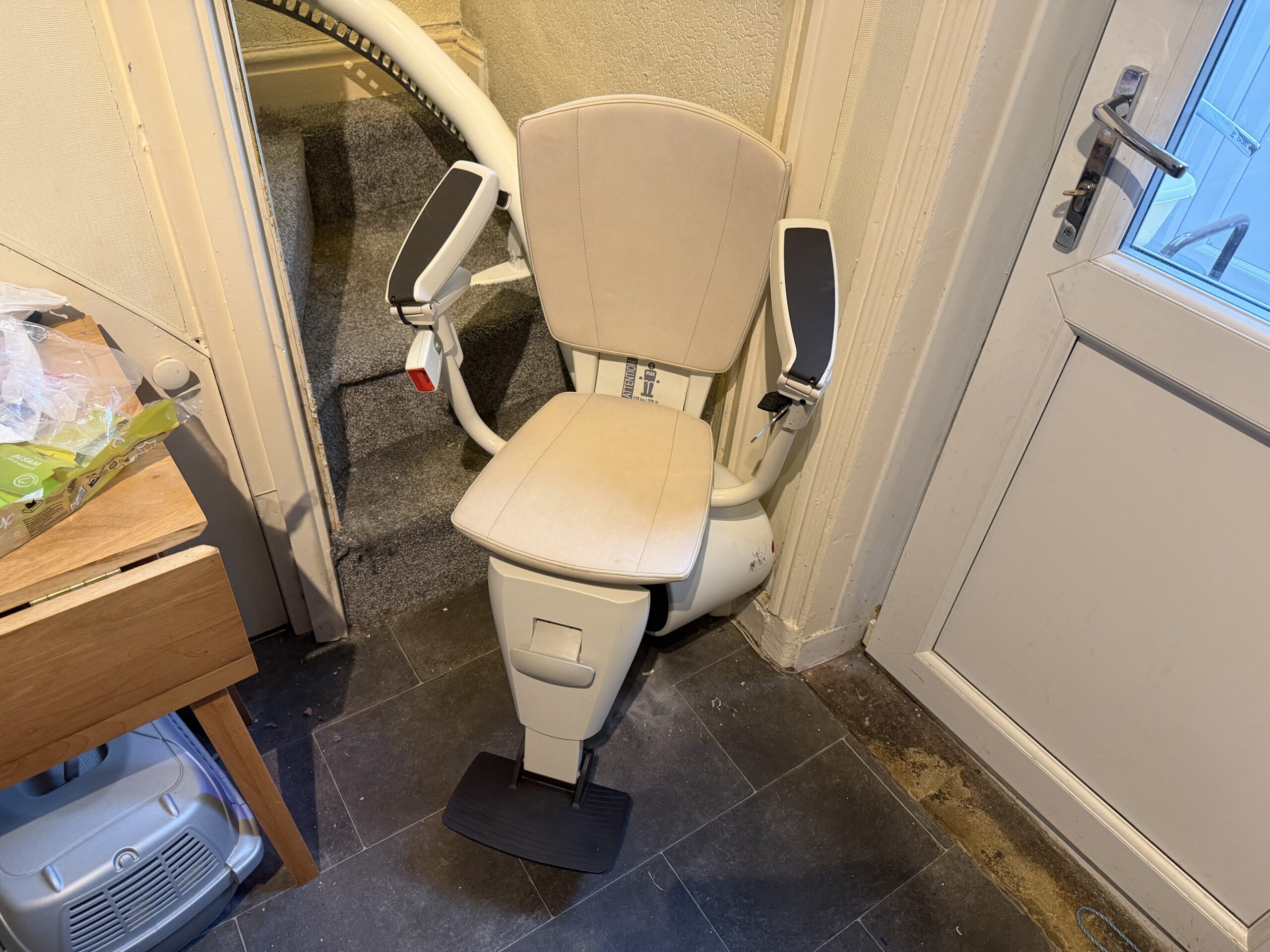
The photographic survey is also used to determine whether a stairlift installation is possible. Usually, even on very awkward stairs, the Flow X can be installed. The Flow X is used where nothing else can be because it is the nimblest stairlift on the market.
Photographic Survey – The Process
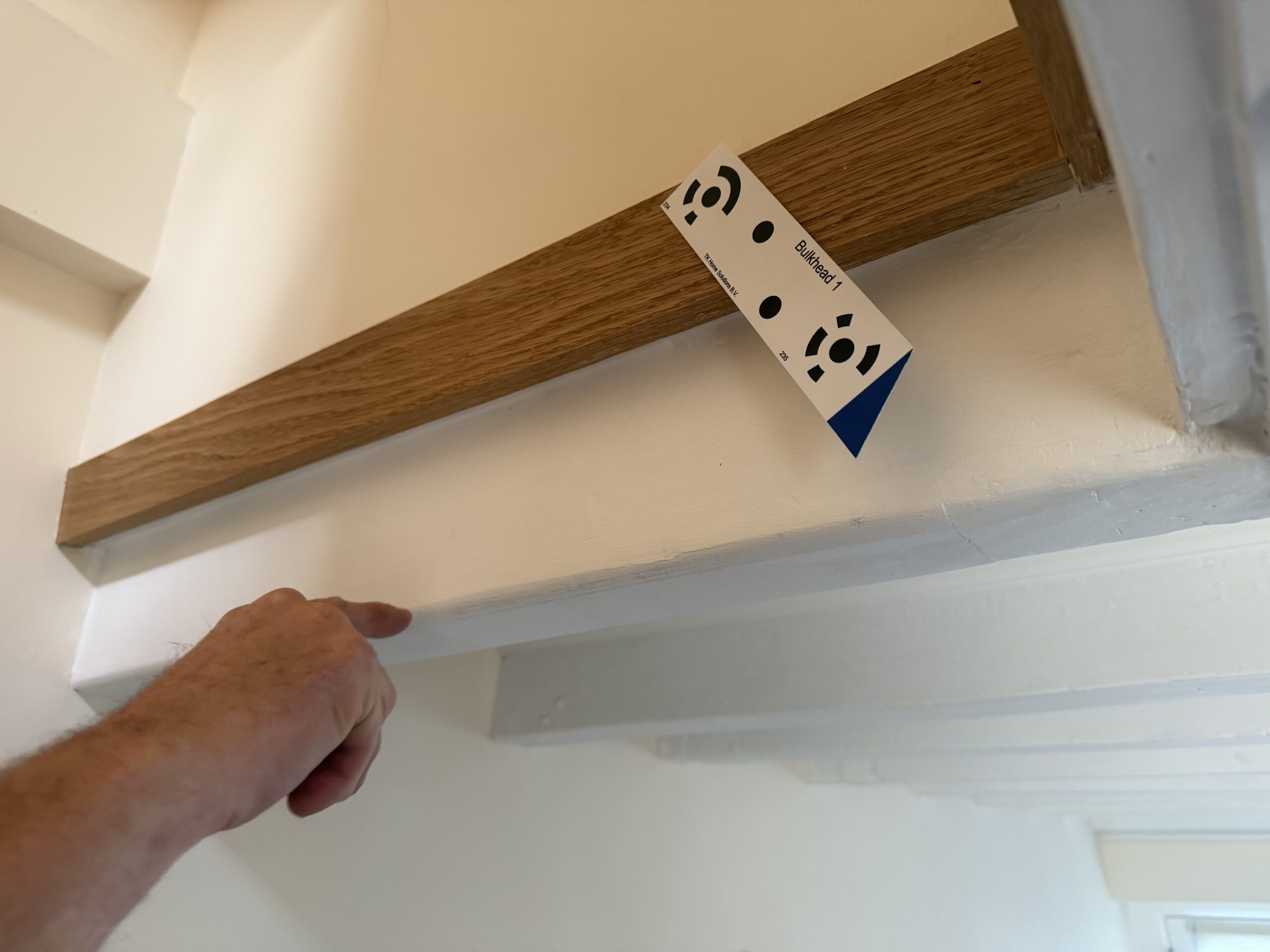
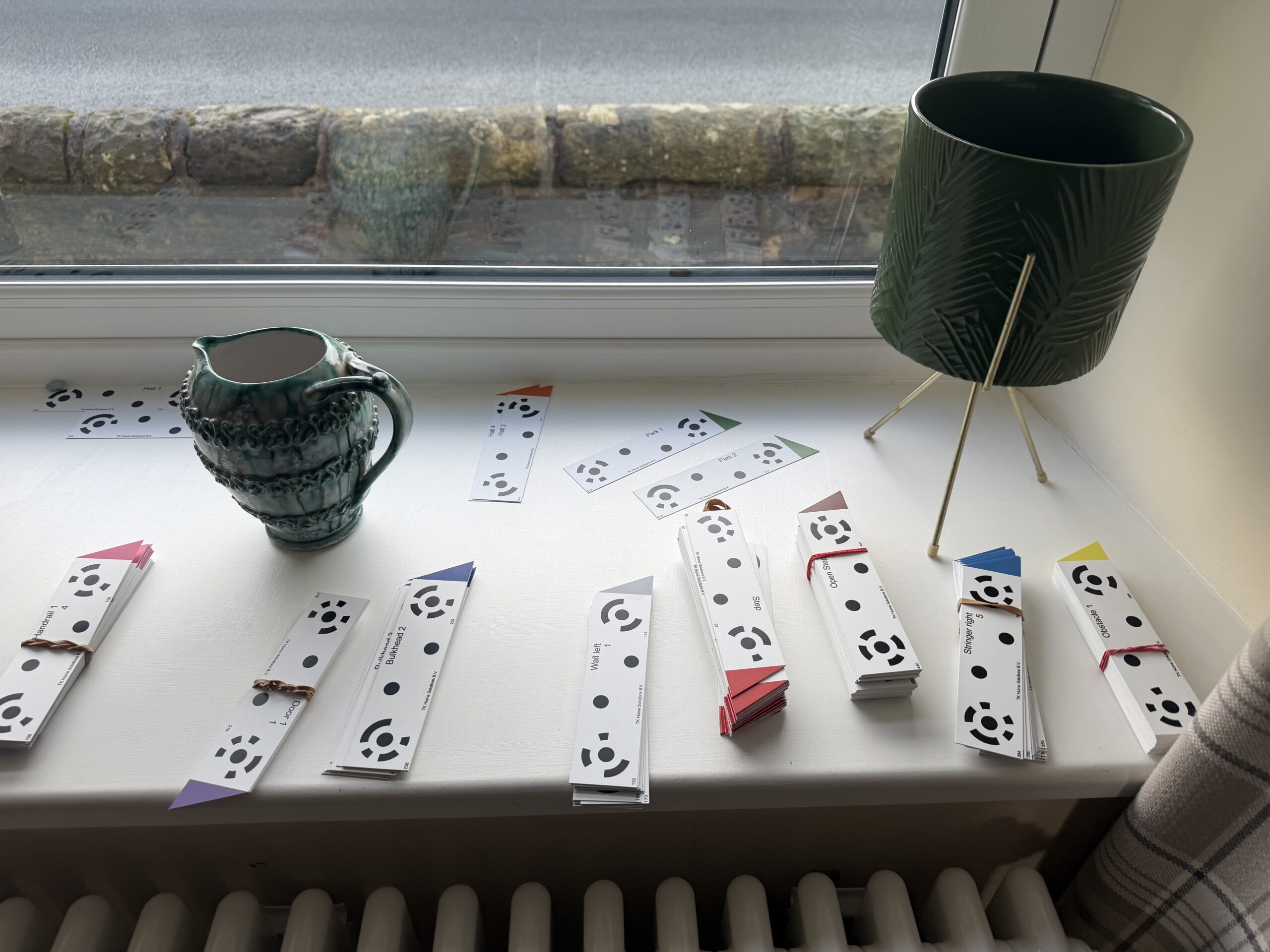
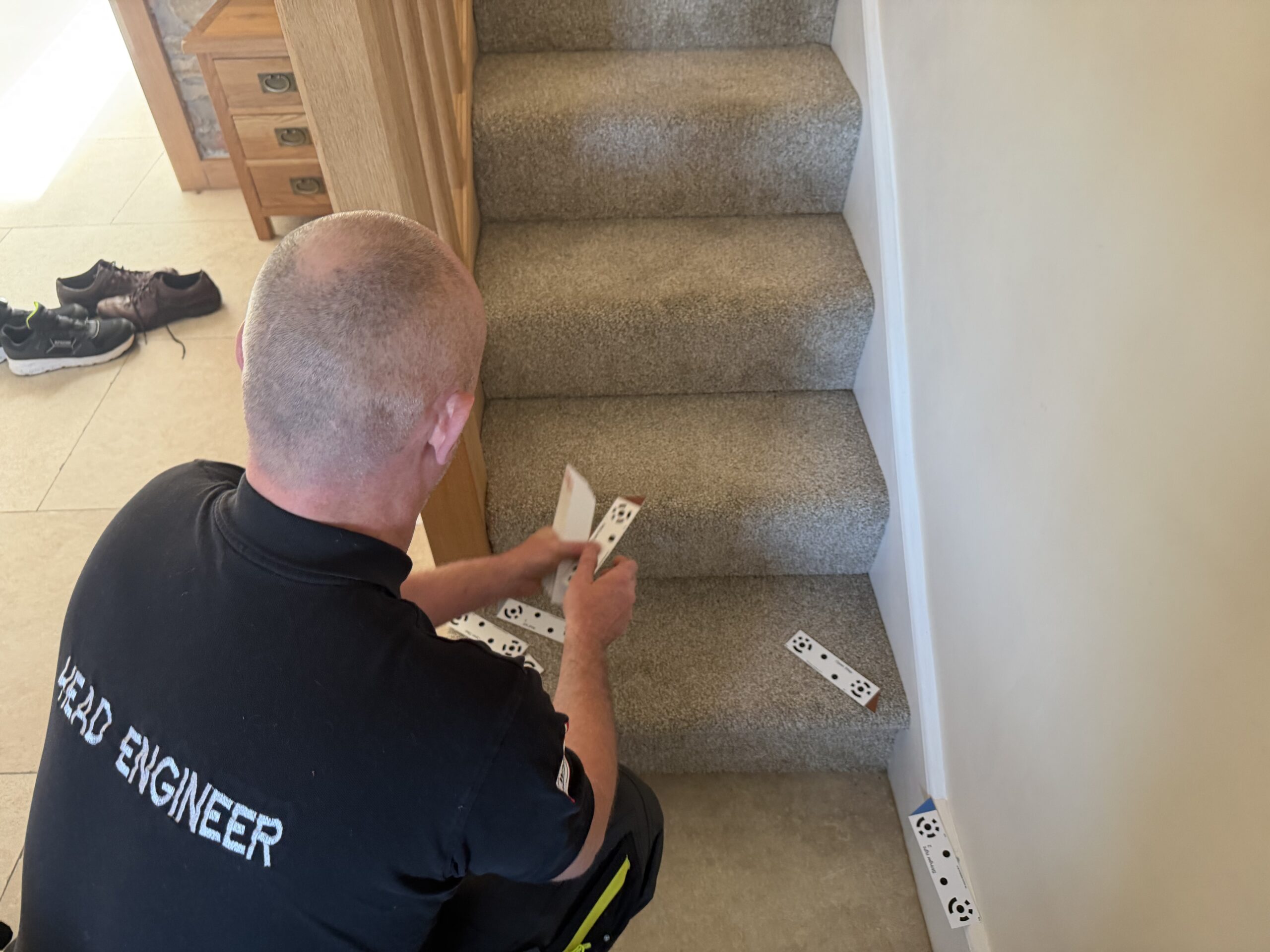
The mapping of the staircase starts by placing cards which indicate the vital measurements needed for the stairlift rail customisation. In this photograph you can see our engineer placing cards around the staircase. The cards are also placed on the skirting boards which can affect the stairlift positioning.
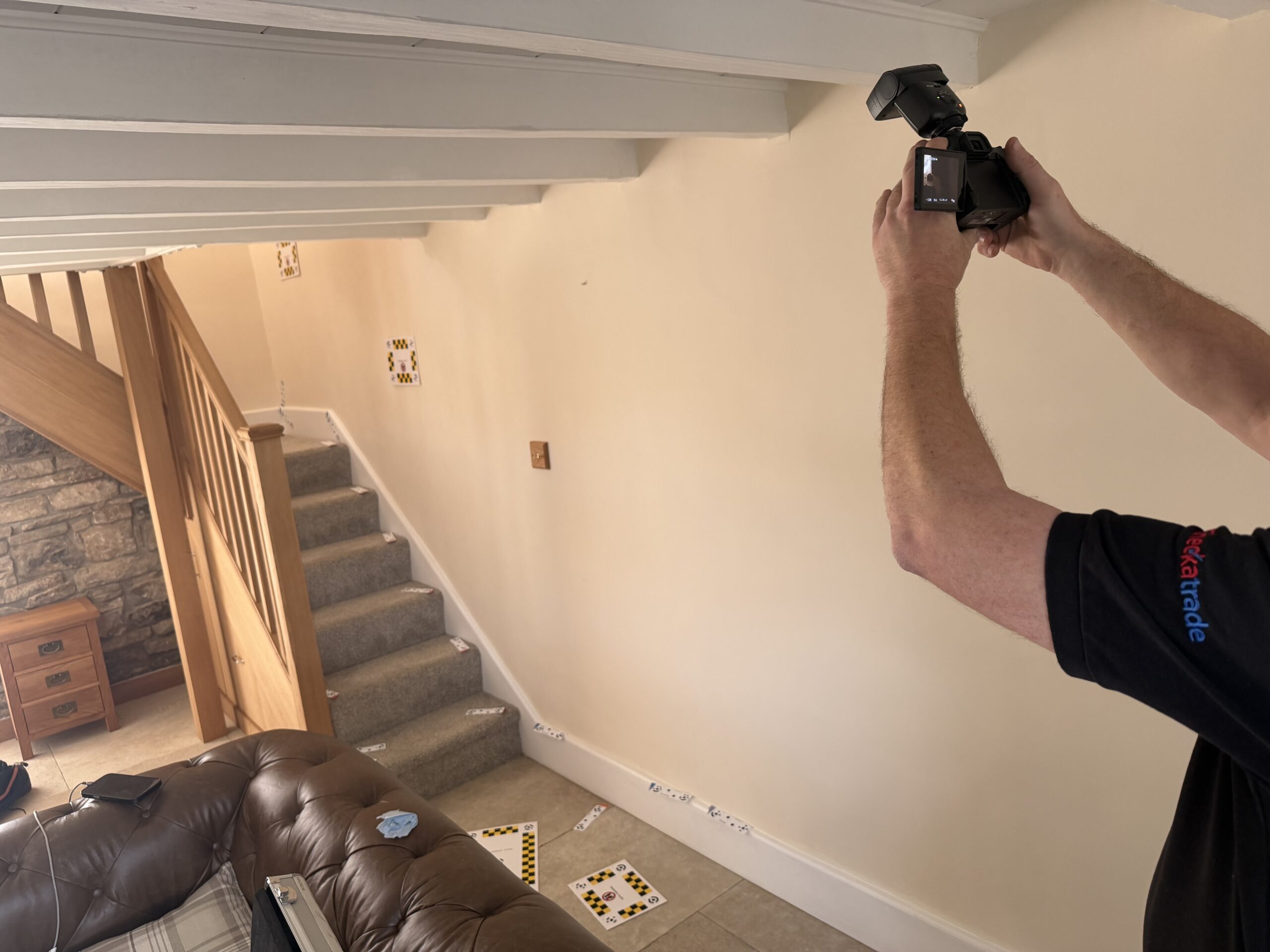
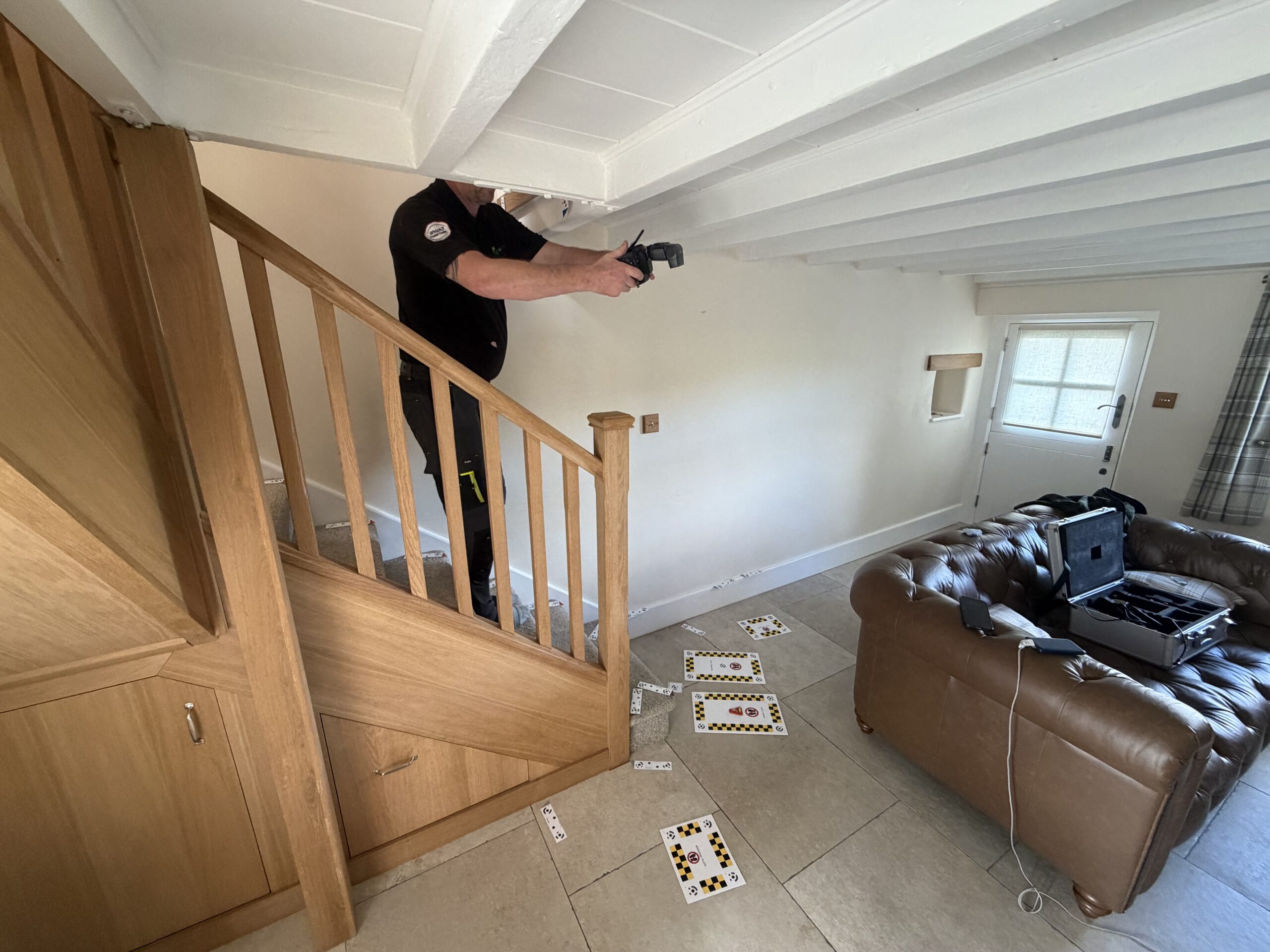
Once all the cards have been placed on the staircase, multiple photographs are taken of the markers. These images can then be used to create a digital image of the staircase, with all the vital measurements noted.
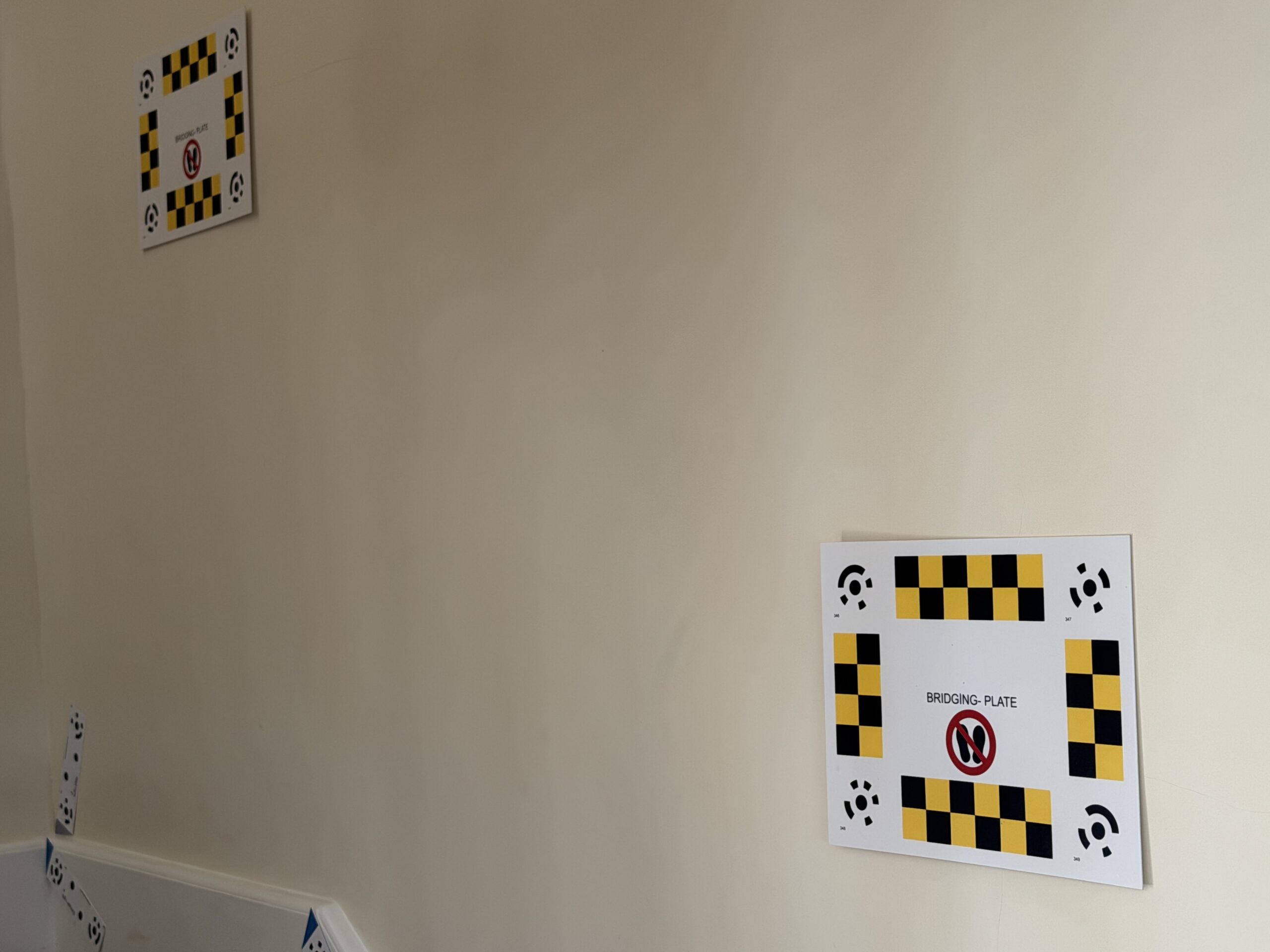
Markers also need to be carefully placed to connect the cards showing overhead obstacles. If the cards cannot be connected digitally the mapping won’t work. So connecting markers are used to join up the markers, wherever they are positioned. Markers known as “bridging plates” are used to connect the images of cards showing overhead obstacles to those on the floor.
Uploading Images To The Computer
The photos are then uploaded onto a computer and a digital image is created of the staircase. It shows overhead obstacles (bulkheads), skirting boards (runners), steps, walls and hand rails. The start and end positions of the stairlift are also noted.
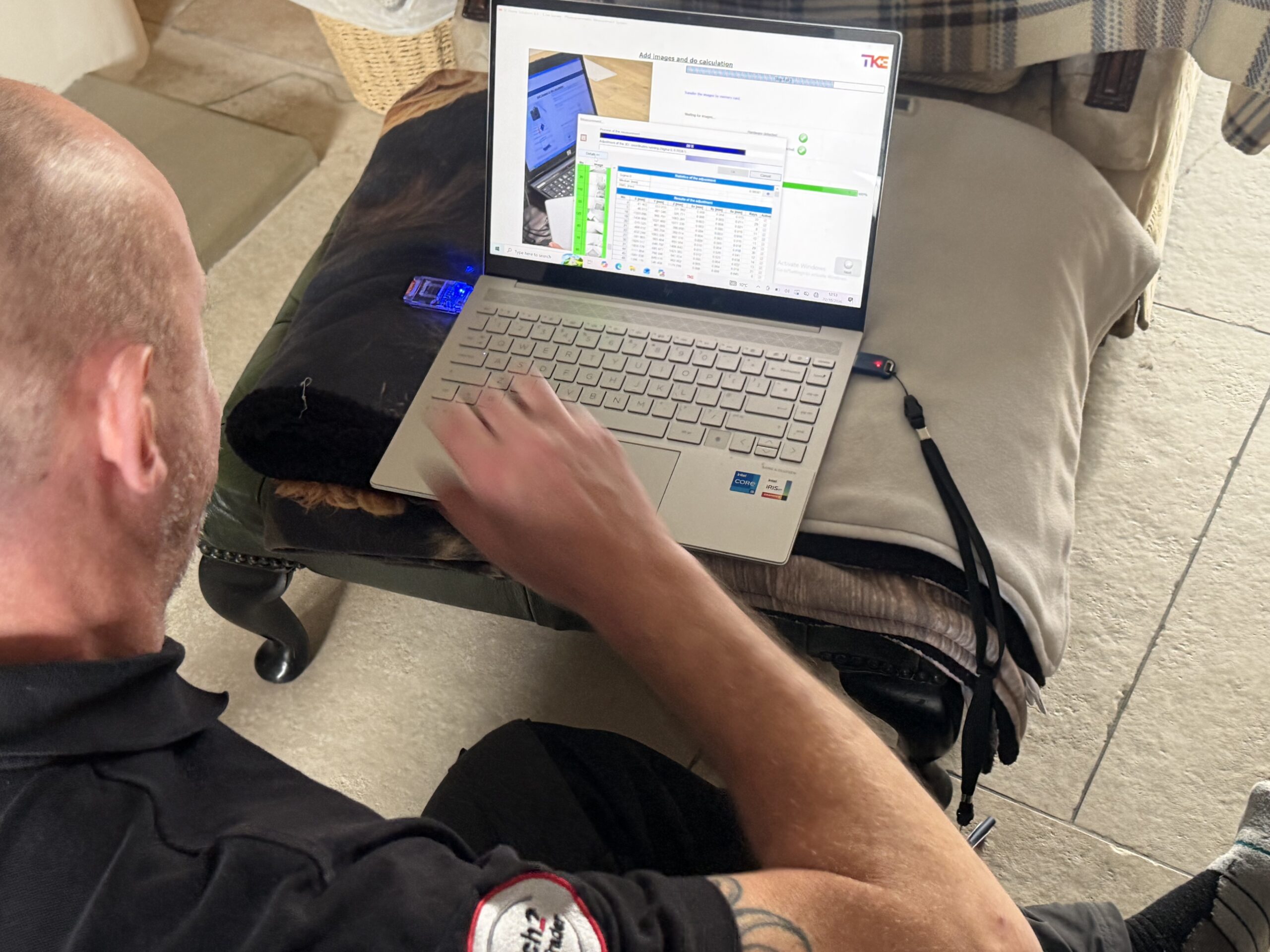
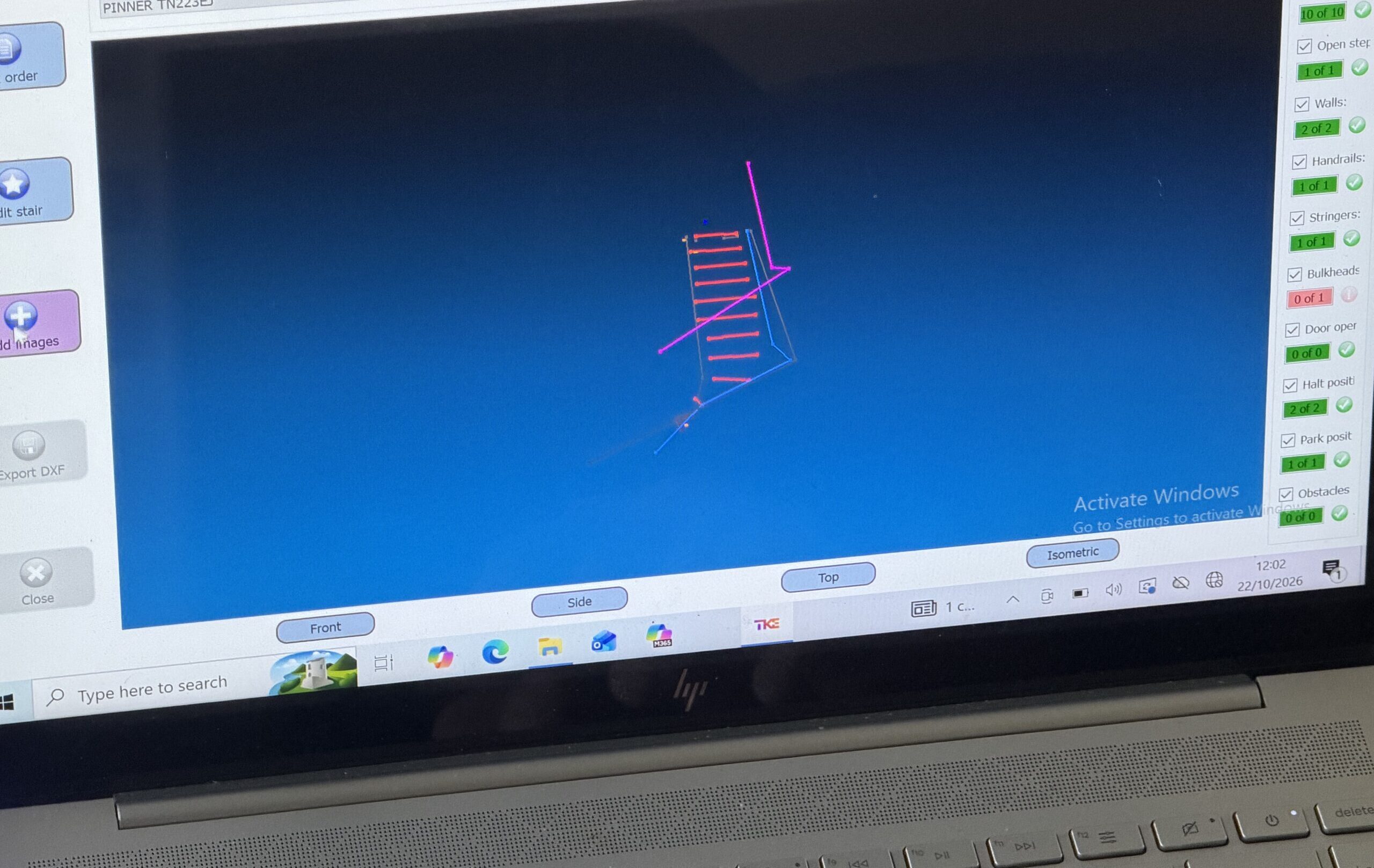
If any necessary information is not captured by the photo survey it is added to the notes of the survey. Even the height and position of nearby furniture is added if it is to remain in place. This is then sent directly to the manufacturer (Thyssen Krupp/Access BDD) and is inspected for manufacture.
Summary
The photographic survey is needed for particularly awkward or difficult staircases and when the Flow X stairlift is to be used. Most staircases don’t need such a high-tech specialist stairlift, but some do; especially if nothing else will fit. See also our page on stairlifts for narrow stairs for more on this topic.
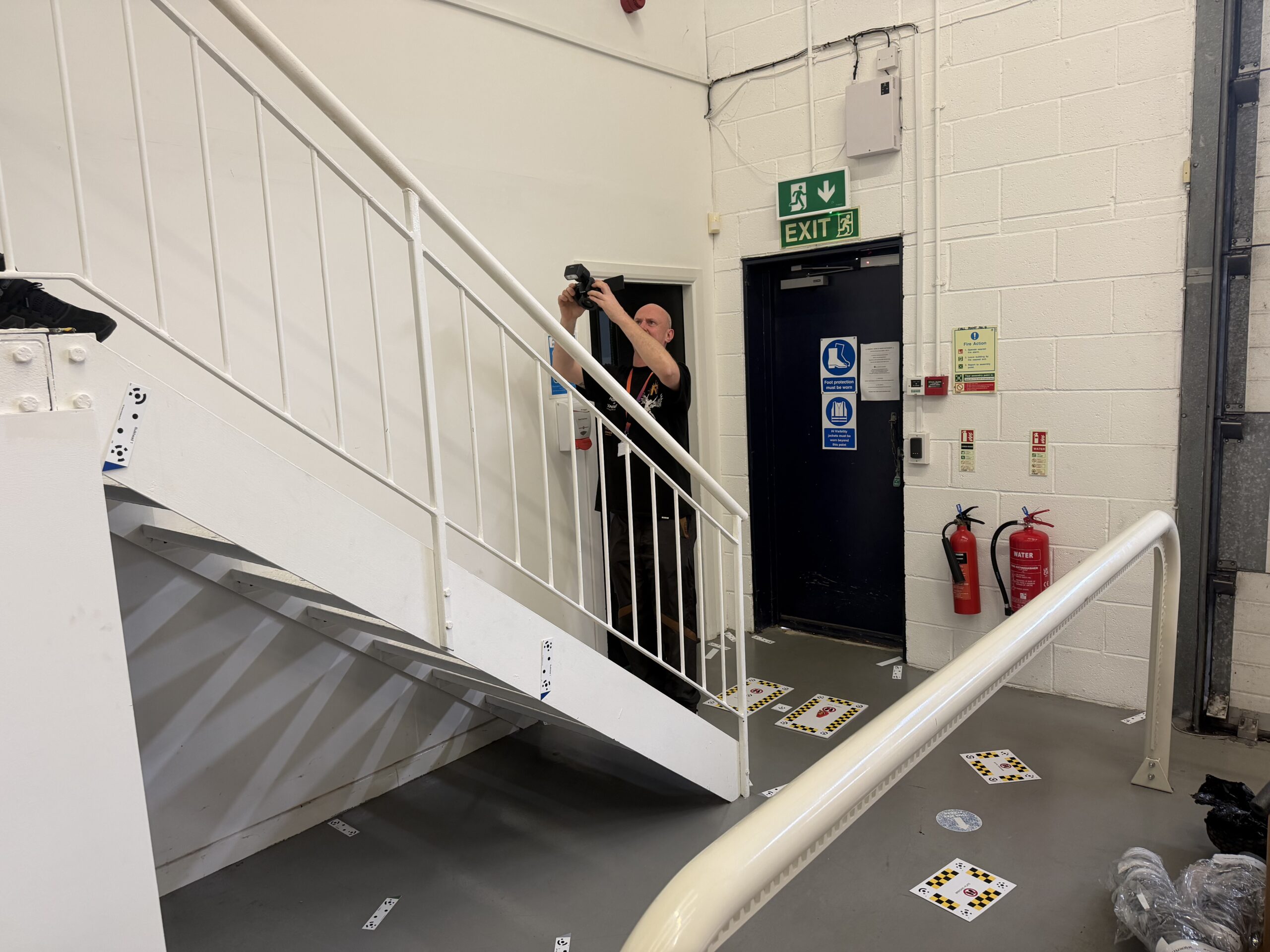
When a photo-survey is required, we take a number of pictures of the staircase with markers placed carefully on all the important positions. This includes stairs, skirting boards, overhead obstacles (bulkheads), handrails, other obstacles such as tables and start and end position of the stairlift.
If a single card/marker is moved during the process of taking the photographs, the process needs to start again! So it is important to avoid the area during the survey!
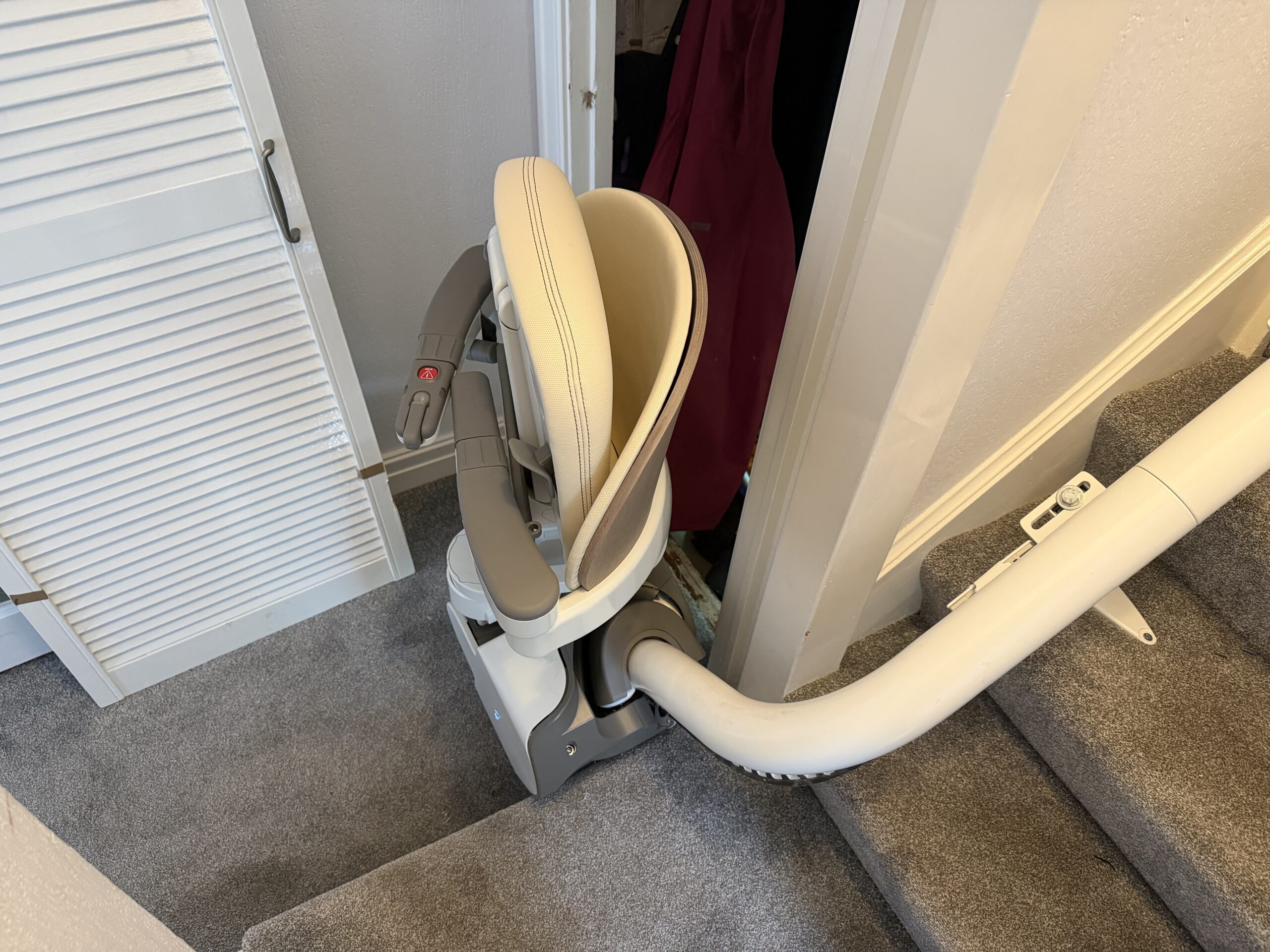
Photo-surveys are great for precision. They allow stairlifts to be installed on the most troublesome staircases, where other stairlifts cannot be installed. See more about the Flow X stairlift here.
See more of our stairlift installations and removals on our YouTube channel here.
Need a stairlift? Give us a call on 0800 046 3438.