


Wondering how to create more knee room for a stairlift on narrow stairs? On a recent alteration in Manchester we did this very thing. A customer was struggling with knee room after a recent operation had left their knees swollen. This made the stairlift more difficult to use due to the outward facing chair position and the knees clashing with the wall.
It’s a common problem with some narrow staircases when using an outward facing chair. We often use the Flow X stairlift for circumstances like this to allow more legroom. The Flow X allows a downward facing ride position, getting around the back to knee leg length issue. Below you can see a standard stairlift with the outward facing ride position (left) and a Flow X with the downward facing knee/leg position (right).
See also our post on stairlifts for narrow stairs.
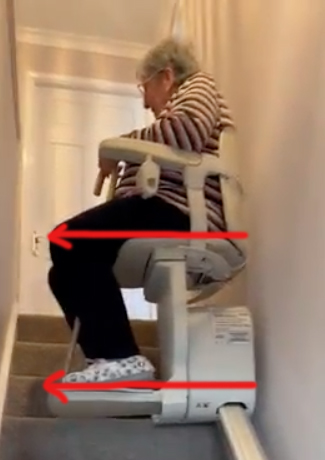

How To Create More Knee Room For A Stairlift On Narrow Stairs
However, there was an existing stairlift in place with our Manchester based customer and unfortunately this wasn’t one of our super space saving models (the Flow X) but a Stannah 600. Stannah’s can be great on narrow stairs too, but the outward facing ride position can create problems, as it did in this scenario.
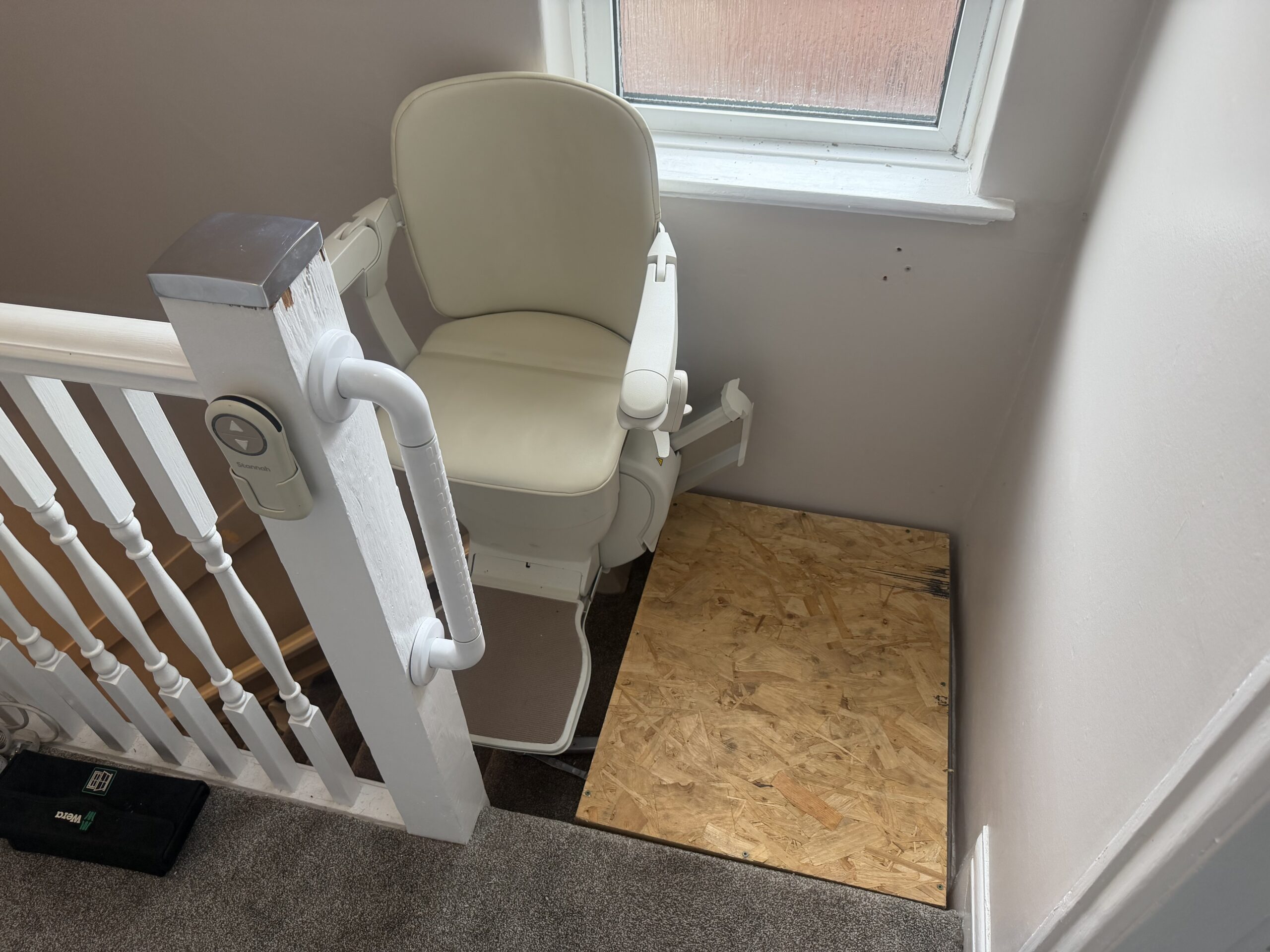
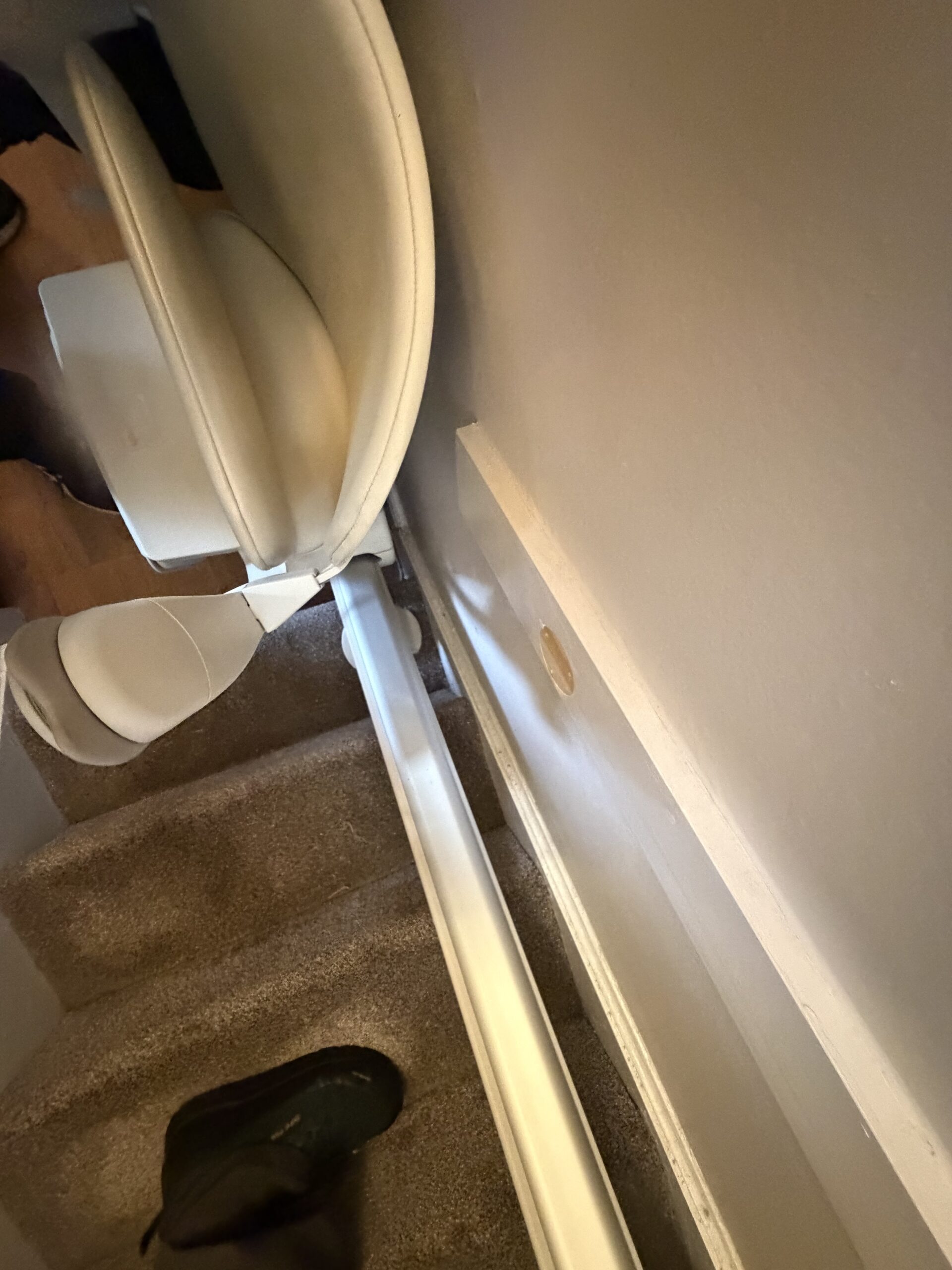
However, what can be done (in some cases) is to move the rail further back against the wall to create more leg room at the front. This should only be done by a qualified stairlift engineer though of course – moving the rail can cause other problems if you don’t know what you’re doing.
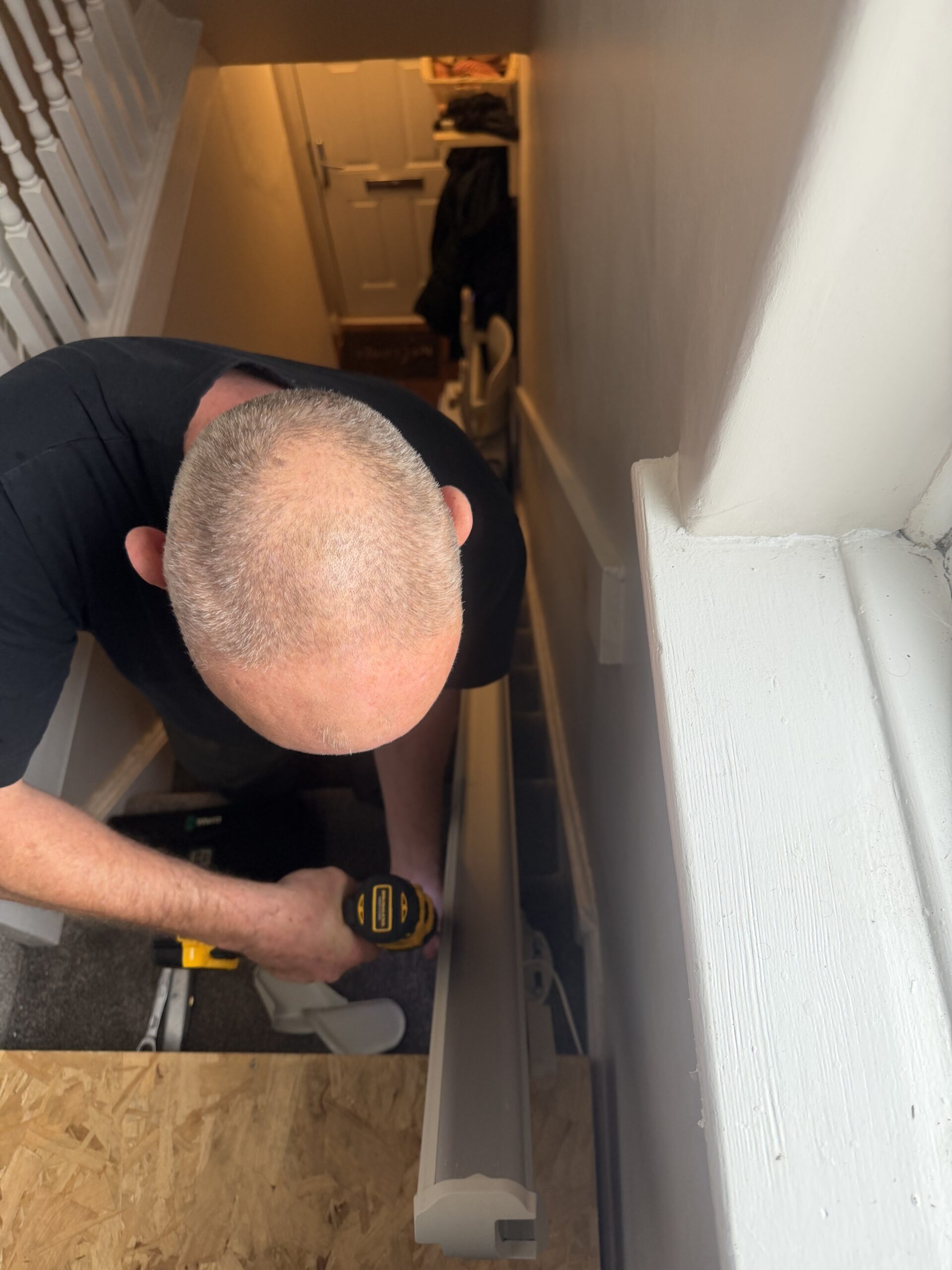
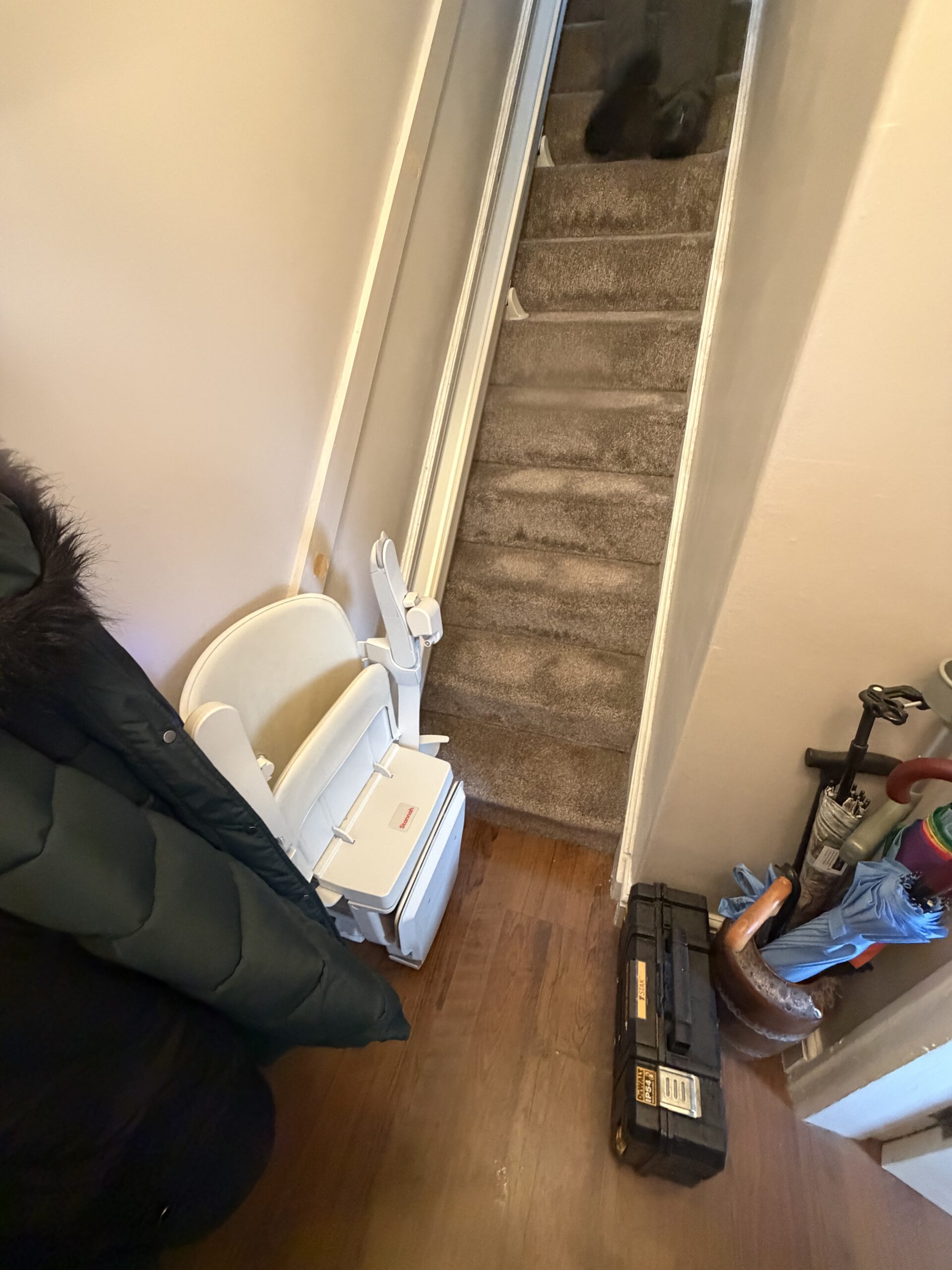
Fortunately, our chief engineer Scott has done this many times and he made it look easy!
Moving The Rail
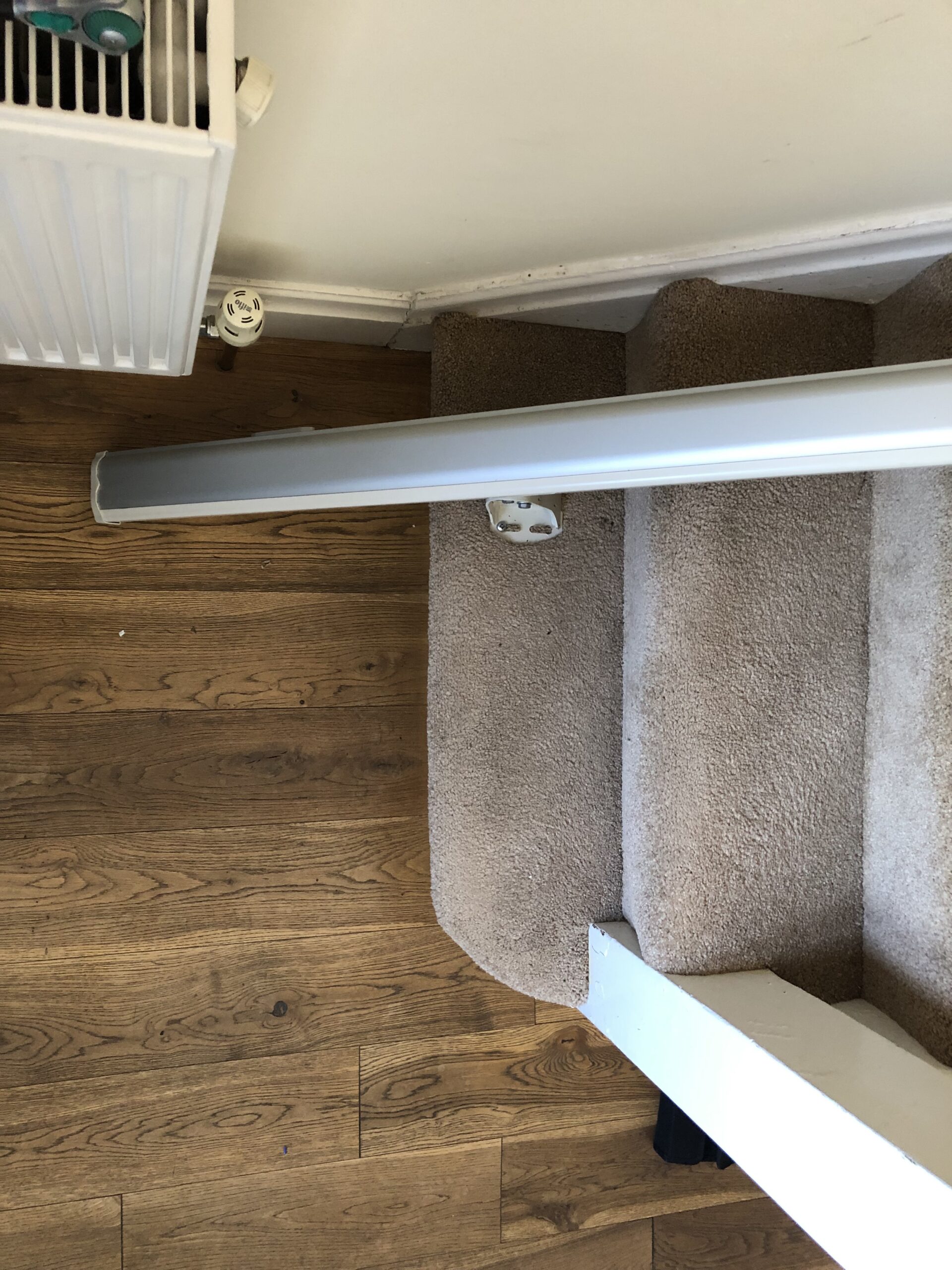
Before moving the rail, Scott carefully measured the distance between the rail and the wall, to determine whether this was an option. The rail feet covers are then removed so the rail can be unscrewed from the stairs. Scott has a clever strategy with this and he leaves the top screw in, unscrewing all the others. The rail can then pivot inwards while being anchored to the top step.
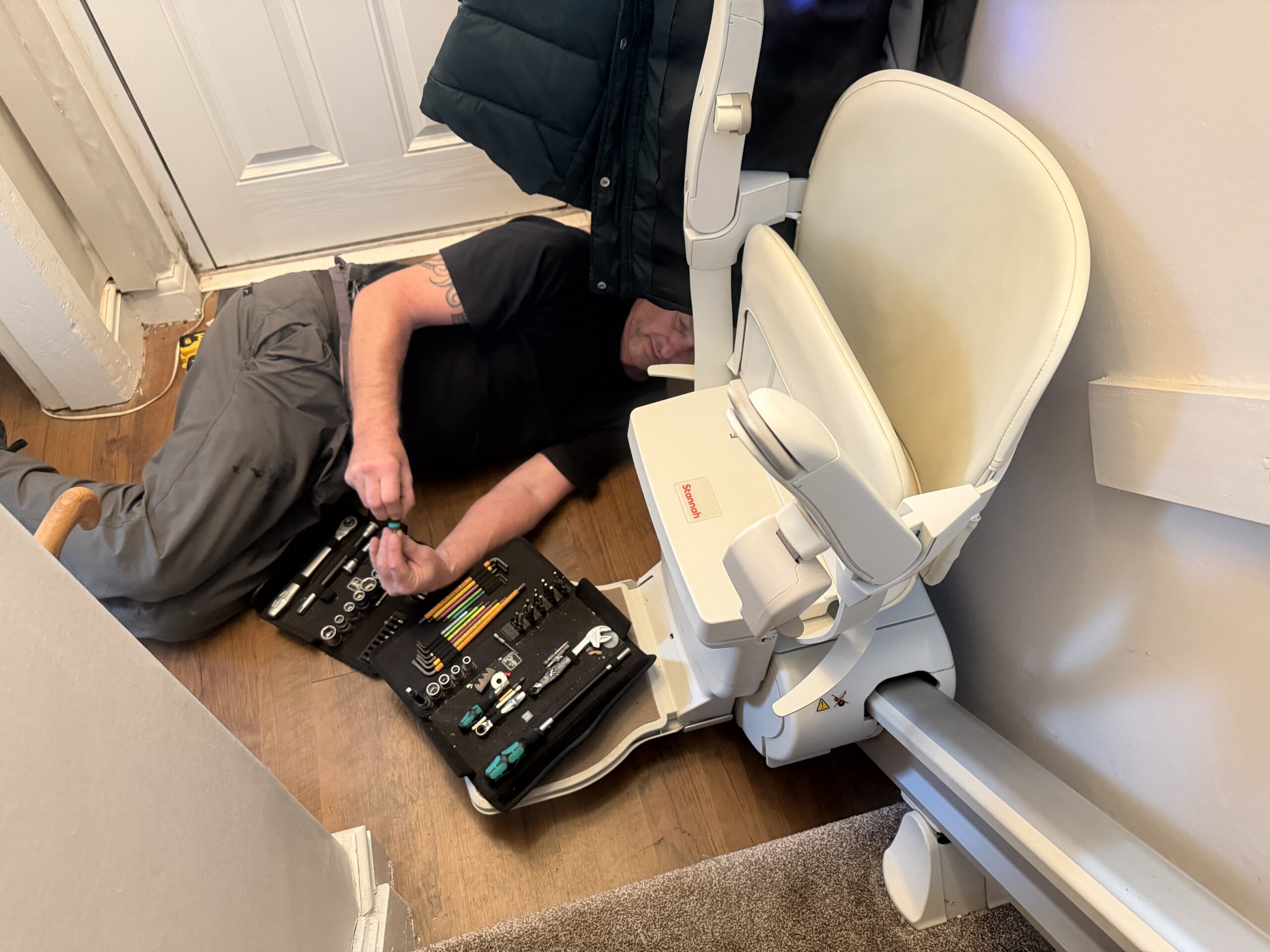
With this one, the rail was moved as close to the wall as possible, to create the most amount of space. The skirting board prevented it from being moved any closer. Still, there must be some space for the stairlift to sit so it doesn’t clash with the wall.
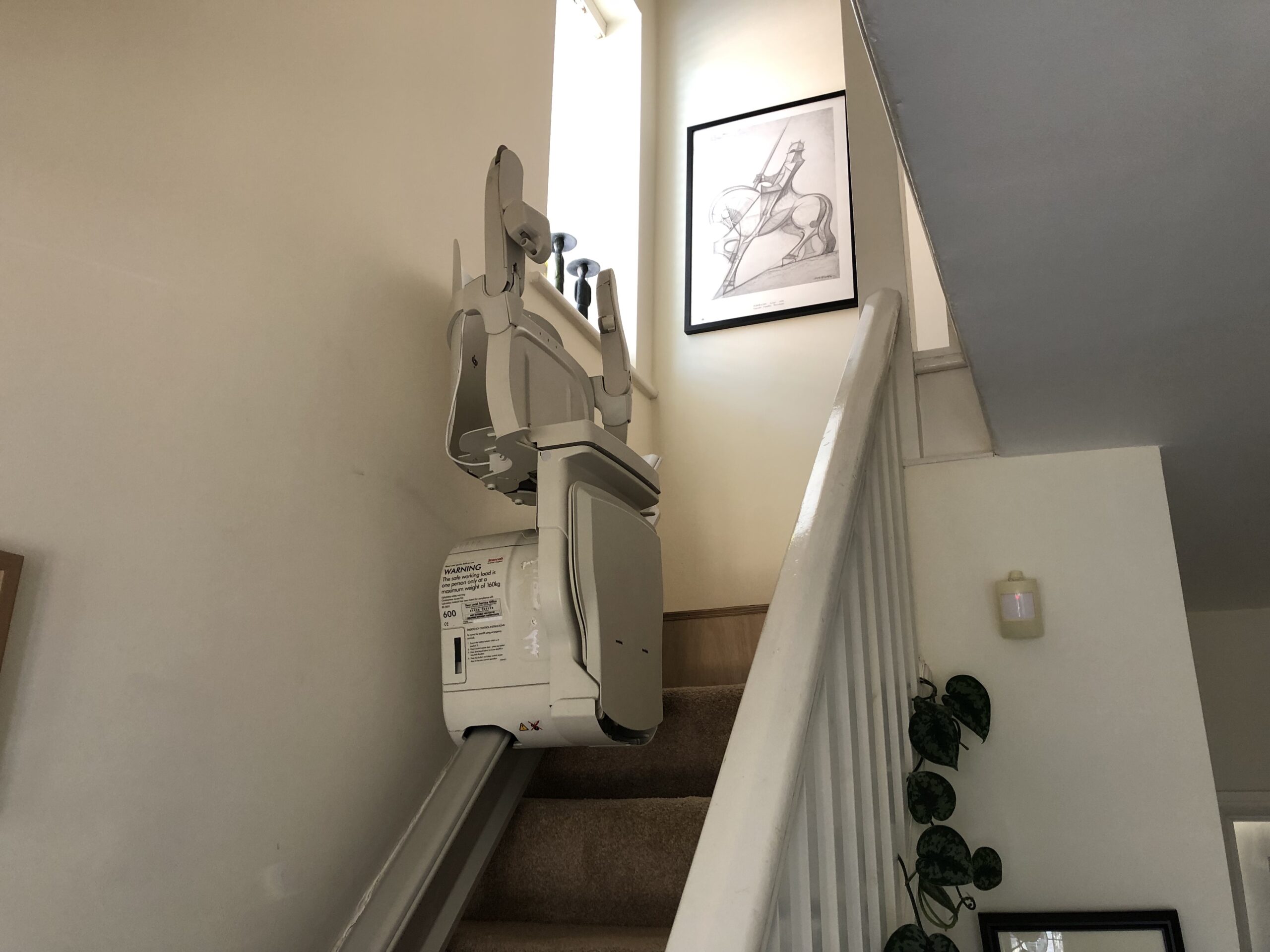
With Stannah’s the chair can sit very close to the wall, which is what makes them often a good choice for narrow stairs. The chair back of the Stannah 600 is very narrow. Here’s another, similar installation showing the folded Stannah 600 against the rail.
Removing/Altering Newel Post
The next option for creating more leg room with a narrow stairlift installation is to alter or remove the newel post. The newel post is the top or bottom vertical post which holds the bannister rail in position. It can be the obstacle which creates a problem with a stairlift because it protrudes into the staircase. In the picture below you can see an installation where the stairlift footplate was clashing with the newel post.
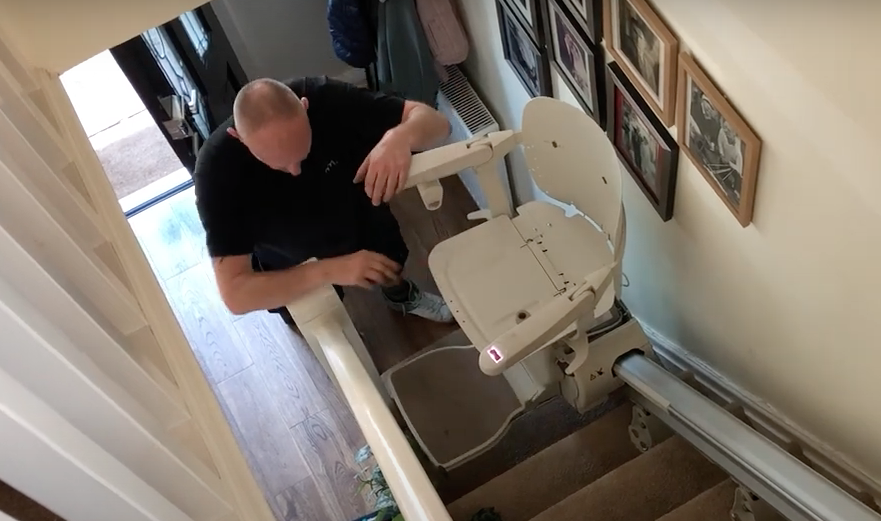
In this scenario we were able to remove the radiator. This gave us the space to move the rail further towards the wall, creating the room needed.
Newel Post Removal
On the Manchester job we looked at the newel post here at the top of the stairs. Newel posts can be removed or cut to allow more knee room on a stairlift. On this one the newel post didn’t offer a solution – even removal wouldn’t have given us the space required.
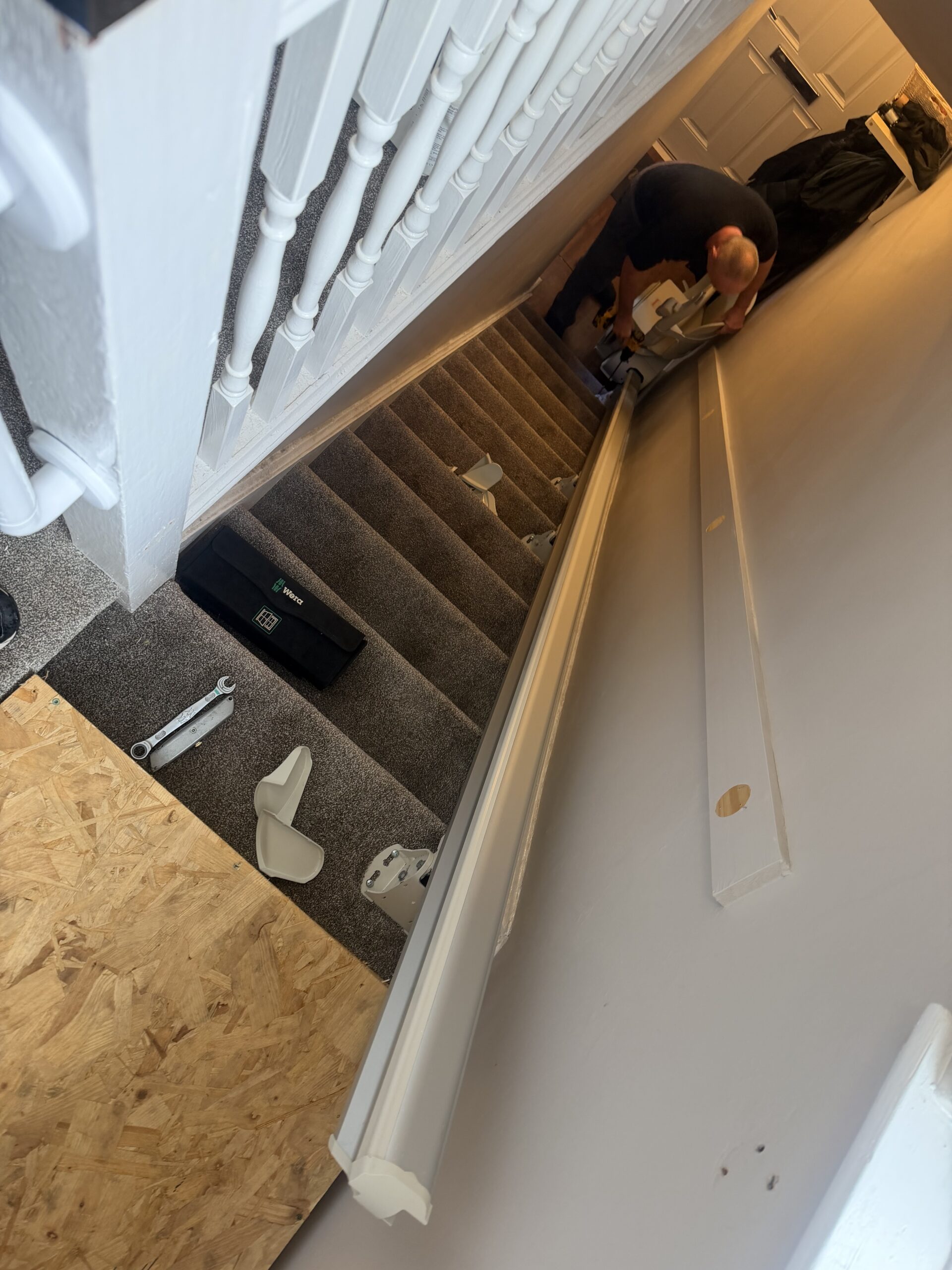
Replacement Stairlift – Swap the Stannah 600 For A Thyssen (Flow X)
When all other options are exhausted there is also the option of changing your stairlift for a specialist model. The Flow X from ThyssenKrupp is an option when nothing else can help. We often recommend this stairlift for very awkward installations where nothing else will fit.
The Flow X is a modern marvel – allowing stairlifts to operate where previously a stairlift simply wasn’t possible.

More information can be found by calling our friendly team on 0800 046 3438 or visit our contact page and get in touch. We offer free surveys for stairlift installations throughout the UK.
You can also visit our YouTube channel here.