


Fitting a stairlift is pretty straight forward. First you lay the track then you put the chair on it! Sounds simple right?! But what if your stairs have a curve in them? This gets a little more complicated. The rail needs to be customised to your stairs. You also need to carefully measure the distance of the rail to the wall/bannister rail, so the stairlift moves without hitting anything.
Then there’s other potential problems when it comes to fitting a stairlift, such as very narrow stairs, or with someone of a heavier weight. In this post we will cover some of the considerations you’ll need to look at when fitting a stairlift.
Fitting A Stairlift – A Straight Stairlift
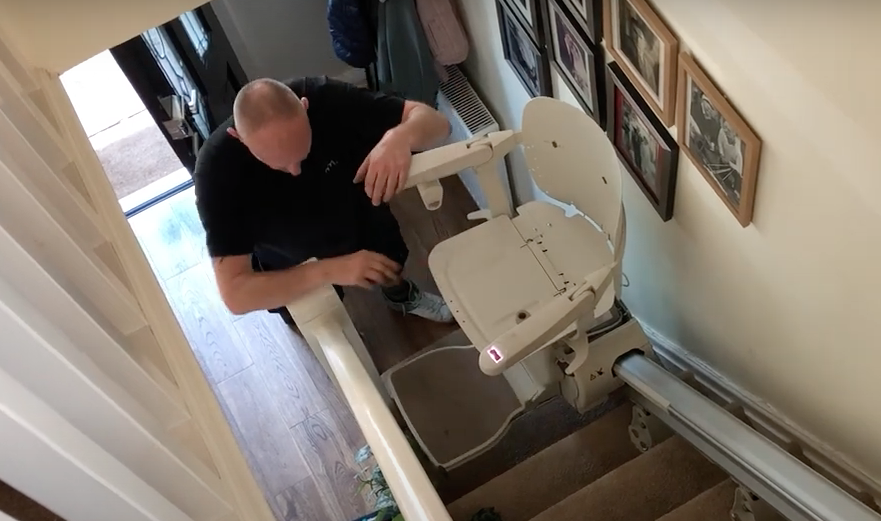
Here’s a simple straight stairlift being fitted. These are the simplest stairlifts to be fitted because of the straight rail. Sometimes these can even use “off the shelf” rails and need much less customisation than curved stairlifts.
As you can see in the time-lapse video above, the first thing to do is install the rail. This of course needs to be carefully measured and obstacles such as radiators and doorways/corridors need to be considered. With certain stairlifts too, you need a little room at the base and top for it to pivot, for easy exit and entry.
Here’s a problem we ran into fitting a stairlift on a straight staircase. In the picture below you can see the radiator forced the position of the rail slightly outwards which caused a problem. The footplate protruded too far and couldn’t get past the newel post at the base of the stairs.
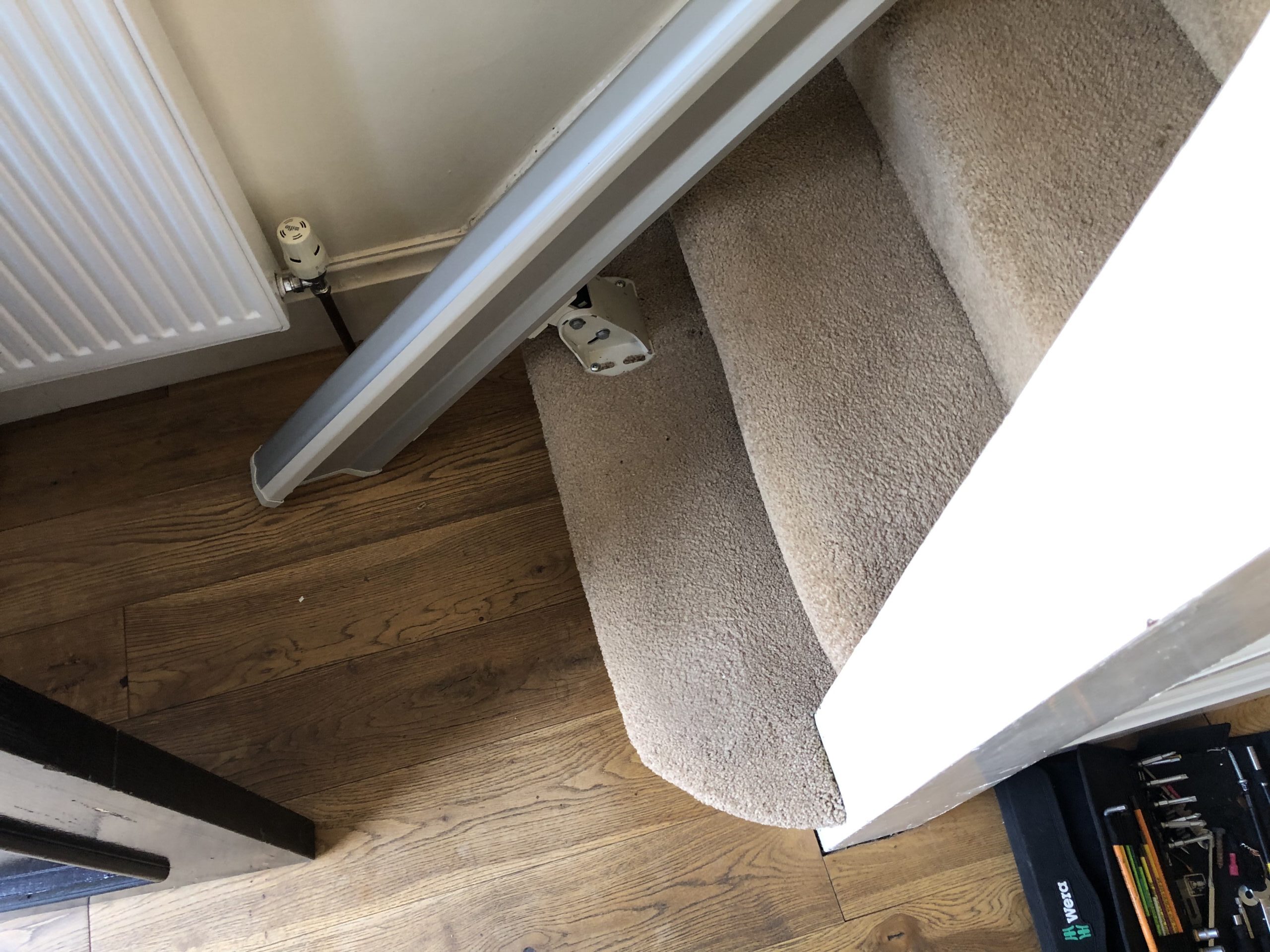
So we had to get the radiator removed to complete this one, which put the stairlift installation back a bit. Once the radiator was removed, the rail could be repositioned nearer the wall, and this created the needed space.
Fitting A Stairlift – A Curved Stairlift
A curved stairlift is more complicated and takes longer because the rail needs more customisation than a straight staircase. It can take a few weeks before installation can begin with a curved staircase, whereas a straight stairlift can be ready for fitting within days.
Here’s a quick time-lapse video showing the stages involved in the fitting of a curved stairlift, including measurements taken for the rail customisation. Before the rail can be manufactured, it needs to be an exact fit with a curved staircase. If it’s even a little off, this can completely ruin the installation! So the measurements need to be exact. This one was quite complicated because it had multiple bends in it.
Here’s another curved stairlift fitting which was a little bit simpler:
Fitting A Stairlift – More Complex Configurations
With more complicated configurations, such as with very narrow staircases, or those with multiple bends or even spiral stairs, you’ll need a specialist stairlift. See our page on stairlifts for narrow stairs for more information on this.
In the clip below, we are fitting a stairlift to a very narrow and awkward staircase. There’s a doorway at the bottom which we needed to avoid.
Here’s another very tight staircase fitting we carried out. In the video below you can see how important the measurement of the staircase, and other obstacles is for the fitting. This one was very touch and go whether a stairlift could be fitted in the house because it was so narrow and had so many obstacles:
Stairlift Fitting – A Step By Step!
So here’s a quick step by step walk through of the stairlift fitting process. In this video you can see the steps involved in the installation:
- Rail placement and connection of each rail section, with wiring
- Attaching the “feet” to the rail
- Securing the feet to the rail and the stairs
- Wiring up the stairlift to the charger/mains
- Loading the stairlift base onto the rail and attaching the seat
- Programming the stairlift – with this model more programming is required
- Testing the stairlift, making adjustments to the rail if required.
- Testing remote controls
Summary
So, as you can see there’s more to fitting a stairlift than meets the eye! This is especially true on the more complicated staircases with turns and obstacles, such as corridors and radiators. With certain staircases, a very narrow stairlift is required, or one with a single rail, or even a collapsing rail which moves to avoid blockages.
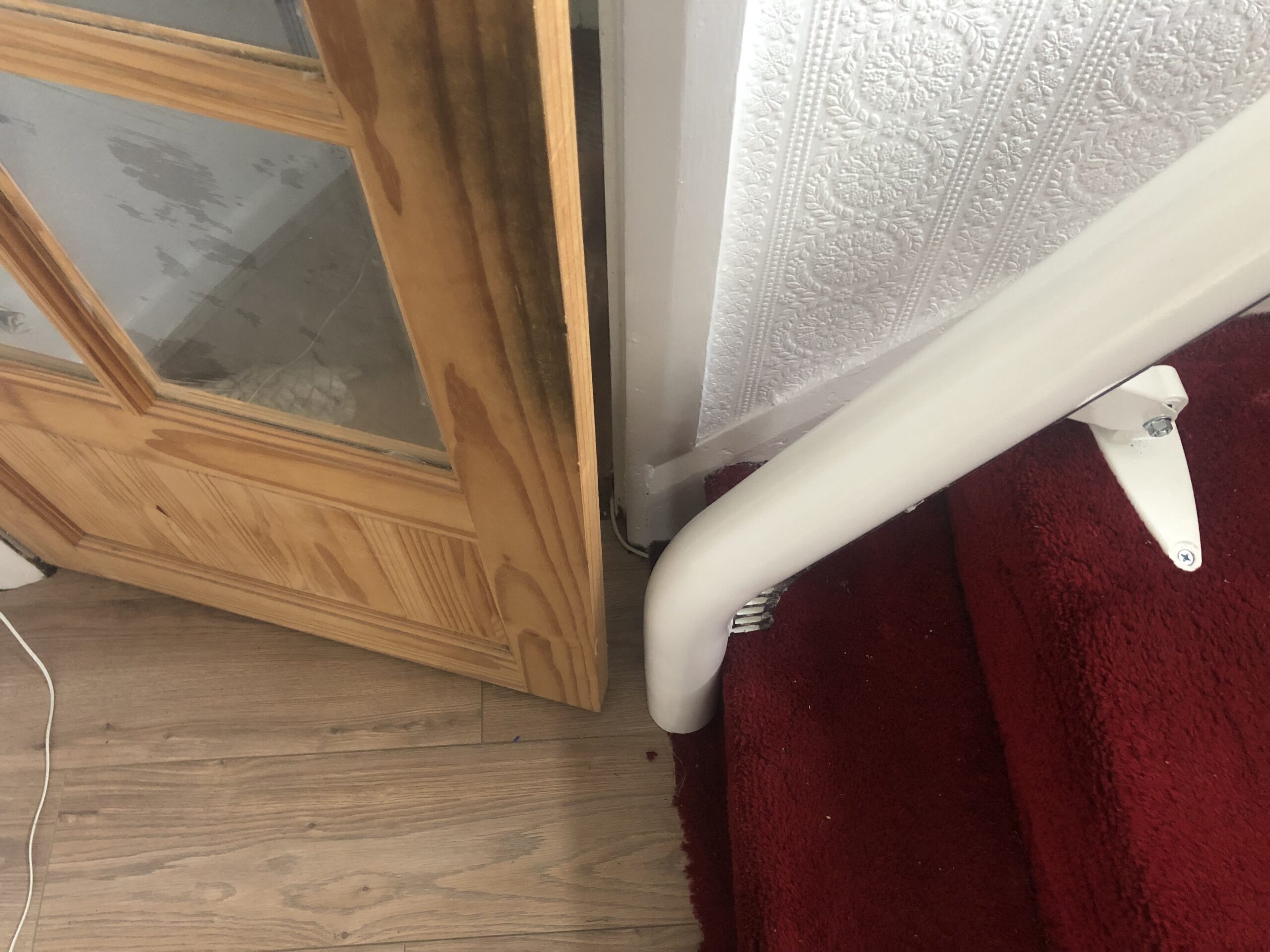
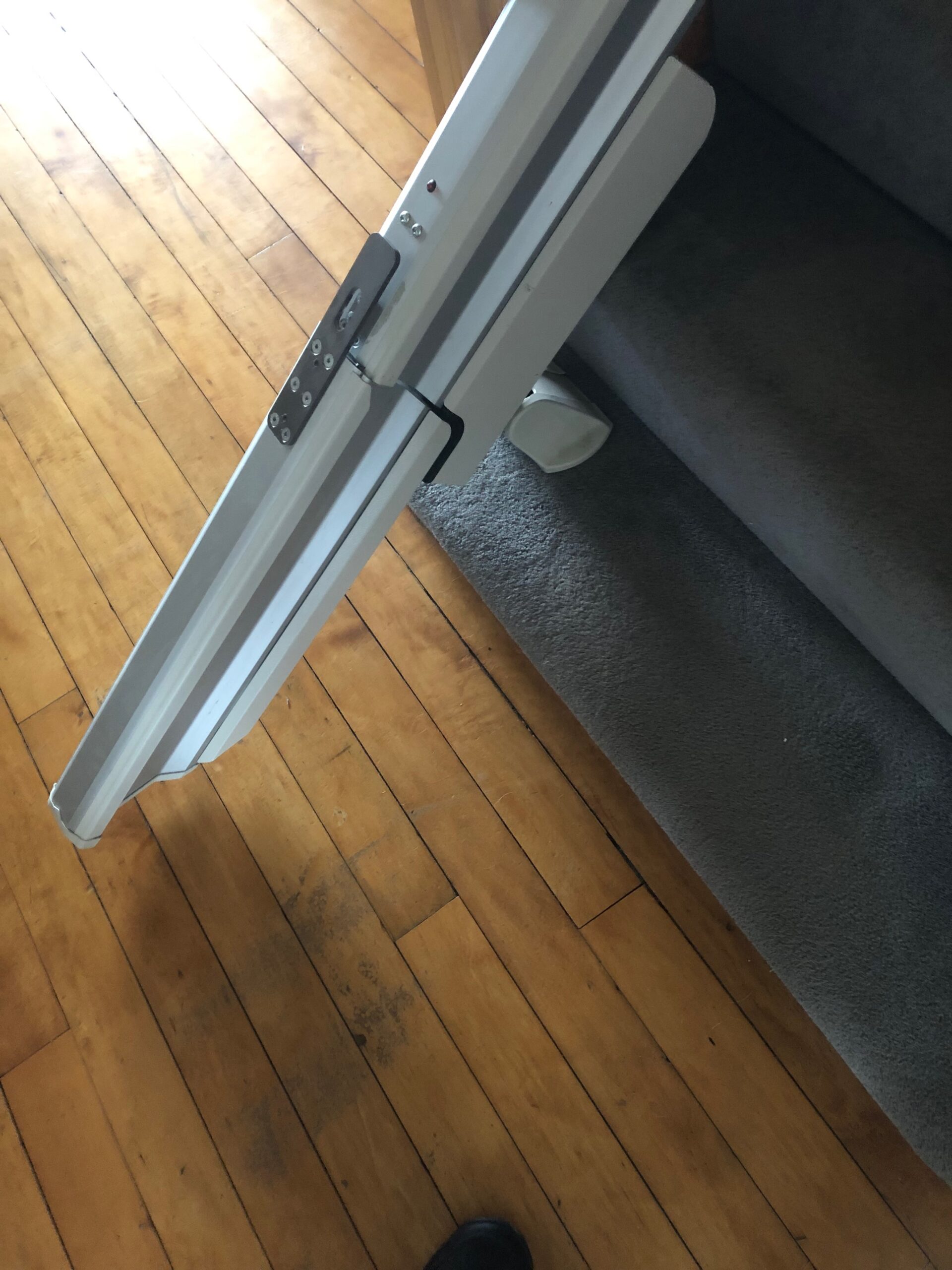
If you’re fitting a stairlift on a straight staircase, it’s considerably easier and simpler than on a curved staircase where more is involved. We always recommend getting the professionals in when it comes to fitting a stairlift.
Give us a call if you’re needing some help with an installation on 0800 046 3438. Or visit our contact page and leave us a message.
You can also download our stairlift guide which gives you an overview of the main considerations when it comes to choosing the right stairlift for you. Click on the image below to download it:
