


When you have a door or obstacle at the bottom of the stairs, you cannot use a standard stairlift. A standard stairlift has a straight/curved rail and generally the stairlift is parked at the base. But with an obstacle, such as a door or corridor, the chair would obstruct the passageway.
Stairlift With A Door At The Bottom Of The Stairs
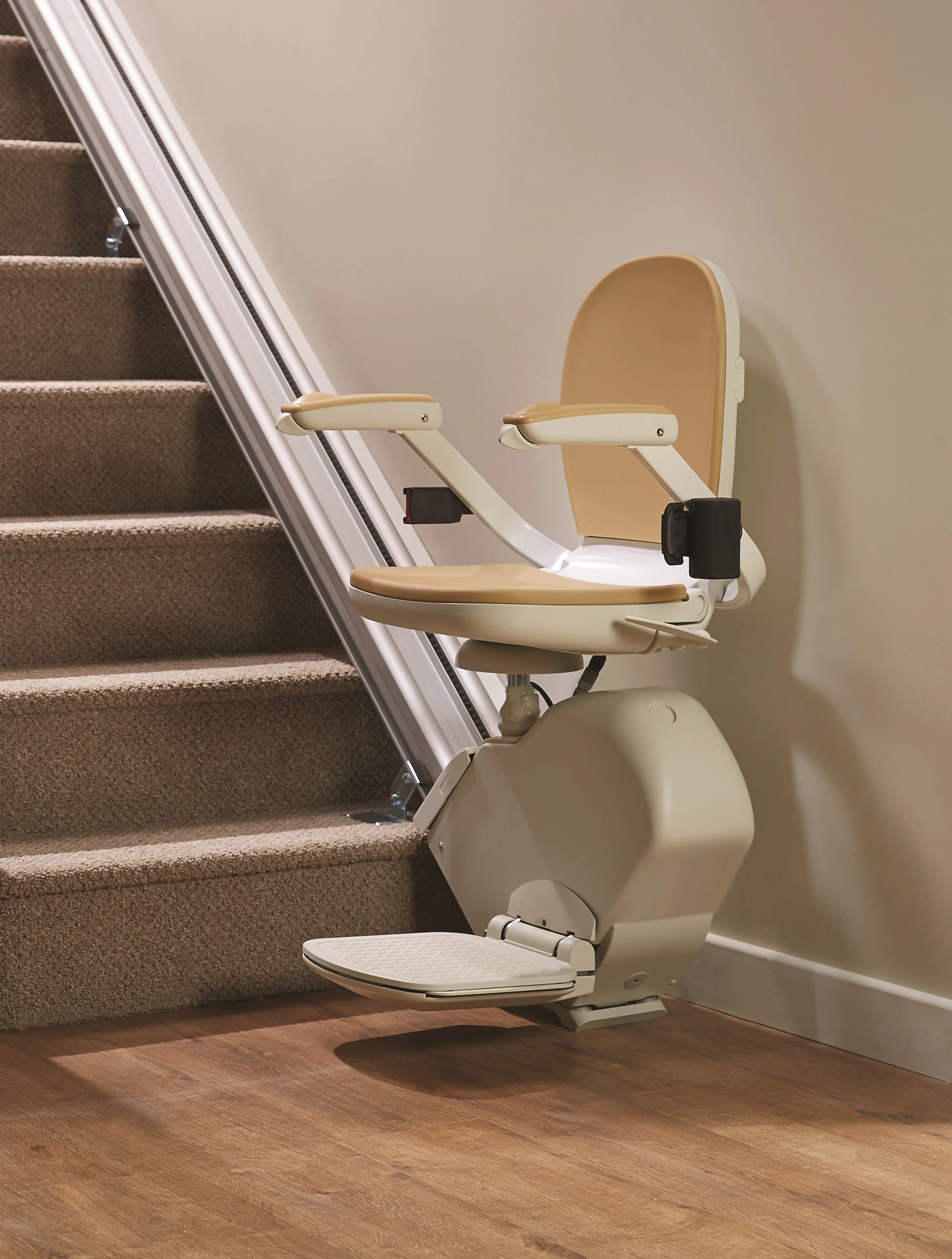
There’s a couple of solutions when it comes to fitting a stairlift when there’s a door at the bottom of the stairs. One common solution is to have a moving rail, which retracts when the stairlift moves.
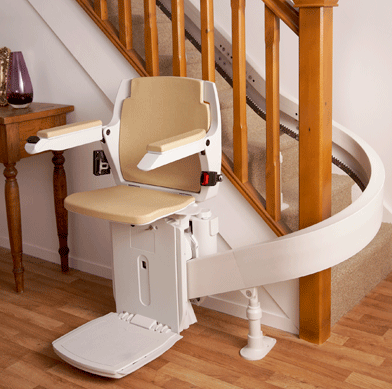
Here’s a couple of moving rail stairlifts. The one on the left is a Stannah 600. The right one is a Stannah 260 (curved) with a moving rail. As you can see, both staircases have a door at the base of the stairs.


The hinged rail stairlift can be a great solution to this problem. However, it throws up some other potential problems too. With any moving part, there’s potential issues. For example, the moving rail requires a separate power source to the stairlift. What if the moving section of the rail should stop working? Not only would it stop the stairlift from working, but It might even mean blocking an important exit, so it could be a safety issue.
Stairlift With A Door At The Bottom Of The Stairs – Options
Another option is to place the stairlift on the other side of the stairs. There’s two main ways to install a stairlift – either on the “inside” or outside of the staircase. So an “internal” wrap might solve the problem of a problem doorway. Rather than installing the stairlift against the wall-side of a staircase, it is installed towards the bannister side, as shown here. The stairlift can even be tucked away around the side of the stairs, if room allows.
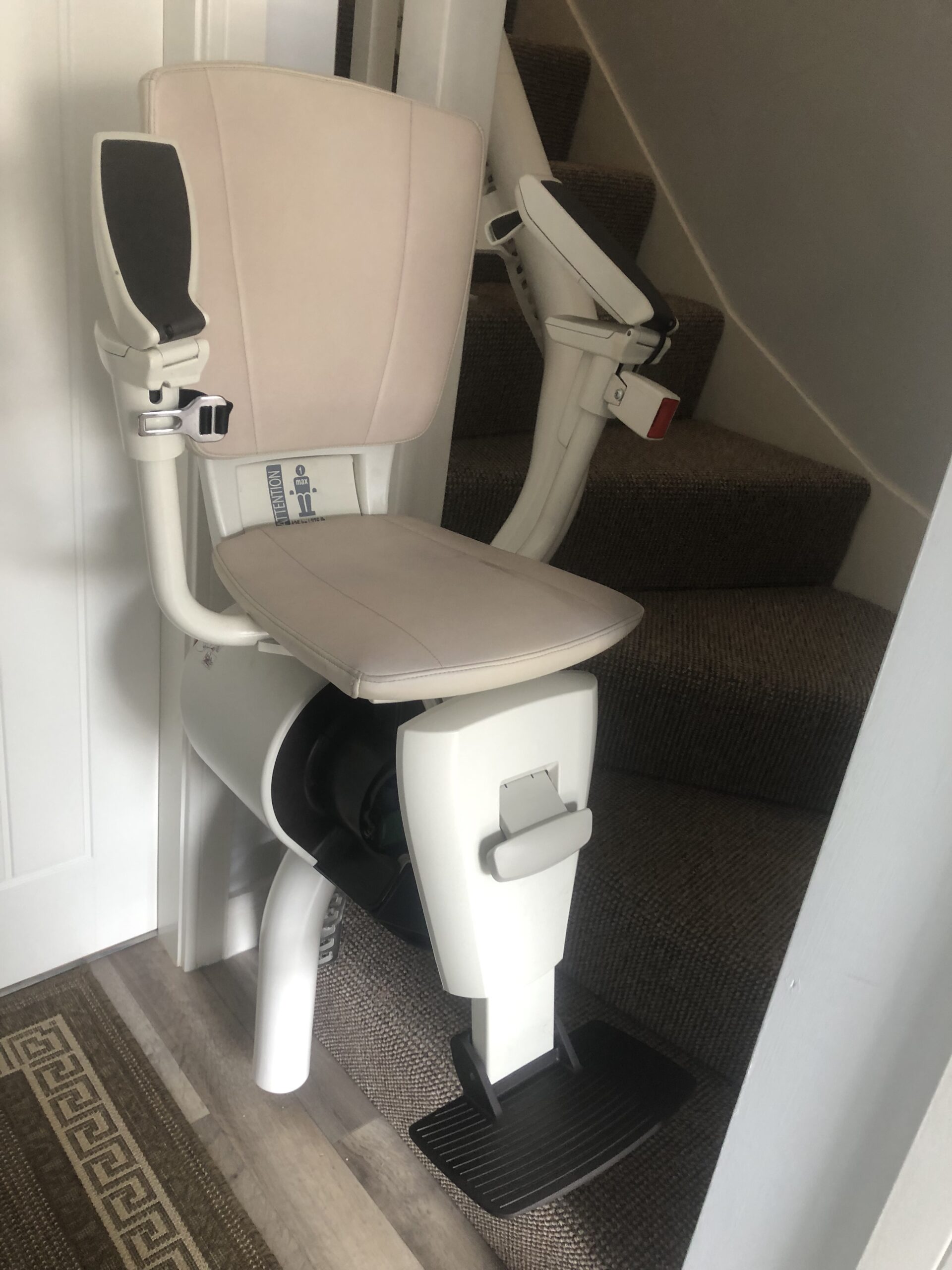
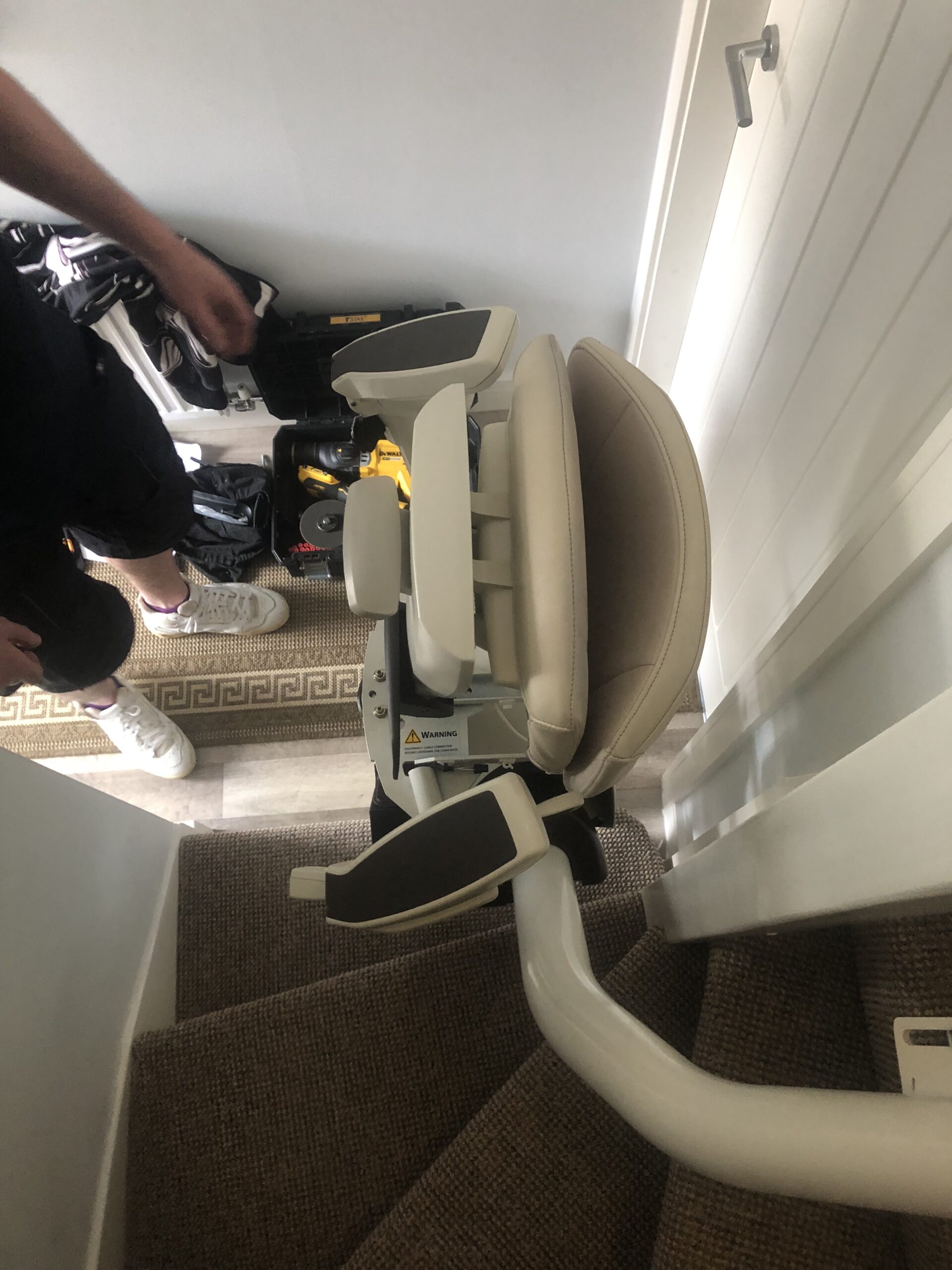
Our favourite option is the drop nose rail stairlift – available on the Flow X from Thyssen-Krupp. In the picture below you can see how the drop nose rail cleverly gets around the problem doorway. The stairlift can be parked away from the base, and called by remote control – so as not to block the door.
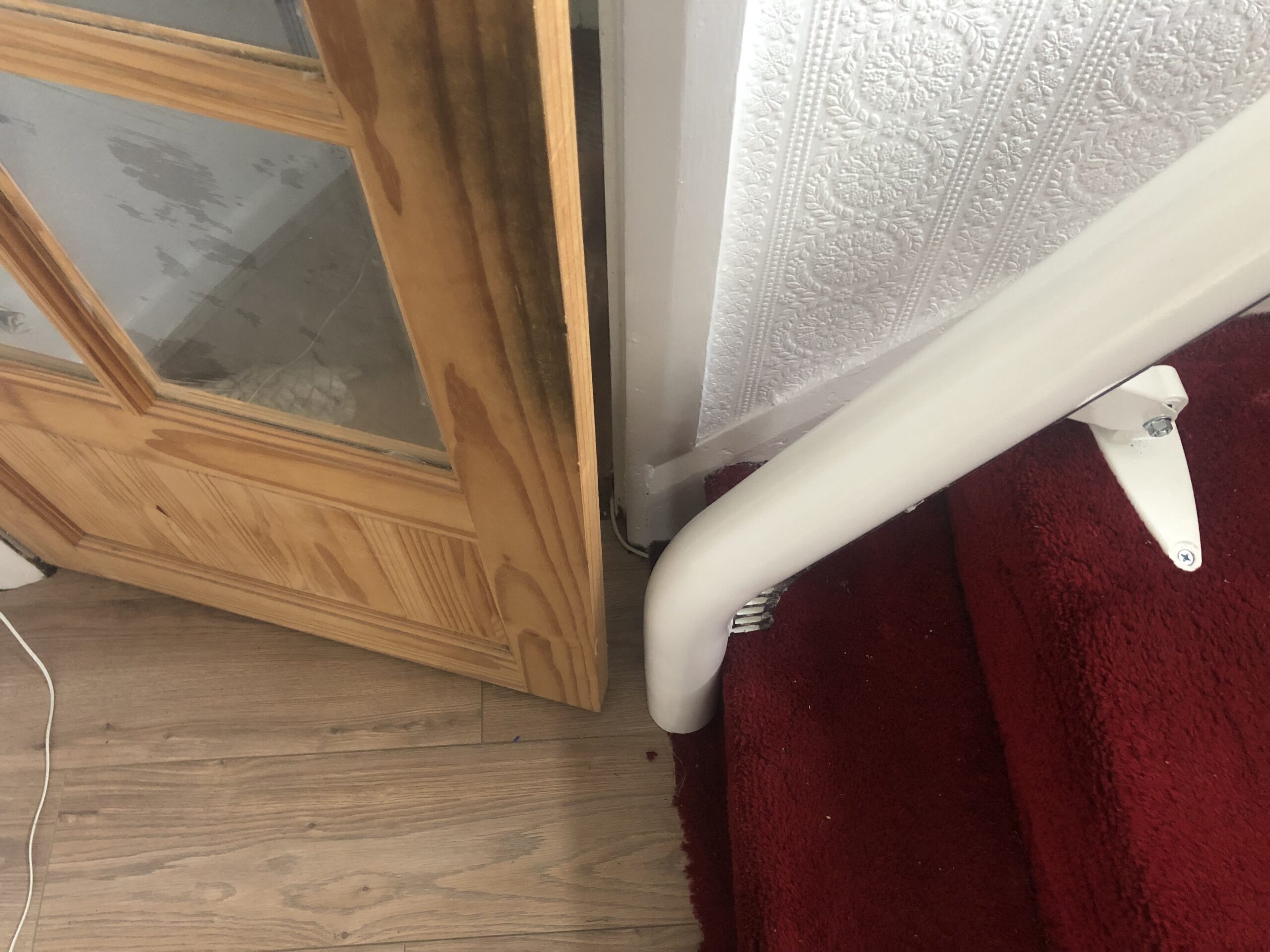
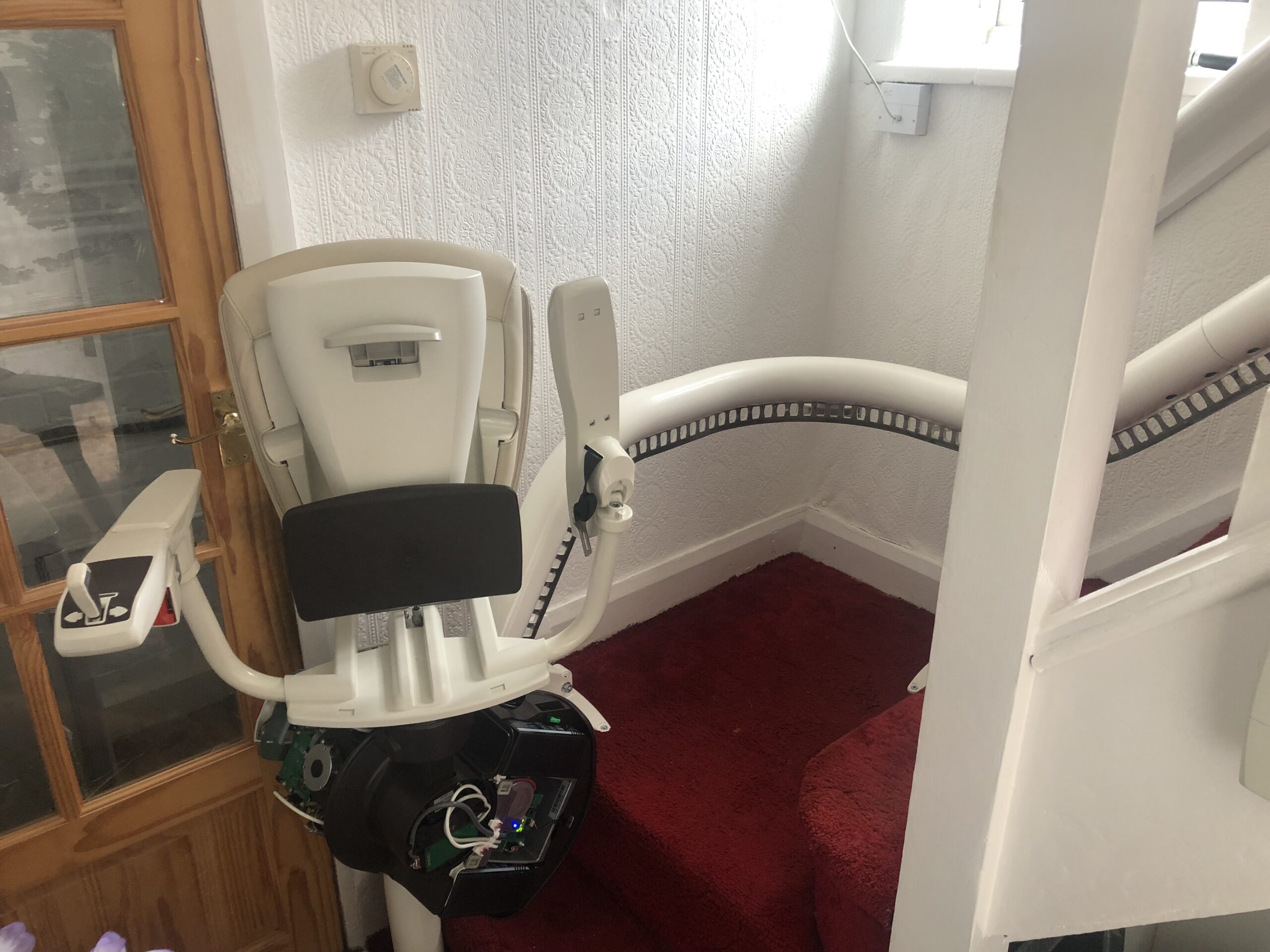
This is a better option than the moving rail, in our opinion, because there are no moving parts which can go wrong. In the case of a breakdown of a moving rail, it leaves you without a stairlift and with a blocked door/corridor.
Here’s another versatile fitting of ours where the doorway/corridor was an issue. With this one there was a kitchen door at the base of the stairs, and a corridor. You can see how the drop nose rail under the chair (below) carefully avoids both the kitchen door and corridor.
Summary
The drop nose rail on the Thyssen Flow X stairlift is our favourite solution for when there’s an obstruction at the bottom of the stairs. The Flow X is also the perfect stairlift for narrow/awkward stairs on the market – with patented ASL technology which makes it the most adaptable stairlift on the market.
We prefer not to use a hinged rail because it can become a problem in the case of a break-down.
For more information on our range of stairlifts, or our prices, give us a call on 0800 046 3438 or visit our contact page. You can also visit our YouTube channel and view some of our installations.