


In a recent trip to Manchester we looked at a problem one of our clients was having with their stairlift. The client had a muscle wasting condition and struggled to transfer from the stairlift to his wheelchair at the top of the stairs. To make it easier, he used several hard cushions to lift his seated position. To add to the difficulties, he was very tall (6 foot 4 inches).
When seated without his cushions, at the very top of the stairs, he would be unable to transfer to his wheelchair. This wasn’t ideal, but he had adapted this to help him with his condition as his physical health had changed.
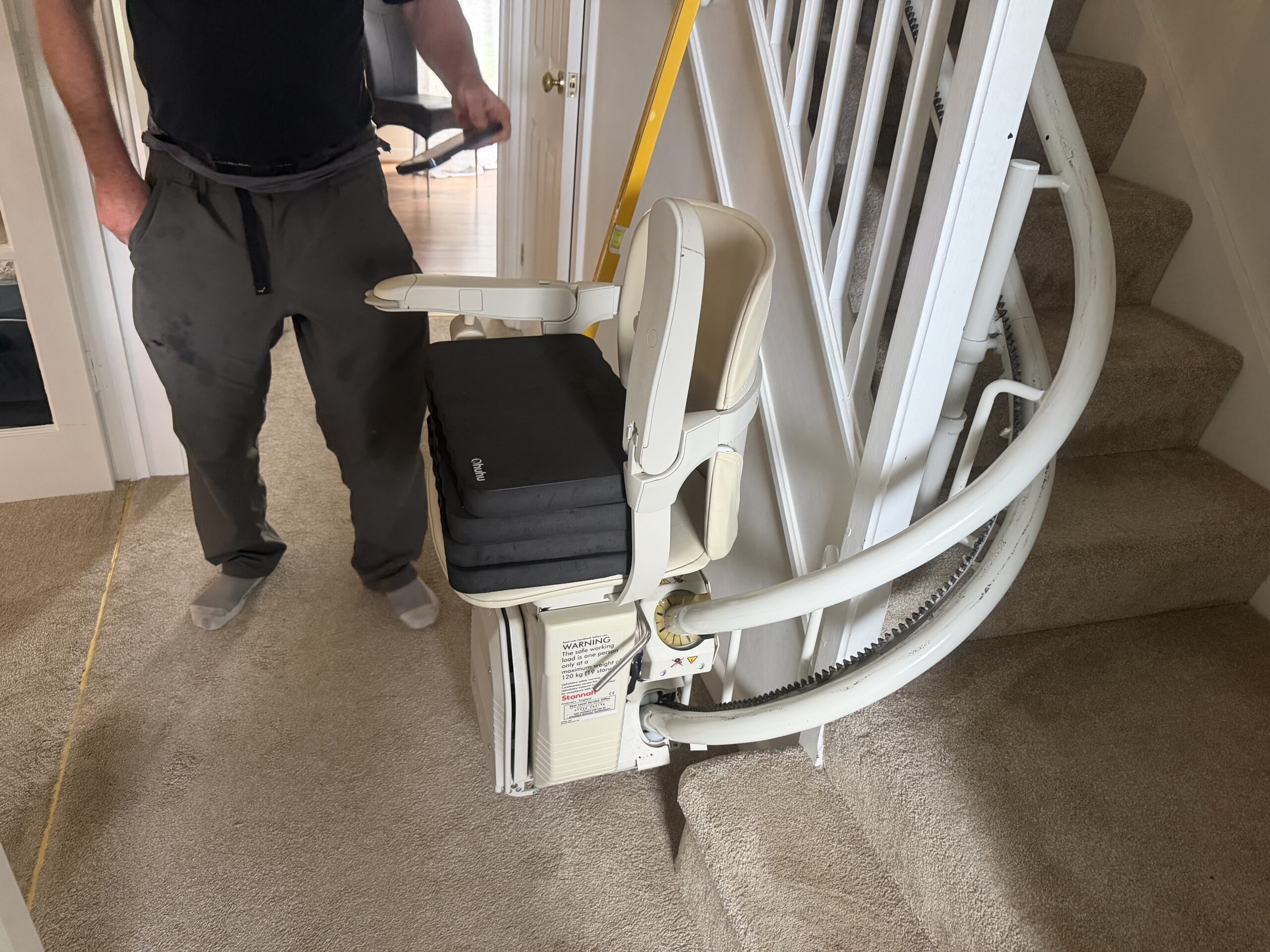
Stairlift Adaptations Wheelchair Transfers – The Solution
The proposed solution was to lift the seated position at the very top of the stairs, and also lift the parking position at the bottom, so the cushions wouldn’t be needed at either end. This would require switching the top section of the rail to lift the seated position. So when the chair arrived at the landing, the seat would be much higher, and so easier to disembark and transfer over to the wheelchair.
As you can see in the image below, the chair position at the top of the stairs is quite low – hence why our client needed to lift his seated position in order to transfer to his wheelchair. There was also very little space on the landing area in order to make the transfer.
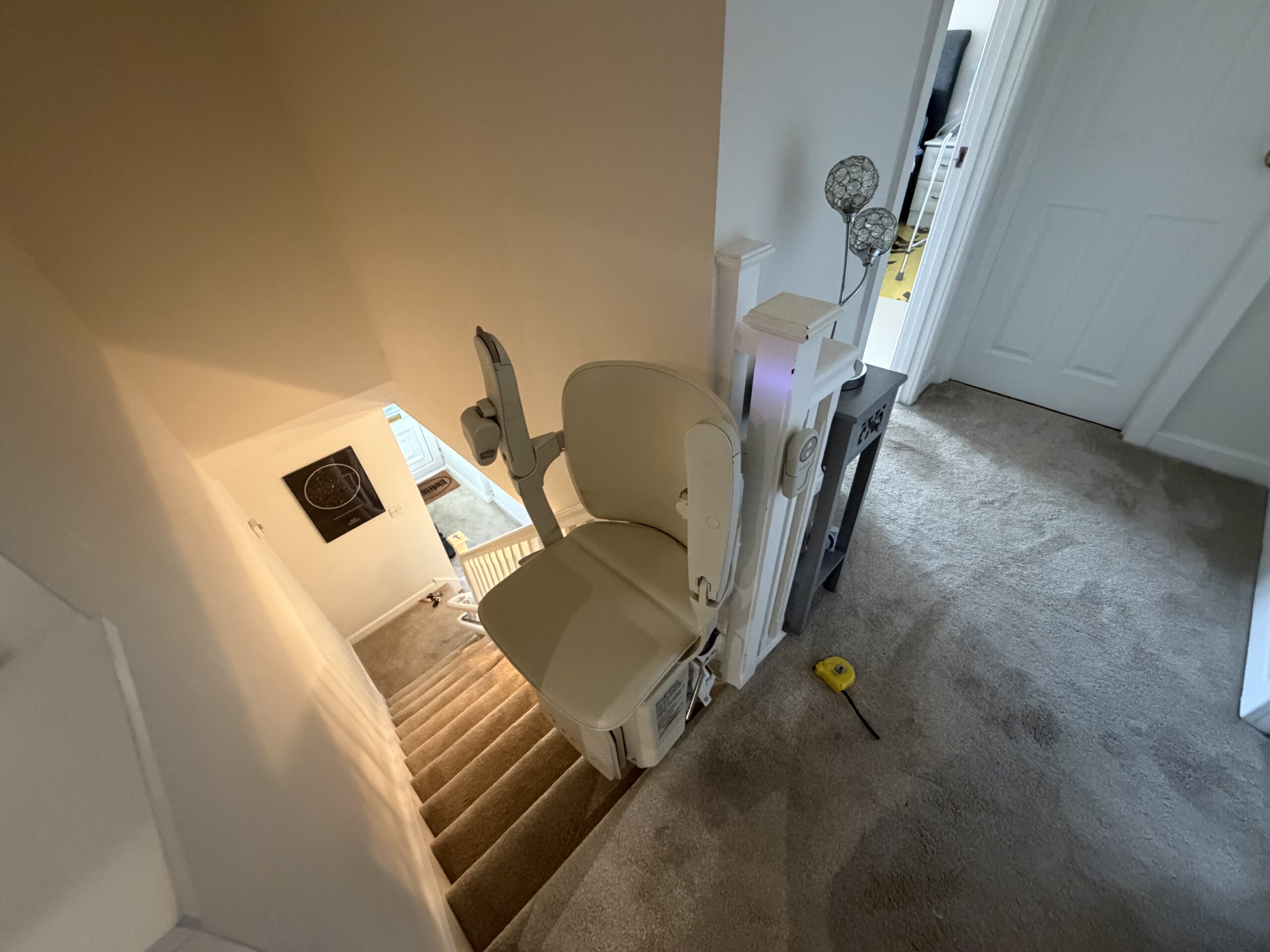
Stairlift Adaptations Wheelchair Transfers – Creating More Landing Space
Now, while the adaptation to the rail, to lift the chair position would solve one problem, there was still a space problem on the landing. To solve this issue we found another potential solution – shift the newel post back towards the wall.
At the very top of the stairs, the newel post protruded into the landing space. By moving it back towards the wall we could create more space for the stairlift to move into as it turned onto the landing.
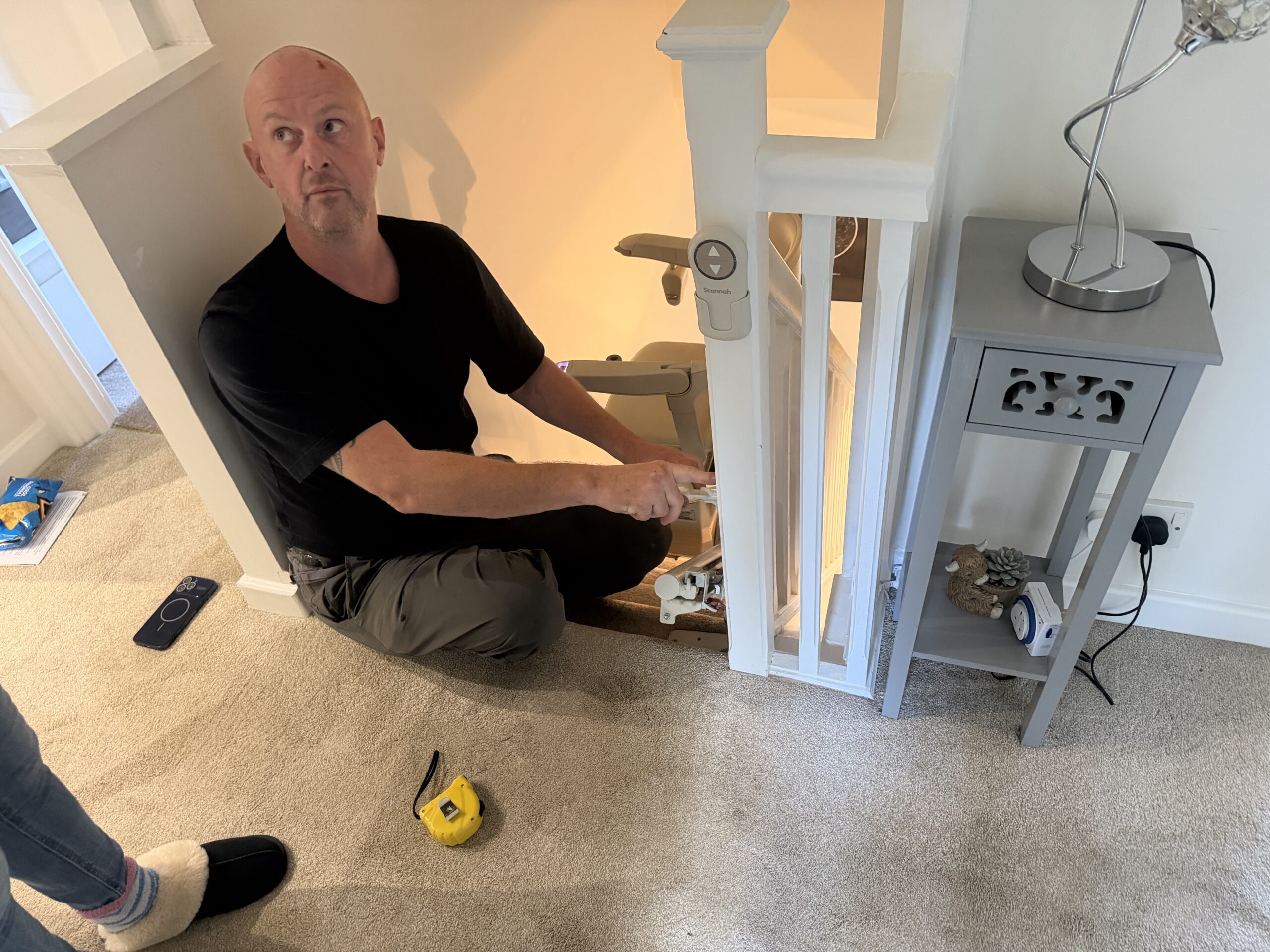
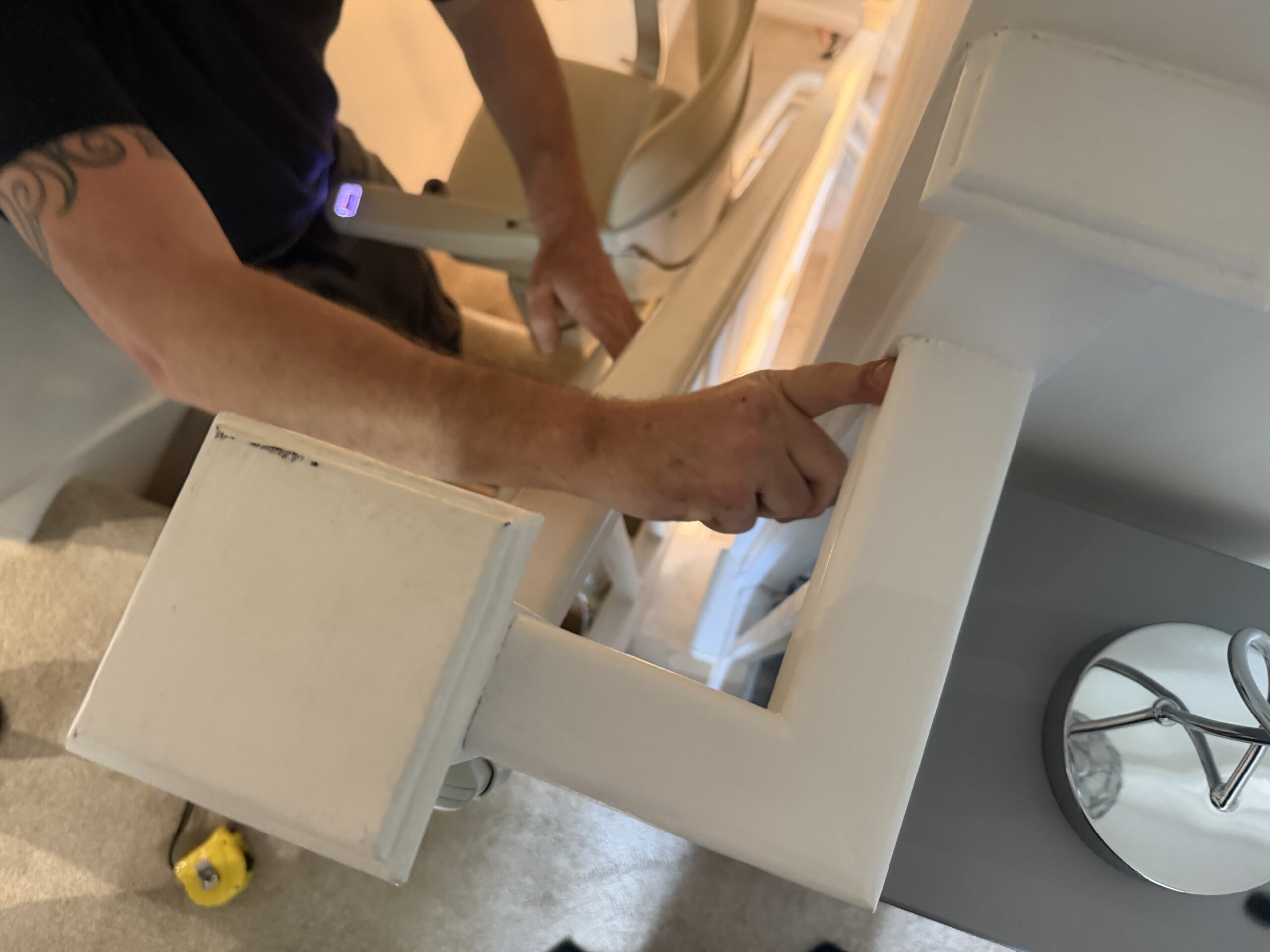
This newel post and bannister rail was protruding from the wall. So it was a good solution in this scenario. But of course each individual staircase is very different. We could simply move the newel post back towards the wall, giving us a good amount more space to manoeuvre.
This potential solution was circumspect, and of course there’s various options our client needs to consider before taking a particular course of action.
The simplest “fix” was lifting the parking position at the bottom of the stairs. This could be done straight away. However, this would present another problem of our client not being able to use the cushions while we decide on whether to go ahead with the rest of the adaptation. So while this would solve the problem at the bottom, it would present another problem at the top!
Summary
Often after a stairlift is installed and especially with certain conditions, your health can deteriorate quickly. So it is always a good idea to thoroughly assess the condition of the user before installation takes place. A little bit of preparation can save a lot of time and effort later, where adaptations need to happen in such a circumstance as this one.
We had another client who had a similar muscle wasting condition and a very narrow staircase – see our case study Desmin Storage Myopathy: why the Flow X was the only solution.
Each situation is different when it comes to stairlifts. Not every stairlift can be adapted. Sometimes the only solution is another stairlift. Often this is the Flow X, which is more nimble on the stairs.
Our recent blog post was one such situation. Moving the rail back towards the wall was not quite enough to create the proper clearance. This was for a client of ours whose condition had deteriorated after an operation.
See the blog post: how to create more knee room for a stairlift on narrow stairs.
See our YouTube channel for videos on removals, installations and stairlift troubleshooting.